At 53 years old, I have spent a lifetime adhering to the pragmatic, often restrictive, financial habits that define the "frugal" mindset. For decades, I viewed automobiles as mere appliances—depreciating assets that necessitated compromise. I bought what I could afford, or what I thought I should drive, rather than what I truly desired. That changed recently, following an unexpected series of events that transformed a routine oil change into a masterclass in opportunistic car ownership.
This is the story of how a volatile used-car market allowed me to finally bypass the compromises of my past and invest in a vehicle that serves as a testament to living a "rich life."
The "Maxi Cooper" Regret
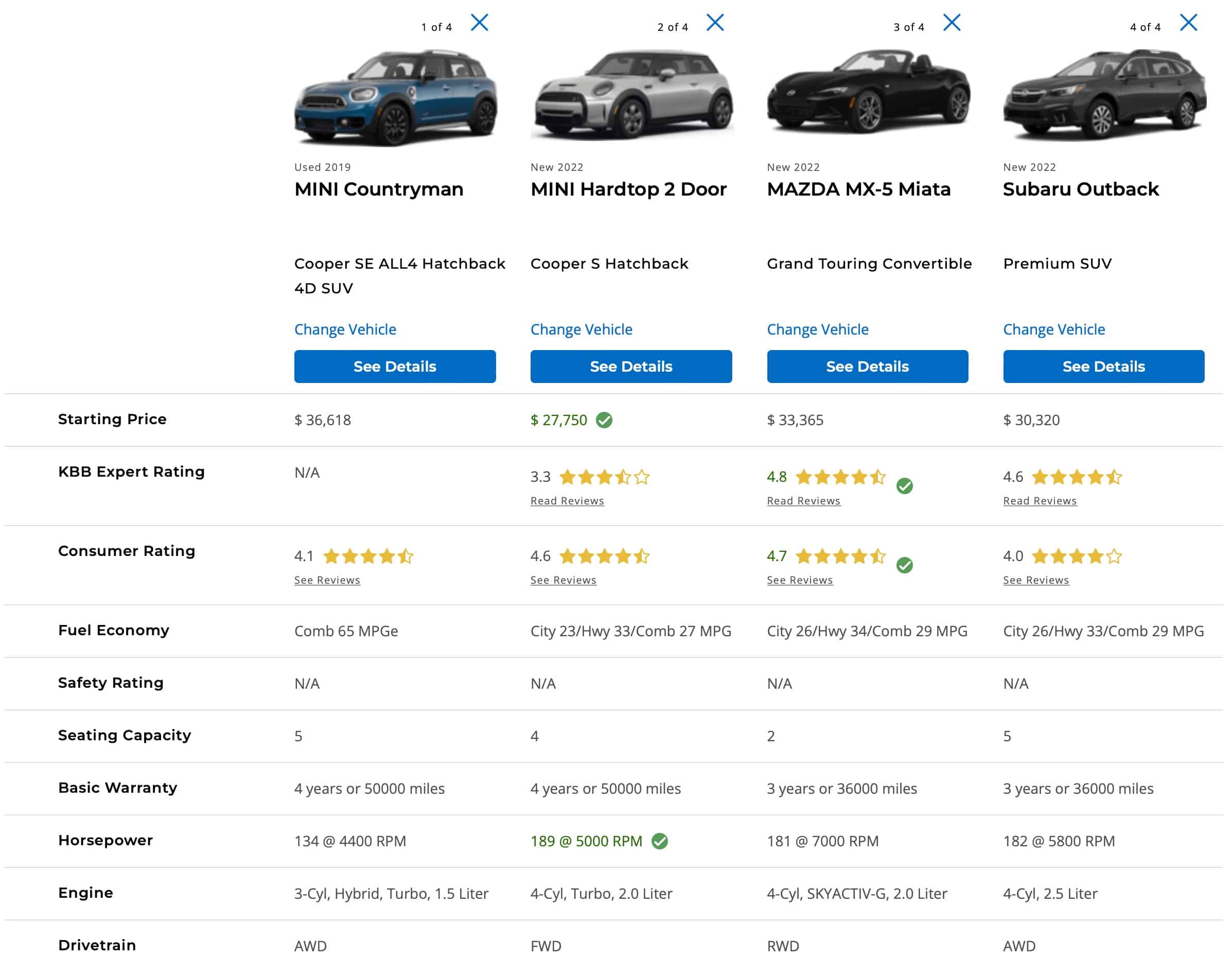
In July 2020, at the height of the global pandemic, I purchased a used 2019 Mini Countryman SE All4 for $35,990. At the time, I viewed it as a logical, albeit slightly boring, successor to my beloved 2004 Mini Cooper. I had allowed myself to be persuaded by the utility of a compact SUV—a category I affectionately, if derisively, dubbed the "Maxi Cooper."
Almost immediately, the buyer’s remorse set in. While the vehicle was objectively capable and well-maintained, it was fundamentally wrong for me. I am, at my core, a "small-car guy." The Countryman felt disconnected from the road, bloated, and uninspired. For two years, I tolerated the vehicle, treating it as an appliance rather than a joy. I had compromised my personal preference for a nimble, driver-focused experience in favor of an SUV’s perceived practicality. It was a purchase made out of necessity rather than passion, and the friction between the car’s personality and my own grew with every mile.
A Market Mirage: The Unexpected Buyback
The turning point arrived last month during a routine maintenance visit to the Mini dealership. While I waited for my oil change, a representative approached me with an offer to buy back my vehicle.
To understand why this was so jarring, one must look at the macro-economic landscape of the U.S. automotive industry. According to data from the U.S. Federal Reserve, the used-car market has been in a state of unprecedented inflation. Prices for used vehicles have surged 55% since July 2020, significantly outpacing the 18% increase seen in new vehicle pricing.
The dealer offered $33,000 for a car I had purchased 26 months prior. I reached out to a contact of mine—a veteran former car salesman—to assess the validity of the offer. His assessment was blunt: "It’s not just a good deal; it’s a miracle. You essentially leased that car for $115 a month. Sell it now, before they realize what they’re doing."
The Shift in Philosophy
The offer presented a rare opportunity: to undo a compromise. As I pondered the sale, I realized I had reached a stage in my life where I was tired of sacrificing my personal happiness for financial "safety" that, in this instance, wasn’t actually saving me much money.
I began to research potential replacements, but I did so with a new, self-centered shopping strategy. I decided that for the first time in my life, I would not compromise on the vehicle itself. I looked at my options: staying car-free (a viable option in my home of Corvallis, Oregon), buying another vintage 2004 Mini, or upgrading to something new. I ultimately decided that if I were to own a vehicle, it should be one that provided genuine, visceral joy.
Navigating the Search: The Quest for the Perfect Fit
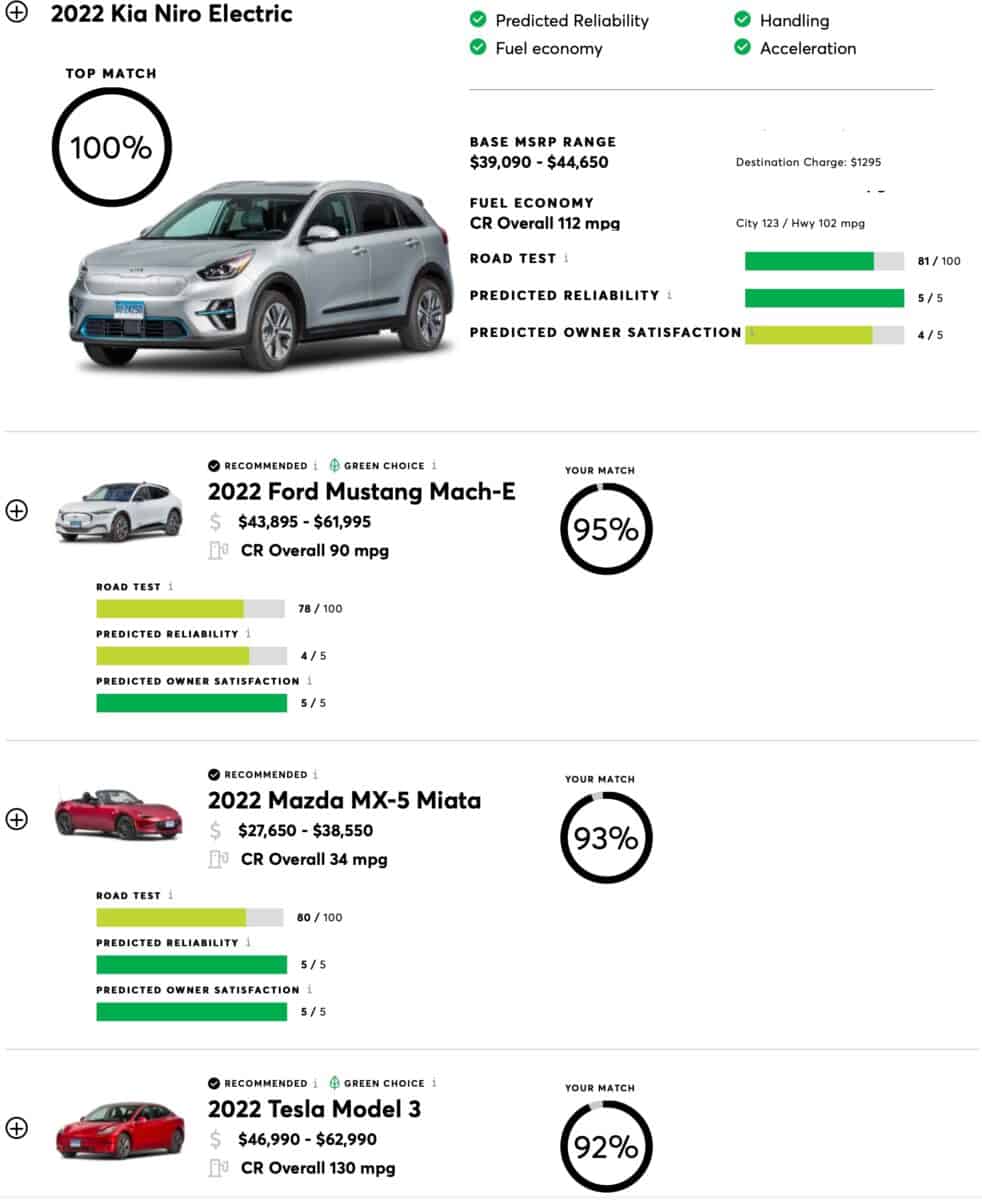
My criteria were simple but rigid: I wanted a small, manual-transmission, highly reliable, and driver-focused vehicle. I utilized Consumer Reports to filter the current market. The results were telling, highlighting the Kia Niro Electric, the Ford Mustang Mach-E, the Mazda Miata, the Tesla Model 3, and the Hyundai Ioniq 5.
After a rigorous 24-hour research period, I discarded the electric options. The Tesla was dismissed due to cost and inconsistent reliability ratings; the Kia and Hyundai failed to meet my personal criteria for owner satisfaction; and the Mustang Mach-E, despite its badge, was ultimately just another SUV.
That left the Mazda MX-5 Miata.
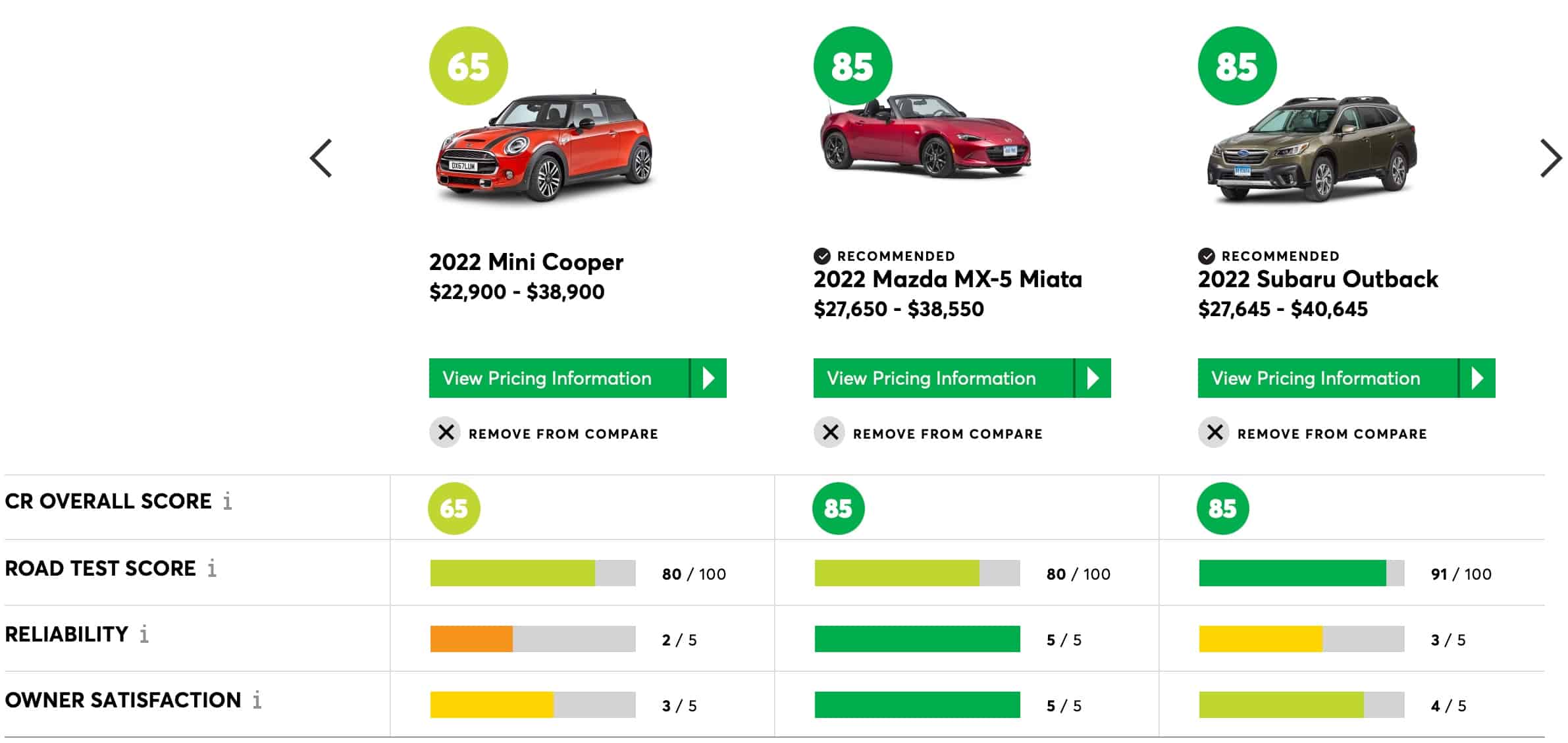
The Miata is famously impractical. It seats two, has minimal storage, and is undeniably loud. Yet, the consensus among enthusiasts and experts is universal: it is a "plucky" machine that offers the highest fun-per-dollar ratio on the market. Consumer Reports noted that the Miata offers an "intimate driving experience," allowing the driver to feel as though they are part of the machine. I wasn’t looking for a grocery hauler; I was looking for a partner for the open road.
The Negotiation and the "Rich Life"
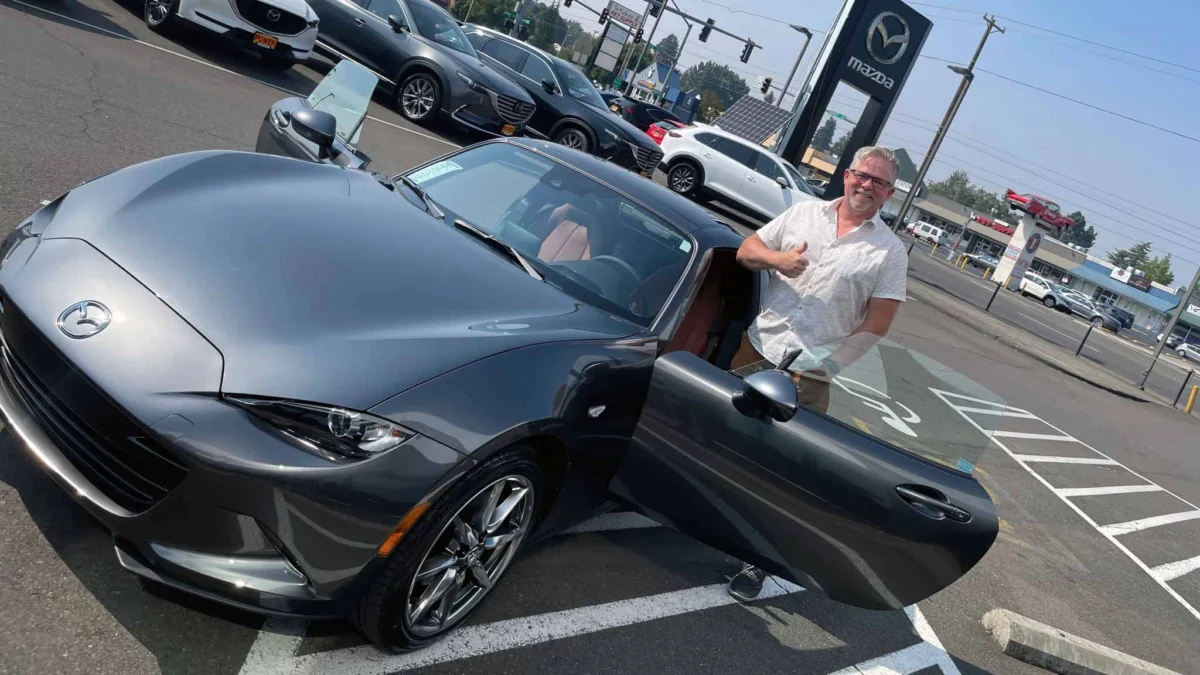
On the last Thursday in August, I traveled to a Mazda dealership in Salem, Oregon. I was prepared to walk away if the deal wasn’t right. After a brief test drive, I knew the Miata was the only choice. When I presented my trade-in, the salesman initially attempted the traditional "four-square" sales tactics, but I remained firm: I wanted a specific gray hardtop model with a manual transmission.
Because they didn’t have the exact configuration on the lot, we reached a tentative agreement on price. The dealership added a $1,995 market adjustment markup, which, while frustrating, was a reality of the current economic climate. I accepted the cost as the price of admission for a brand-new vehicle that checked every one of my boxes.
When the car arrived, it had only five miles on the odometer—the lowest number the finance manager said he had seen in his thirty-year career.
The Broader Implications: Money and Meaning
Driving the Miata home on the winding, riverside roads of Oregon, with the top down and music playing, I felt a sense of clarity.
Critics might call the purchase an emotional decision, and they would be right. However, I have learned that money is a tool intended to build a "rich life"—a concept championed by author Ramit Sethi. My upbringing in poverty had instilled in me a deep-seated guilt regarding the purchase of "nice things." But by reframing this purchase as a choice between a boring, depreciating SUV and a car that sparks genuine daily joy, the guilt evaporated.
Key Takeaways for Potential Buyers:
- Understand the Market: Use tools like the Federal Reserve’s economic data to time your sales and purchases. I essentially "rented" a vehicle for $115 a month because I understood the market shift.
- Define Your Non-Negotiables: Stop compromising on the features that actually matter to your daily quality of life. If you are a small-car person, do not buy an SUV just because it seems "practical."
- The "Rich Life" Test: When making a large purchase, ask yourself if the item contributes to your long-term happiness or if you are simply following societal expectations of "sensible" behavior.
- Listen to Your Instincts: Sometimes, the most illogical financial move on paper—buying a sports car—is the most logical move for your mental health and personal fulfillment.
The Miata is not merely a mode of transportation; it is a celebration of the fact that I no longer have to settle. I have spent 53 years being practical; I have decided that the next chapter will be defined by the joy of the drive. In this current economic environment, that is not just a luxury—it is a triumph.