We live in a culture obsessed with the "Game of Life." The phrase is ubiquitous, woven into our casual conversation, our self-help literature, and even our childhood playrooms. From Milton Bradley’s iconic 1860 board game—which remains a staple in American households—to the infinite array of Amazon bestsellers promising the secrets to "winning" at existence, we have been conditioned to view our time on Earth as a competitive endeavor with a distinct set of rules and a final leaderboard.
However, a growing chorus of philosophers, psychologists, and sociologists are beginning to argue that this metaphor is more than just a figure of speech; it is a fundamental misunderstanding of the human condition. When we treat life as a game, we stop living it and start attempting to "solve" it. In doing so, we often sacrifice the very elements that make life worth living.
The Origins of the Competitive Metaphor
The conceptualization of life as a game traces back through generations. The original The Game of Life, created in 1860, was a grim, didactic affair designed to instill moral character through the pursuit of "honesty" and "industry." While the modern iterations have shifted toward material wealth and status, the underlying premise remains consistent: you navigate a series of arbitrary obstacles, collect "points" (money, status, credentials), and eventually arrive at a finish line where your final score determines your worth.
This societal framework creates a dangerous paradox. In the "Real World," the rules of the game are never explicitly written down, yet they are universally felt. We are taught—through media, social pressures, and institutional benchmarks—that success is defined by the quality of one’s career, the prestige of one’s neighborhood, the academic achievements of one’s children, and the sheer volume of one’s financial portfolio. By internalizing these as the metrics of a "winning" life, we cease to view our days as opportunities for experience and start viewing them as steps on a ladder.
The Fundamental Flaw: Life vs. Games
To understand why this is a tragic error, one must distinguish between the nature of a game and the nature of life.
A game is, by definition, a closed system with finite goals that hold no intrinsic value. It does not actually matter who puts a ball through a hoop or crosses a finish line first; the significance is entirely manufactured by the rules of the game itself. Games are competitive, zero-sum, and usually result in a majority of participants being categorized as "losers."
Life, conversely, is not a game. It is an open system. When we apply the logic of the former to the reality of the latter, we encounter several critical failures:
The Measurement Problem
The most important aspects of a fulfilling life—ethical integrity, the depth of our relationships, the quiet satisfaction of a hobby, or the sense of purpose derived from one’s work—are inherently subjective. They cannot be quantified or placed on a scoreboard. You cannot calculate the "meaning" of a friendship, yet when we treat life as a game, we ignore these abstract, immeasurable treasures in favor of the tangible, objective prizes that can be tracked: the car in the driveway, the job title on the business card, or the "prestige" of a university degree.
The Erosion of Empathy
Perhaps the most damaging implication of the "game" mindset is what it does to our social fabric. Competition creates a barrier to genuine connection. In a game, you want your opponent to falter. If you view your friends and colleagues as fellow players in the "Game of Life," your ability to celebrate their successes is compromised. Their promotion becomes a threat to your standing; their child’s achievement becomes a reminder of your own perceived lack. True intimacy requires us to be on the same team, but the game mentality turns everyone into an uneasy rival.
Autonomy and the Myth of the "Win"
When we play by the rules of the "Game of Life," we are implicitly agreeing to accept someone else’s definition of success. This is a massive surrender of individual autonomy.
The Problem of External Validation
The moment you decide that winning means having a certain net worth or a specific social status, you have allowed external forces to dictate your life’s purpose. You are no longer pursuing what brings you happiness; you are pursuing what society tells you is "valuable." Any victory achieved under these circumstances is often what scholars call a "Pyrrhic victory"—a success so costly that it feels like a defeat. You may have the status, but you have lost the self.
The Zero-Sum Trap
The game model is inherently zero-sum. For you to "win," someone else must occupy a lower rung. This mindset traps individuals in a perpetual state of comparison. Sociological data consistently shows that the "comparison trap" leads to one of two outcomes: insecurity and unhappiness if you perceive yourself as inferior, or arrogance and isolation if you perceive yourself as superior. Both states are antithetical to the "good life," which is characterized by contentment, self-actualization, and connection.
Preparing for the Inevitable
The reality of the human experience is that we will all face setbacks. We will all have moments of professional stagnation, personal failure, and grief. If you are playing a "game," these moments are not just obstacles—they are proof of your inadequacy. This creates a terrifying, shame-filled existence where every failure is viewed as a public defeat.
However, if we reject the game metaphor, we can reframe these failures. They are no longer "losses" on a scorecard; they are simply parts of the human experience. When we remove the pressure to win, we become free to be resilient. We can find value in our struggles because we are no longer focused on how they look to the gallery of observers, but rather on what they teach us about our own character.
Implications for Modern Living
The shift away from the "Game of Life" requires a radical reassessment of our values.
- Prioritize Intrinsic Goals: Shift your focus from prestige and status to things that provide genuine, long-term satisfaction: learning, creativity, community service, and physical health.
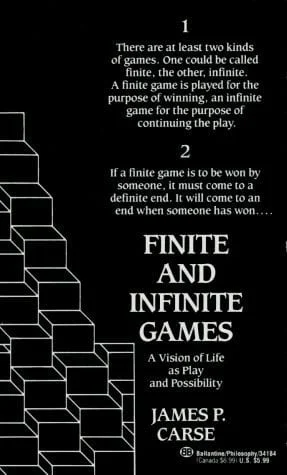
- Cultivate "Infinite" Relationships: Adopt the mindset of an "infinite game," where the goal is not to win, but to keep the game going. In relationships, this means prioritizing mutual growth over personal dominance.
- Define Your Own Rules: Spend time articulating what a "good life" looks like to you. Does it involve a massive house, or does it involve the time to read, travel, and mentor others? Your life is your own; don’t let a generic board game set the parameters for your joy.
Conclusion: Trivializing the Trivial
To be clear, there is nothing inherently wrong with games. Sports, board games, and professional competitions are wonderful ways to blow off steam and test our mettle. They are fun, they are engaging, and they are healthy—as long as we keep them in their proper place.
The danger arises when we allow the trivial to become the foundational. We should compete in our golf games, our fantasy football leagues, and our professional projects. But when the whistle blows and the game ends, we must be able to step away from the scoreboard. We must return to the people we love, the work that matters, and the values we hold dear, recognizing that these things are far too significant to be treated as items in a game.
Life is not a game to be won; it is a landscape to be explored. It is messy, it is subjective, and it is entirely unique to the individual living it. To trade that profound reality for the shallow satisfaction of "winning" is the greatest mistake one can make. Stop looking at the scoreboard—you might find that the life you’ve been ignoring is far more beautiful than any game you could ever win.