For decades, the automobile interior was a sanctuary of tactile engagement—a space defined by the deliberate weight of a gear shifter, the satisfying click of a toggle switch, and the intuitive resistance of a climate control dial. However, the last decade has seen a radical, industry-wide pivot toward minimalism, with manufacturers aggressively replacing mechanical interfaces with vast, high-resolution touchscreens.
Now, one of the most storied names in automotive history is sounding a retreat. Alfa Romeo, under the guidance of design director Alejandro Mesonero-Romanos, is actively challenging the industry’s "war of centimeters," arguing that the current obsession with oversized displays is not only detrimental to driver focus but is fundamentally stifling the artistry of interior design.
The "Smartphone-ization" of the Cockpit
The rise of the digital-first dashboard can be traced directly to the proliferation of the smartphone. As consumers grew accustomed to the seamless, screen-centric interface of handheld devices, automakers scrambled to replicate that experience in the cabin. The result has been a homogenization of interior design across the global market.
"Let’s get rid of the screens," Mesonero-Romanos stated in a candid interview with Autocar. His frustration is shared by a growing chorus of automotive journalists and ergonomic experts who argue that screens have "killed creativity." When a dashboard is designed solely to house a massive glass slab, the unique design language of the brand often takes a backseat to the constraints of the hardware.
The current trend creates a paradox: while technology is meant to improve the driving experience, the reliance on touchscreens often forces drivers to navigate complex sub-menus to perform simple, safety-critical tasks—like adjusting cabin temperature or fan speed—that were once accomplished by muscle memory alone.
Chronology of a Design Shift
To understand why this shift is occurring now, it is necessary to look at the evolution of the cockpit over the last twenty years:
- The Analog Era (2000–2010): Dominance of physical knobs, buttons, and high-fidelity instrument clusters. Interior design focused on ergonomic placement and tactile feedback.
- The Hybrid Era (2010–2018): Infotainment screens become standard, but they exist as "add-ons" to traditional center stacks. Physical buttons remain the primary interface for climate and audio.
- The Tablet Era (2018–2024): The "Tesla effect" takes hold. Automakers begin consolidating all vehicle functions into massive, portrait or landscape-oriented touchscreens. Physical buttons are aggressively purged to reduce manufacturing costs and achieve a "clean" look.
- The Correction (2025 and beyond): Brands like Alfa Romeo, along with others receiving backlash from consumer surveys, begin re-evaluating the necessity of "screen-first" design, moving toward a more balanced, human-centric approach.
The Case Against the "Rolling Tablet"
The industry’s race for the largest screen is, in the view of Mesonero-Romanos, a short-sighted endeavor. He points out that while the screen itself might be the "star" of the showroom floor today, it is destined to become an expensive liability.
Technological Obsolescence
Unlike mechanical switches, which can remain functional for decades, the computing hardware powering an infotainment system is subject to the rapid cycles of Moore’s Law. A touchscreen that looks state-of-the-art today will appear dated in five years and sluggish in ten. When the screen becomes the brain of the car, the entire vehicle feels obsolete the moment the software stops receiving updates or the hardware can no longer support modern connectivity standards.
Safety and Ergonomics
The "war of centimeters" ignores the fundamental reality of operating a moving vehicle. Touchscreens lack haptic feedback; they require visual confirmation to ensure a button was pressed correctly. In contrast, a physical dial allows a driver to adjust the volume or temperature without ever looking away from the road. By forcing drivers to navigate digital menus, automakers are effectively increasing cognitive load and, by extension, the risk of accidents.
The Cuorerosso Concept: A New Philosophy
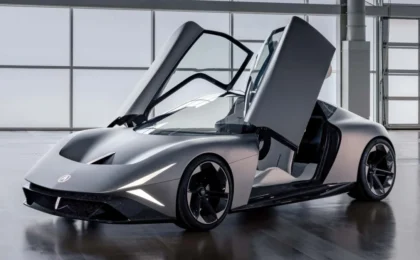
The unveiling of the Alfa Romeo Cuorerosso concept at the Paris Motor Show provided a tangible look at the future of the brand’s design language. The Cuorerosso is not merely a styling exercise; it is a manifesto for the "driver-focused" cabin.
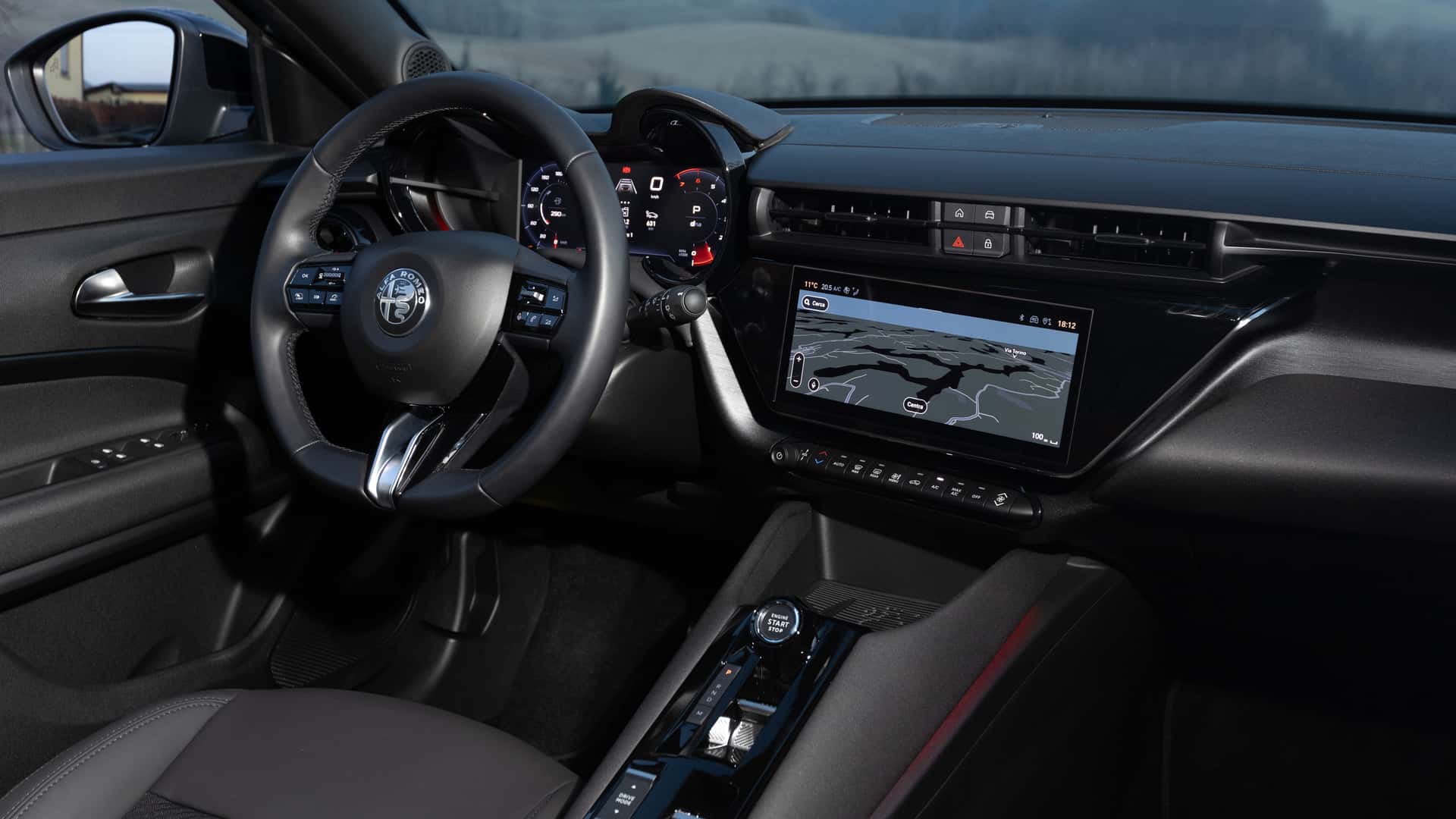
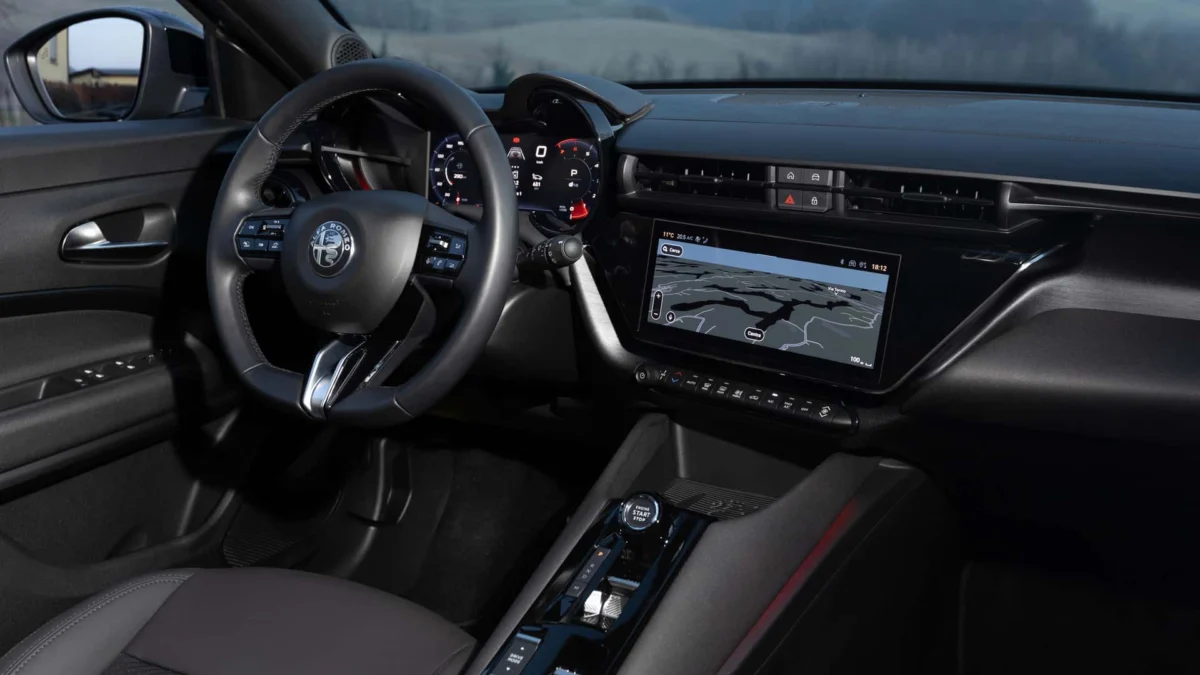
The interior of the concept is a masterclass in restraint. It utilizes a sophisticated "cannocchiale" (telescope) instrument cluster—a nod to Alfa Romeo’s rich heritage—but updates it with dual-round digital displays that can function independently or merge into a unified interface. This allows for a modular presentation of data: one dial can handle navigation while the other focuses on telemetry or speed, all while keeping the information within the driver’s peripheral vision.
Crucially, the Cuorerosso features a discreet approach to the central screen. The interface is designed to fade into the background when not in active use, allowing the driver to focus on the act of driving. When the screen is needed, it integrates seamlessly into the console, surrounded by tactile, high-quality physical controls for the most frequently used functions.
Official Responses and Industry Outlook
The industry at large remains split. While companies like Mercedes-Benz have doubled down on the "Hyperscreen" philosophy—an expansive, pillar-to-pillar glass interface—Alfa Romeo is betting that a segment of the market is craving a return to tactile, analog-inspired experiences.
"I want to have an infotainment screen, but I don’t want to have it on all the time," says Mesonero-Romanos. This philosophy is echoed by a quiet movement within the design studios of premium manufacturers who are beginning to realize that "premium" should be defined by the quality of the materials and the intuitiveness of the interface, not the square footage of the display.
Market research suggests that consumer sentiment is shifting. While tech-savvy buyers initially flocked to minimalist, screen-heavy interiors, reports from major safety organizations and consumer advocacy groups have put pressure on manufacturers to bring back physical controls. European safety bodies, in particular, are considering new standards that would require physical buttons for critical functions to maintain a high safety rating.
The Long-Term Implications
If Alfa Romeo’s vision gains traction, it could spark a renaissance in automotive interior design. We may see a future where:
- Adaptive Displays: Digital screens will be used for specific tasks (like mapping or entertainment) but will be retractable or dimmable to reduce distraction.
- Tactile Resurgence: High-end vehicles will emphasize "tactile luxury"—the feel of machined aluminum knobs, leather-wrapped switches, and weighted stalks.
- Longevity as a Feature: By decoupling the infotainment system from the core vehicle controls, manufacturers could allow for modular hardware upgrades, extending the lifecycle of the vehicle’s interior.
Conclusion: Driving, Not Browsing
The automotive industry stands at a crossroads. For years, the path of least resistance has been to digitize everything, turning vehicles into extension cords for our smartphones. Alfa Romeo’s bold stance against this trend is a reminder that a car is a machine designed to be operated, not a lounge chair for consuming media.
As we look toward the next generation of Alfa Romeo production models, the hope is that they maintain the courage of the Cuorerosso. By prioritizing the driver’s connection to the road over the size of the digital display, the brand isn’t just preserving its heritage—it is defining a more sustainable, ergonomic, and truly luxurious future for the automobile.
The industry may be currently obsessed with turning dashboards into rolling tablets, but as Alfa Romeo suggests, true innovation often involves knowing when to stop, when to step back, and when to focus on what truly matters: the art of driving.