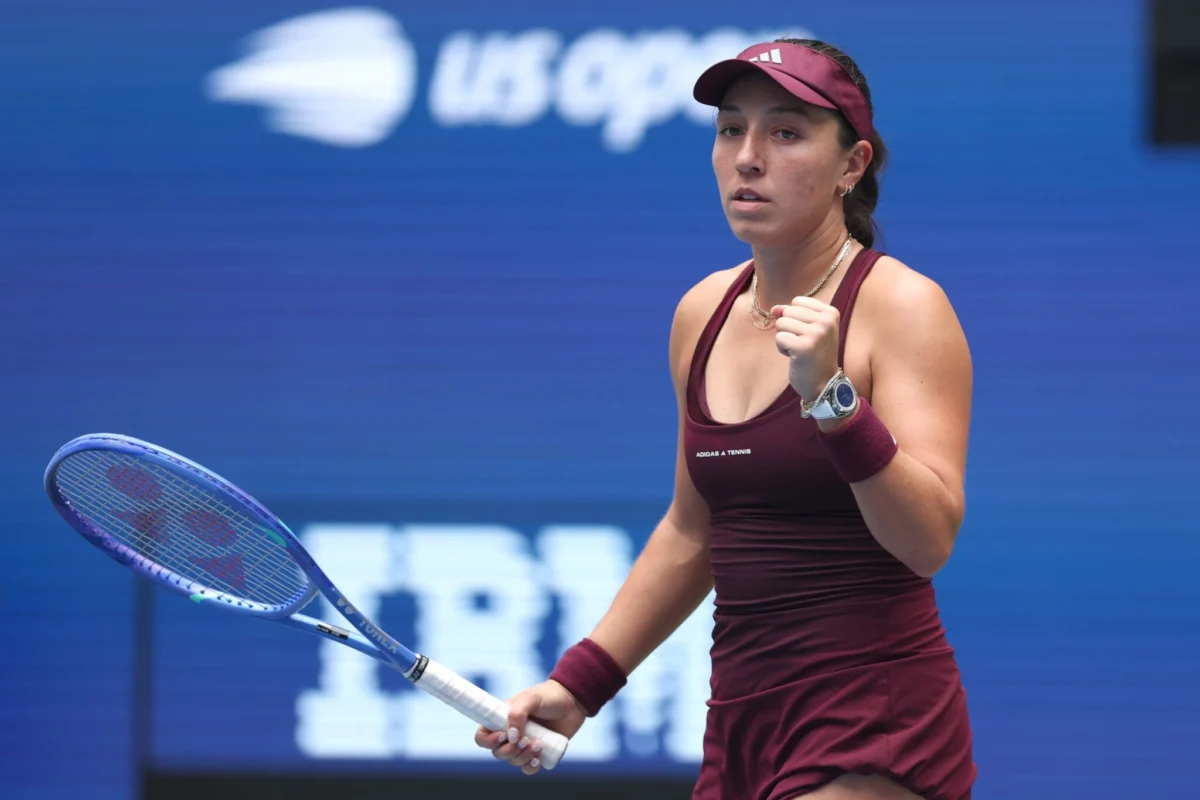
As the sun sets over the hard courts of the U.S. Open, the spotlight shines with increasing intensity on Jessica Pegula. Currently ranked No. 3 in the world, the 32-year-old American is not merely playing for a trophy; she is playing for a place in the history books. A deep run in this year’s tournament offers Pegula the opportunity to claim her first Grand Slam title and potentially ascend to the world No. 1 spot in the WTA rankings—a feat no American woman has achieved since Serena Williams dominated the sport over a decade ago.
Yet, for Pegula, the narrative on the court is often intertwined with the narrative of her lineage. As the daughter of Terry and Kim Pegula, owners of the NFL’s Buffalo Bills and the NHL’s Buffalo Sabres, she carries a label that few professional athletes possess: the "richest tennis player in the world." While her family’s estimated $9.3 billion fortune provides a backdrop of immense privilege, Jessica’s journey is a testament to a "blue-collar" work ethic that defies the easy assumptions of her heiress status.
Main Facts: The Stakes of the U.S. Open
Jessica Pegula enters the current U.S. Open at the pinnacle of her career. Having already amassed over $26 million in tournament prize money and secured lucrative endorsement deals with global brands like IBM, Hyatt, and The Farmer’s Dog, her financial independence as an athlete is undisputed. However, the 2026 season has brought her closer than ever to the ultimate sporting validation.
The Ranking Race
The WTA rankings are currently led by powerhouse players Aryna Sabalenka and Elena Rybakina. For Pegula to leapfrog into the No. 1 position, she must navigate a draw filled with elite talent while maintaining the consistency that has become her trademark. Reaching the top spot would be a symbolic milestone for American tennis, which has searched for a definitive successor to the Williams era.
Performance on the Court
Pegula’s recent performance underscores her readiness. On Friday, Sept. 4, she delivered a clinical performance to defeat No. 31 seed Leylah Fernandez, the former U.S. Open finalist. The victory propelled her into the fourth round, where she is scheduled to face Romania’s Sorana Cirstea. Pegula’s game, characterized by flat, deep groundstrokes and exceptional court coverage, has proven effective against the power-hitters of the modern era.
Chronology: From Pennsylvania Coal Country to Professional Sports Empires
To understand Jessica Pegula’s drive, one must look at the trajectory of her father, Terry Pegula. His rise from a modest upbringing to the heights of the Forbes billionaires list serves as the foundational blueprint for the family’s philosophy.
The $7,500 Gamble (1983–2010)
Terry Pegula grew up in rural northeastern Pennsylvania. His father was a truck driver and coal miner, a background that instilled a sense of grit and industrial discipline. After earning a degree in Petroleum and Natural Gas Engineering from Penn State University in 1973, Terry spent time at Getty Oil before striking out on his own.
In 1983, with just $7,500 borrowed from family and friends, he founded East Resources. Over the next 27 years, he grew the independent oil and gas exploration company into a titan of the Appalachian Basin. The turning point came in 2010, when he sold the majority of East Resources to Royal Dutch Shell for a staggering $4.7 billion. This liquidity event transformed the Pegula family from wealthy to ultra-high-net-worth overnight.
The Sports Pivot (2011–Present)
Following the sale of his energy assets, Terry Pegula turned his attention to his passion: professional sports.
- 2011: He purchased the Buffalo Sabres (NHL) for $189 million, vowing to bring a Stanley Cup to Western New York.
- 2014: In a high-stakes bidding war, Pegula outmaneuvered a group led by rock star Jon Bon Jovi and future President Donald Trump to acquire the Buffalo Bills (NFL) for $1.4 billion.
Jessica’s Parallel Path
While her father was building an empire, Jessica was building a career. Born in 1994, she began playing tennis at age seven. Crucially, Jessica notes that the family’s extreme wealth did not materialize until she was in her late teens.
- 2011: At 17, she made her U.S. Open doubles debut.
- 2015: She made her Grand Slam singles debut.
- 2019–2022: After years of battling injuries, including hip surgery, Pegula broke into the Top 10, proving she was a "late bloomer" capable of competing with the world’s best.
Supporting Data: The Economics of Elite Tennis
The financial landscape of professional tennis is often criticized for its high barrier to entry. Coaching, travel, and specialized training can cost hundreds of thousands of dollars annually before a player ever breaks even on the professional circuit.
Prize Money vs. Family Net Worth
While Jessica Pegula’s $26 million in career earnings is a massive sum, it represents less than 0.3% of her family’s $9.3 billion net worth. This disparity has led to public fascination, but within the locker room, Pegula is respected for the "grind" she has endured. Unlike many players who might rely on family offices, Pegula has built her own brand portfolio, including her skincare line, Ready 24.
The Competitive Landscape
Pegula’s "late bloomer" status is supported by data comparing her to her peers.
- Aryna Sabalenka (No. 1): Age 28, multiple Grand Slams.
- Elena Rybakina (No. 2): Age 27, Wimbledon champion.
- Jessica Pegula (No. 3): Age 32, zero Grand Slams.
Her longevity is a rarity in a sport that often sees players peak in their early 20s. Her ascent to No. 3 at age 30+ is a statistical outlier that highlights her physical durability and mental resilience.
Official Responses and Perspectives
Jessica Pegula has been remarkably candid about her background, often using interviews to bridge the gap between her public image and her private reality.
On Privilege and Identity
In a recent interview with The Times, Pegula addressed the "billionaire" label head-on. "I’ve always tried to carry myself as just a normal person because that’s to me how I am," she stated. "I’m definitely aware that I was very privileged and had a lot of good opportunities, and I didn’t want to waste those."
She emphasized that her father’s wealth was not a factor during her formative training years. "Some people get this image that it’s really easy for me because my dad is very wealthy, but that didn’t happen till I was 17 or 18," she told The Times.
The Family Philosophy
Terry Pegula’s advice to his children has remained consistent, regardless of their bank balance. According to team documents from the Buffalo Bills, Terry’s mantra is: "Work hard, love what you’re doing, and treat people right." Jessica has echoed this sentiment, telling Forbes in 2023 that talent and wealth are insufficient without drive: "You’re not really going to get there unless you work hard, are talented, and are really driven… It’s really difficult."
Fortune reached out to the Pegula family for additional comment on Jessica’s current U.S. Open run; however, the family has maintained a focus on the competition, declining further interviews at this stage of the tournament.
Implications: Wealth, Meritocracy, and the Future of the Sport
The rise of Jessica Pegula—and other players from wealthy backgrounds like Emma Navarro (daughter of billionaire Ben Navarro)—raises important questions about the socioeconomic future of tennis.
The "Pay-to-Play" Barrier
Tennis has long been seen as an elitist sport. The success of Pegula and Navarro suggests that while wealth can provide the best coaching and facilities, it cannot "buy" a Grand Slam. The mental toughness required to win a three-set match in 90-degree heat is a meritocratic equalizer. Emma Navarro herself noted, "My family instilled in me the value of hard work… My dad always taught us to never give up no matter the circumstances."
The Rags-to-Riches Counter-Narrative
The history of tennis is also defined by those who overcame extreme poverty. Serena and Venus Williams, who rose from the public courts of Compton, California, to build a combined net worth of nearly half a billion dollars, represent the other side of the coin. Similarly, Novak Djokovic’s story of surviving the NATO bombings in Serbia and practicing in an empty swimming pool serves as a reminder that hunger—born of necessity—is a powerful motivator.
Djokovic’s philosophy of "fall hard on your nose, and then stand up" resonates across the spectrum of wealth. Whether a player starts with $10 in their pocket or $10 billion in a trust fund, the path to a Grand Slam trophy requires the same singular focus.
Legacy and American Tennis
For Jessica Pegula, a victory at the U.S. Open would do more than add a trophy to her mantle. It would validate a career spent in the shadow of a massive family legacy. It would prove that "blue-collar" values can indeed thrive in the most "white-collar" of environments. As she prepares for her next match, Pegula isn’t just playing for the Pegula name; she is playing to prove that she belongs at the top of the world, entirely on her own merits.