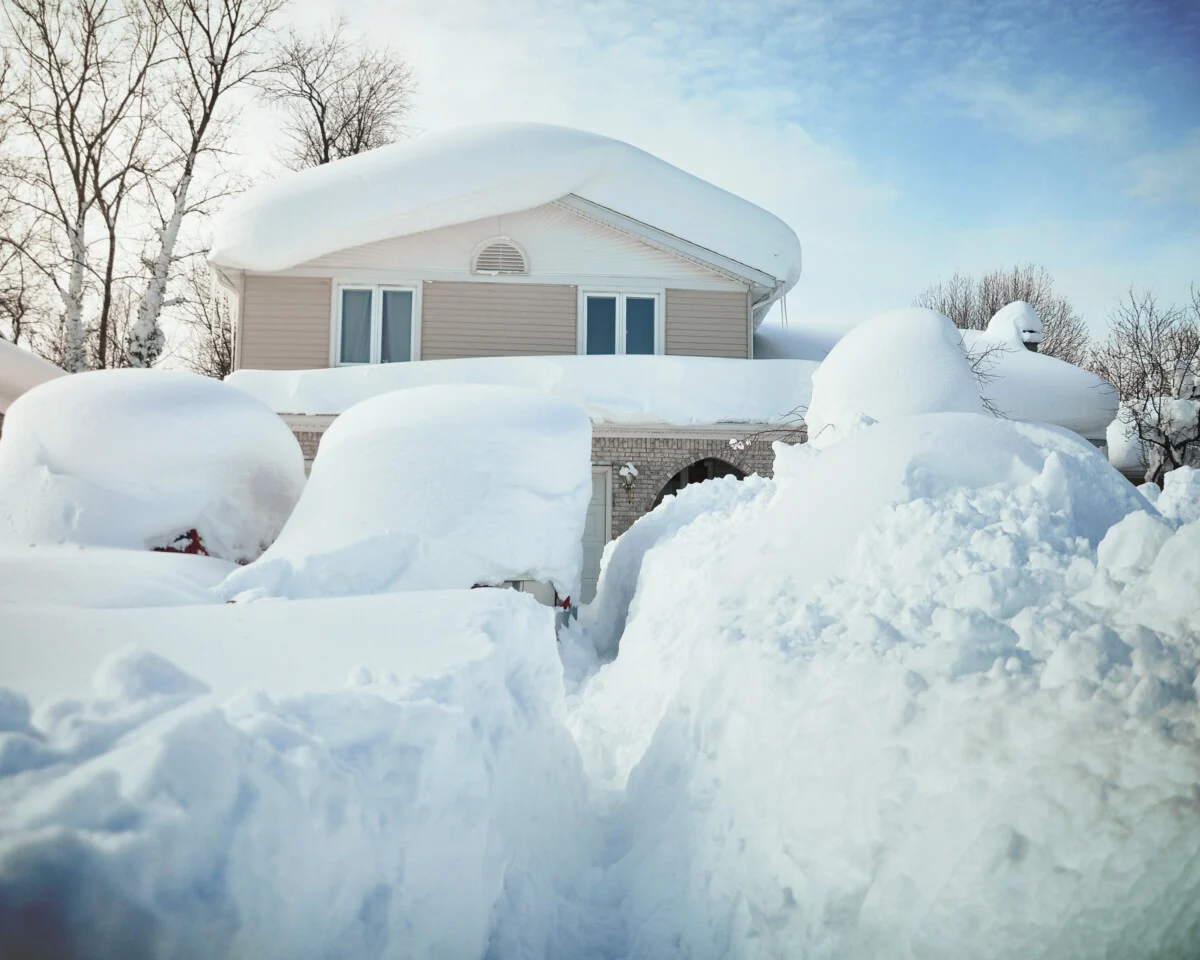
For many, the image of a quintessential American winter is one of pristine, snow-covered landscapes, cozy hearths, and the crisp stillness of a northern climate. However, as global climate patterns shift, the traditional "winter wonderland" is becoming an increasingly rare phenomenon. With the last 11 years marking the hottest period on record, the seasonal rhythm of the United States is undergoing a fundamental transformation.
For prospective homebuyers, real estate investors, and those considering a relocation, understanding the nuances of these changing climates is no longer just a matter of personal comfort—it is a critical component of risk management and long-term financial planning.
Main Facts: The Geography of Cold
The coldest cities in the United States are largely concentrated in the northern tier of the country, far removed from the equatorial heat. These regions, often referred to as the "North Country," derive their frigid characteristics from a combination of high latitude, elevated terrain, and the influence of the Polar Vortex—a massive pool of frigid air that circles the Earth’s poles and occasionally dips southward.
Fairbanks, Alaska, stands as the undisputed champion of cold, with an average annual temperature nearly 10°F lower than its runner-up, Anchorage. For those confined to the contiguous United States, Grand Forks, North Dakota, claims the title of the coldest city with a population over 20,000. While smaller municipalities like International Falls, Minnesota, frequently register lower temperatures, they fall outside the demographic scope of major housing studies.
Key Metrics: Top 10 Coldest Cities
| City | Avg. Annual Temp | Avg. Winter Temp | Record Cold |
|---|---|---|---|
| Fairbanks, AK | 28.3°F | -4.1°F | -66°F (1934) |
| Anchorage, AK | 37.6°F | 19.2°F | -34°F (1975) |
| Grand Forks, ND | 39.8°F | 9.9°F | -43°F (1912/2004) |
| Butte, MT | 40.1°F | 20.4°F | -52°F (1983) |
| Duluth, MN | 40.6°F | 14.6°F | -41°F (1885) |
| Superior, WI | 41.4°F | 17.4°F | -38°F (1962) |
| Laramie, WY | 41.4°F | 22.4°F | -50°F (1963) |
| Williston, ND | 41.7°F | 14.6°F | -50°F (1936) |
| Juneau, AK | 42.1°F | 29.6°F | -22°F (1968/1972) |
| Moorhead, MN | 42.2°F | 12.4°F | -48°F (1887) |
Chronology of a Changing Climate
To understand the current state of these cities, one must look at the historical trajectory of their temperatures. Climate data from the National Oceanic and Atmospheric Administration (NOAA) confirms that winter is the fastest-warming season in the United States.
- The 20th Century Standard: Throughout the 1900s, these cities were defined by consistent, deep freezes. Winters lasted from late October through early April, with temperatures rarely climbing above freezing.
- The 2010s Shift: A noticeable acceleration in warming began to emerge. Seven of the ten cities listed above recorded significantly higher average annual temperatures compared to the 1981–2010 climate normal period.
- The Recent Extremes: Fairbanks, despite the long-term warming trend, experienced its coldest winter on record during the 2025-2026 season, with an average temperature of -13.6°F. This serves as a reminder that while the climate is warming, "extreme weather events" can still produce localized, intense cold snaps that defy the broader trend.
Supporting Data: Why Some Cities Stay Colder
The disparity between these cities often comes down to geography. Alaska’s prominence on the list is intuitive due to its northern latitude, but the presence of cities like Butte, Montana, and Laramie, Wyoming, reveals a different mechanism: elevation.
In the Rocky Mountain regions, high altitude creates a natural cooling effect. Furthermore, the mountains act as a barrier to atmospheric flow. While they provide protection against the most aggressive warm fronts, they also trap air, leading to long, drawn-out periods of freezing temperatures. For example, Butte experiences roughly 197 days per year where the low temperature drops below the freezing point, even if the daily highs are relatively manageable.
Conversely, coastal cities like Anchorage and Juneau benefit from the moderating influence of the Pacific Ocean. Large bodies of water act as thermal reservoirs, absorbing heat in the summer and releasing it in the winter, which prevents these cities from experiencing the sub-zero plunges seen in the inland Dakotas or Minnesota.
Official Perspectives and Scientific Consensus
Climate scientists and environmental agencies, including the World Meteorological Organization (WMO), have verified that the warming of the Arctic and northern latitudes is occurring at a rate nearly four times faster than the global average.
Government reports from the Department of Energy emphasize that the built environment in these regions is under increasing pressure. As "average" winter temperatures creep upward, the infrastructure—which was designed for extreme, sustained cold—must now adapt to a cycle of "freeze-thaw" that causes more rapid degradation of materials, road surfaces, and building foundations.

Local municipalities in the upper Midwest have begun integrating climate resilience into their master plans. This includes updating building codes to require higher R-value insulation and more robust energy-efficient heating systems, acknowledging that the future of these regions will be defined by volatile weather rather than stable, predictable cold.
Implications for the Housing Market
The correlation between climate and real estate is becoming increasingly transparent. For buyers, the "coldest city" label is no longer just a warning about the thermometer; it is a financial variable.
1. The Cost of Maintenance
Homes in these regions require specific engineering to survive the climate. High-efficiency windows, reinforced roofs to handle heavy snow loads, and advanced climate control systems are standard. Potential homeowners must account for higher energy bills and the inevitable wear-and-tear caused by ice expansion and extreme thermal fluctuations.
2. Market Seasonality
The real estate market in the northern U.S. is intensely seasonal. Winter months traditionally see a sharp decline in transaction volume, as the physical act of showing homes is impeded by weather. However, this creates a niche opportunity for savvy buyers to negotiate in the "off-season" when competition is low.
3. Climate Risk Disclosure
Real estate platforms like Redfin have begun integrating climate risk data—including heat, flood, fire, and wind risk—directly into property listings. Buyers are now empowered to look beyond the curb appeal and analyze the long-term risk to the asset. If you are buying a home in a flood-prone area of the North that is seeing more rapid snowmelt due to warming winters, you are looking at a fundamentally different risk profile than a buyer in a stable, elevated mountain town.
4. The Demographic Shift
Interestingly, some of the coldest cities in the U.S. have seen a resurgence in popularity. As major metropolitan areas in the Sun Belt become increasingly unaffordable, many Americans are turning to the upper Midwest. These cities offer a lower cost of living, which, for many, outweighs the necessity of owning a heavy-duty snowblower and a winter wardrobe.
Conclusion: Living in the New North
Moving to one of the nation’s coldest cities is a lifestyle choice that demands preparation and a respect for the environment. Whether it is the 60 days of "polar night" in Utqiagvik, where the sun never rises, or the high-altitude resilience of Laramie, these cities offer a unique American experience that is rapidly evolving.
As the planet continues to warm, the "coldest" cities will likely see their titles challenged. The historic, bone-chilling winters of the 20th century are fading into memory, replaced by a new, more unpredictable climate reality. For those looking to put down roots, the best approach is to embrace the local climate while utilizing modern data to ensure the home you buy is built to weather the changes to come.
For those interested in further research, the National Centers for Environmental Information (NCEI) provides comprehensive datasets on U.S. climate normals, while local municipal archives often offer the best context for understanding how specific cities have adapted to their unique thermal environments over the last century.