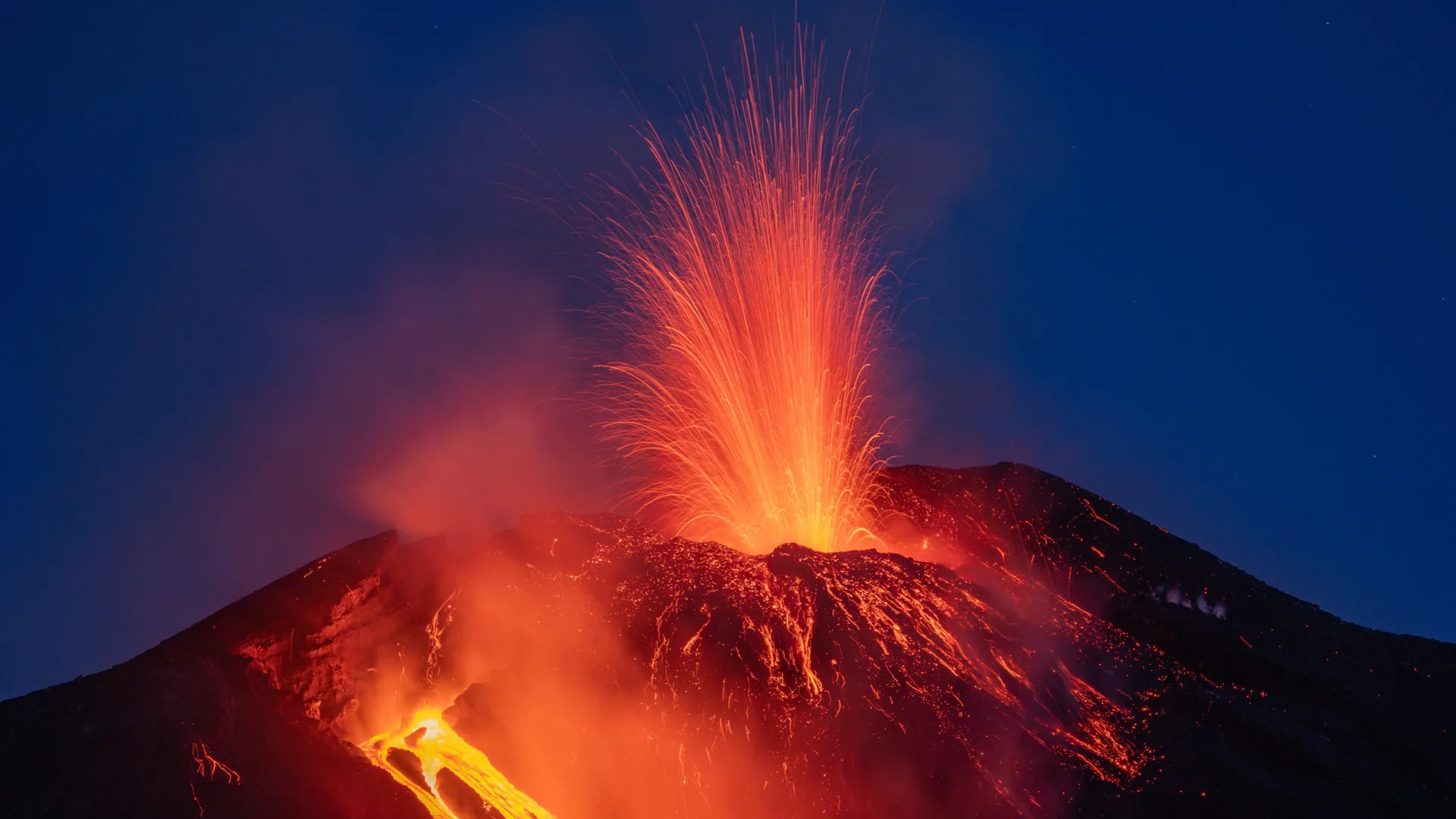
Volcanoes are often envisioned as monolithic conduits—singular pipes funneling molten rock from the Earth’s core to the surface. However, the reality of volcanic architecture is far more complex, dynamic, and unpredictable. A groundbreaking study led by Cornell University researchers has revealed that even a single volcano can operate through vastly different subterranean processes, effectively changing its “personality” depending on the chemistry of its magma.
By meticulously reconstructing two of Mount Etna’s most significant historical eruptions, scientists have mapped the hidden plumbing systems of the iconic Italian volcano. The findings, published in the journal Geochemistry, Geophysics, Geosystems, provide a new blueprint for understanding how magma moves, how it stalls, and what triggers the transition from a steady simmer to a catastrophic explosion.
The Chemistry of Catastrophe: Understanding Volatile Drivers
At the heart of the research is the fundamental question of what turns a relatively gentle volcanic vent into a violent, explosive force. According to Esteban Gazel, the Charles N. Mellowes Professor in the Department of Earth and Atmospheric Sciences at Cornell’s Duffield College of Engineering, the answer lies in the volatile material—gases like water and carbon dioxide—trapped within the magma.
“Imagine a bottle of soda,” Gazel explains. “If you open that bottle without agitating it, you can drink it, but if you shake it up, all the bubbles get separated really fast, and you have an explosion. Volcanoes work in a similar way, and my lab is trying to quantify these processes.”
For decades, the scientific community operated under the consensus that water was the primary driver of volcanic eruptions. However, Gazel’s team challenged this paradigm in 2023 by demonstrating that carbon dioxide (CO₂) plays a much larger, and often more rapid, role in triggering explosive activity than previously understood. By analyzing microscopic gas bubbles trapped within crystals—some as small as 1 to 10 percent the thickness of a human hair—the researchers can now determine the pressure, depth, and speed of magma as it surges toward the surface.
Chronology of a Volcano: Comparing Two Eras of Etna
To test their hypotheses, the team focused on Mount Etna. While the volcano is often characterized as “gentle” due to its frequent, low-level activity, its geological history is punctuated by extreme violence. The researchers performed a comparative analysis between two distinct events: the 122 B.C. Plinian eruption and the Fall Stratified event, which occurred roughly 4,000 years ago.
The 122 B.C. Plinian Event
The 122 B.C. eruption serves as a quintessential example of a "mafic" and Plinian event. Mafic magma, characterized by its low viscosity and high concentrations of magnesium and iron, often flows easily. However, this eruption was far from simple.
By analyzing the chemical sequencing of crystals formed within the magma during that period, the team reconstructed a complex ascent. The magma did not travel directly to the surface. Instead, it originated at a depth of approximately 22 kilometers. Rather than surging upward, the magma stalled at a shallower depth—between 2 and 5 kilometers—remaining there for several weeks. During this "stalling" period, the magma underwent a degassing process, slowly releasing its trapped volatiles before finally erupting in a violent, Plinian-style explosion.
The Fall Stratified Event (c. 2000 B.C.)
In stark contrast, the Fall Stratified event reveals a vastly different plumbing dynamic. Data derived from crystal analysis suggests that this eruption was driven by a rapid ascent from the deep mantle, starting at depths of 24 to 30 kilometers.
In this scenario, there was no weeks-long hesitation. The magma raced to the surface, erupting in a matter of hours. The researchers found that this rapid transit was directly correlated with significantly higher concentrations of carbon dioxide, which acted as a high-pressure propellant, pushing the magma through the crust with little time for stalling or degassing.
Supporting Data: The Power of Raman Spectroscopy
The precision of this study is owed to a pioneering technique involving Raman spectroscopy. Lead author and former Cornell postdoctoral researcher Maxim Gavrilenko notes that this method allows scientists to treat magma crystals as "time capsules."
"That technique gives us the density of CO₂, and using a state equation, we can transform that density into pressure, and pressure can be transformed into depth," Gavrilenko explained. "Then we apply those techniques to these explosive eruptions, and we are able to reconstruct the plumbing system with an unprecedented level of precision."
The collaboration, which included experts such as Terry Plank of Columbia University and Bruce Houghton of the University of Hawaii, Manoa, involved the systematic collection of samples from the flanks of Etna. By measuring the gas inclusions in these samples, the team proved that Etna is a unique laboratory where water and carbon dioxide compete for control of the eruption style.
"Etna is one of the few volcanoes in the world where you have the two volatile species competing," Gazel noted. "This shows that at a certain threshold of CO₂, the eruption will come from very deep and really fast, but when you have a higher threshold of water, then the process is controlled at shallow levels."
Implications for Global Risk Assessment
The implications of this research extend far beyond the slopes of Sicily. By understanding the "thresholds" of gas concentrations, scientists can develop more accurate predictive models for volcanic activity worldwide.
Currently, Gazel’s team is applying this methodology to volcanoes in Chile, Hawaii, and other volatile regions. The goal is to move away from generic models and toward site-specific, data-driven forecasting. "Ideally, this should be done in every volcano on the planet," Gazel stated. "This is data we need for physical models of eruptions that are the base of risk assessment."
By identifying whether a volcano is currently dominated by deep-seated, CO₂-driven magma or shallow, water-saturated systems, emergency management agencies may eventually be able to better anticipate the "lead time" of an eruption—the difference between having weeks to prepare and having only hours to react.
A Cultural and Scientific Convergence
Mount Etna holds a dual identity: it is both a premier subject for modern earth science and a cornerstone of classical mythology. The ancient Greeks associated the mountain with the burial of the giants Typhon and Enceladus, who were said to be trapped beneath the volcanic crust after their defeat by the Olympian gods.
In an intriguing synthesis of geology and folklore, Gazel draws parallels between the myths and his team’s findings. The elongated, deep-reaching plumbing system of the 122 B.C. Plinian eruption, he suggests, mirrors the serpentine, complex nature of the giant Typhon. The shallower, more compact systems of other eruptions resonate with the smaller, localized presence attributed to Enceladus.
For the research team, this connection to history serves as a reminder of the human element in volcanology. The danger posed by Mount Etna is not merely a theoretical exercise; it is an enduring reality for the populations living in its shadow.
Conclusion: Looking Ahead
The work conducted by the Cornell team represents a significant leap forward in our understanding of volcanic plumbing. By shifting the focus from simply asking if a volcano will erupt to how it will erupt, the researchers are providing the scientific community with the tools to demystify one of nature’s most destructive forces.
As the team continues their work in other volcanic hotspots, the "plumbing" of our planet is slowly being mapped with increasing clarity. Whether fueled by the deep, rapid surge of carbon dioxide or the slow, deliberate accumulation of water, the eruptions of tomorrow will be better understood—and perhaps better managed—thanks to the microscopic analysis of the crystals buried deep beneath our feet.
The research was supported by the National Science Foundation. Additional co-authors included postdoctoral researchers Kyle Dayton and Ellyn Huggins, as well as Anna Barth from the University of California, Berkeley.