For decades, the six-figure salary stood as the ultimate benchmark of professional achievement and financial tranquility. To earn $100,000 a year was to have "made it"—a gateway to homeownership, comfortable vacations, robust savings, and a life free from the granular anxieties of price tags at the grocery store. However, a perfect storm of sustained inflation, geopolitical volatility, and shifting consumer landscapes has fundamentally dismantled this milestone.
Today, the $100,000 threshold is increasingly viewed not as a sign of affluence, but as the bare minimum required to maintain a functional, baseline existence in modern America. As the cost of essential goods and services continues to outpace wage growth, the "affluence illusion" is fading, leaving even high earners to adopt the survivalist shopping habits once reserved for the lowest income brackets.
Main Facts: The Erosion of the Six-Figure Dream
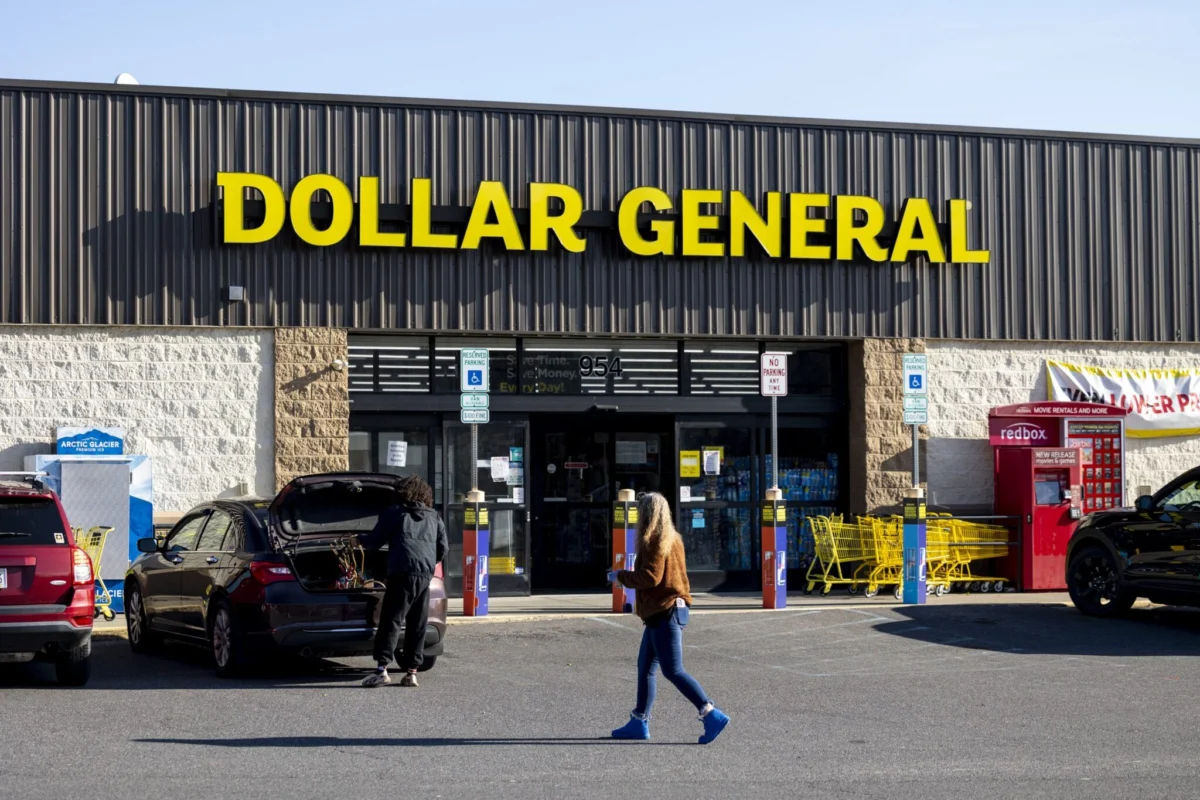
The primary revelation regarding this shift came during the recent Goldman Sachs Global Consumer and Retail Conference. Todd Vasos, CEO of Dollar General, provided a startling look into the changing demographics of the "discount shopper." According to Vasos, the economic "headwinds" of the post-pandemic era have become so persistent that the middle and upper-middle class are now behaving almost identically to lower-income consumers.
Key takeaways from the current economic landscape include:
- The New Bargain Hunters: Consumers earning $100,000 or more are increasingly patronizing deep-discount retailers like Dollar General and Walmart to offset the rising costs of living.
- Behavioral Shifts: High-income households are adopting "low-income" shopping patterns, such as making more frequent trips to buy smaller quantities of goods to manage cash flow.
- The Debt Reliance: A significant portion of six-figure earners now relies on credit cards, "Buy Now, Pay Later" (BNPL) services, and reward points to cover basic necessities.
- Redefining the Floor: Financial analysts are now suggesting that the "true" poverty line—the level below which a family cannot comfortably function—has risen to as high as $140,000 in the current inflationary environment.
Chronology: From Pandemic Disruption to Sustained Inflation
The path to the current affordability crisis began with the global disruptions of the COVID-19 pandemic, but it has been cemented by a series of secondary shocks.
2020–2021: The Inflationary Spark
The initial surge in inflation was driven by broken supply chains and a sudden shift in consumer demand. As the world reopened, the cost of goods began to climb, but many economists and policymakers initially dismissed the trend as "transitory." During this period, the $100,000 salary still held much of its traditional purchasing power.
2022–2023: The Broadening Squeeze
As inflation proved sticky, it spread from durable goods (like used cars) to essential services. Energy prices became a primary driver of distress. Gasoline prices surged, hitting a national average that recently sat at $4.476 per gallon—a staggering increase from $3.189 just a year prior. The geopolitical situation, particularly tensions involving Iran and global oil markets, has kept energy costs volatile. Simultaneously, the price of diesel climbed to approximately $6.50 per gallon, creating a "tax" on every item delivered via truck, which includes nearly everything on retail shelves.
2024–Present: The Normalization of Scarcity
By late 2024, the cumulative effect of several years of 3% to 9% annual inflation has resulted in a permanent step-up in the cost of living. While the rate of inflation may have slowed, the prices have not returned to pre-pandemic levels. This has forced a permanent change in how six-figure earners view their wealth.
Supporting Data: Quantifying Financial Anxiety
Data from the Harris Poll and various retail reports provide a quantitative look at how the "wealthy" are struggling.
The Harris Poll Insights
A comprehensive survey conducted by the Harris Poll found that 64% of Americans earning $100,000 or more no longer view their income as a symbol of success. Instead, they characterize it as the "bare minimum" to stay afloat. The survey highlighted a "paradox of income" where high earners feel a sense of "nouveau poor" status.
Financial Tactics of the $200,000+ Bracket
Perhaps most shocking is the data regarding those earning over $200,000 a year. This group, once considered the upper-crust of the professional class, is now utilizing financial tools typically associated with liquidity crises:
- 64% have used accumulated credit card or retail rewards points specifically to pay for essential groceries or household items.
- 50% have utilized "Buy Now, Pay Later" (BNPL) services for purchases under $100, indicating a need to spread out even minor costs over several pay cycles.
- 46% admit to relying on credit card debt to bridge the gap between their monthly income and their cost of living.
Retail Performance and Consumer Resilience
Despite these pressures, the U.S. consumer has remained remarkably resilient. August retail sales showed a 1.2% increase, or 1.1% when excluding gasoline. This growth, however, is increasingly driven by a shift in where people shop rather than an increase in what they are buying. Dollar General’s strategy of maintaining 2,000 items at or below the $1 price point has become a magnet for all demographics, not just their core customer base (those earning under $45,000).
Official Responses: Perspectives from Corporate Leadership
Corporate leaders are recalibrating their strategies to account for this "stretched" middle class. At the Goldman Sachs conference, Dollar General CEO Todd Vasos noted that even as the "core" customer struggles, the "trade-down" customer—those coming from higher income brackets—is providing a new growth engine for discount retail.
"The interesting thing with this economy… even that middle to upper-middle [class] is acting more like a lower-income shopper these days," Vasos remarked. He explained that when gas prices hit the $4.00 mark, it triggers a psychological and practical shift. Customers shop closer to home to save on fuel and increase the frequency of their trips because they lack the "lump sum" liquidity to buy in bulk.
Vasos emphasized that as long as the labor market remains strong and unemployment stays low, consumers will continue to "navigate the inflation landscape." However, he acknowledged that the feeling of being "higher income" has vanished for the $100,000 earner due to the compounding costs of utilities, insurance, food, and caregiving.
Implications: Redefining the Poverty Line and the Middle Class
The most provocative takeaway from the current economic climate comes from Michael Green, chief strategist and portfolio manager for Simplify Asset Management. In a viral analysis, Green argued that the traditional gauges used by the government to measure poverty and economic health are fundamentally broken.
The $140,000 Threshold
Green suggests that the "crisis threshold"—the floor below which a family cannot realistically function without constant financial duress—is now $140,000. If this figure were adopted as a modern standard, it would mean that a vast majority of the "middle class" is actually living in a state of functional poverty.
This shift has several long-term implications for American society:
- The Death of Discretionary Spending: As more of the $100,000 salary is eaten up by "fixed" costs—like the soaring price of car insurance (up 20% in some regions) and childcare—discretionary industries like travel, high-end dining, and luxury retail may face a long-term contraction.
- Political and Social Unrest: The gap between perceived status and actual purchasing power often leads to "political rage." When people work hard to reach a historical milestone like $100k only to find they are still struggling, it creates a sense of systemic betrayal.
- The "Dollarization" of the Economy: We are seeing a permanent shift toward a two-tiered retail economy. One tier caters to the ultra-wealthy, while the other—comprising everything from Walmart to Dollar General—becomes the default for everyone else, from the teacher earning $50,000 to the tech manager earning $150,000.
Conclusion
The $100,000 salary is no longer the finish line of the American Dream; it has become the starting blocks of a grueling race to stay relevant in an increasingly expensive world. As the CEO of Dollar General aptly noted, the "headwinds" of inflation have flattened the consumer experience. Whether an American earns $45,000 or $100,000, they are increasingly finding themselves in the same aisles, hunting for the same bargains, and feeling the same weight of an economy that has outpaced the value of the dollar. The "Affluence Illusion" has been shattered, leaving behind a nation of resilient but exhausted bargain hunters.