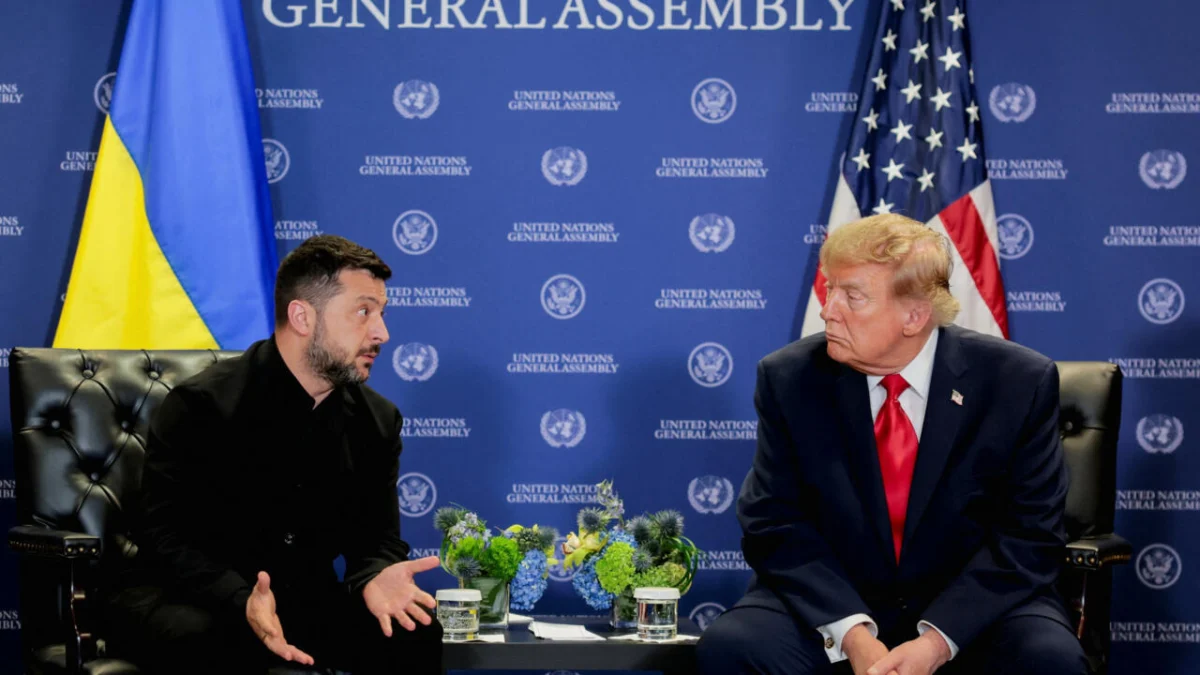
New York City, September 22, 2026 – The 81st United Nations General Assembly (UNGA) has convened under the heavy shroud of overlapping geopolitical crises, with the global spotlight fixated on the evolving relationship between the United States and Ukraine, and the deepening instability of the global energy market. In a high-stakes bilateral meeting held on the sidelines of the summit, U.S. President Donald Trump and Ukrainian President Volodymyr Zelensky faced the daunting task of reconciling their strategic objectives against a backdrop of escalating conflict and economic volatility.
The atmosphere in New York this week is markedly different from previous years. With conflict zones stretching from the Strait of Hormuz to the mouth of the Red Sea, and a pervasive sense of economic anxiety affecting citizens on five continents, the UN rostrum has become a stage for blunt rhetoric and shifting alliances.
Main Facts: A Convergence of Crises
The primary narrative emerging from this year’s assembly is the inextricable link between military conflict and the global energy supply. During his address, President Trump echoed the combative tone that defined his previous UN appearances. Having previously pivoted toward a more isolationist stance regarding U.S. development funding, the President maintained a focus on "America First" priorities, explicitly linking the global surge in fuel prices to the ongoing war in Ukraine.
Central to the tension is the President’s assertion that Ukraine’s persistent drone strikes on Russian energy infrastructure are the primary driver of a global diesel shortage. This claim has sent shockwaves through energy markets and diplomatic circles alike, as it places direct blame on a U.S. ally for the economic pain currently felt by consumers worldwide.
However, energy analysts remain skeptical of the administration’s narrative. While Russian infrastructure has indeed been targeted, Russia accounts for only approximately 6 percent of global diesel exports. This discrepancy has fueled a broader debate about whether the administration is using energy volatility as a scapegoat to pressure Kyiv into a negotiated settlement, or if there is a fundamental misunderstanding of supply chain dynamics at the highest levels of government.
Chronology: A Timeline of Escalating Instability
To understand the gravity of the current moment, one must look at the progression of the last 24 months:
- Late 2024 – Early 2025: The initial, dramatic shifts in U.S. foreign aid policy toward Ukraine begin to take effect, signaling a move away from open-ended financial support.
- Mid-2025: Hostilities in the Middle East intensify, leading to significant disruptions in the Strait of Hormuz. Global energy prices begin a steady climb as maritime security becomes a primary concern for the shipping industry.
- Early 2026: The "Contagion Effect" begins. Regional conflicts in the Middle East and the continued grind of the war in Ukraine begin to synchronize, creating a "perfect storm" of supply chain bottlenecks and inflation.
- September 2026 (UNGA Week): The 81st General Assembly convenes. President Trump arrives with a speech echoing his previous "riot act" rhetoric, further polarizing the diplomatic community.
- September 22, 2026: The bilateral meeting between President Trump and President Zelensky occurs. The meeting is characterized by reports of intense pressure regarding military tactics and the economic fallout of the conflict.
Supporting Data: The Anatomy of the Energy Crunch
The assertion that Ukraine’s strikes are responsible for the current diesel shortage is currently being parsed by the International Energy Agency (IEA) and independent market analysts.

Current data suggests that while the loss of Russian refined products is a contributing factor, the "pain at the pump" is a result of a multi-faceted failure:
- Refining Capacity: Global refining capacity has failed to keep pace with the recovery in post-pandemic demand.
- Geopolitical Risk Premium: The instability in the Red Sea has forced tankers to take longer routes, increasing operational costs by nearly 30% and locking up shipping capacity that would otherwise be available for distribution.
- The 6% Paradox: Experts argue that while a 6% reduction in Russian exports is significant, it does not explain the exponential price spikes, which are more accurately attributed to market speculation and the lack of reserve depth in major economies.
Official Responses and Diplomatic Fallout
The reception to President Trump’s rhetoric at the UN has been mixed, reflecting the deepening divide between Western allies.
The U.S. Perspective: The administration maintains that its role is to protect the American consumer from the fallout of foreign conflicts. Officials close to the President emphasize that the "price of energy is the price of stability," and that if Ukraine cannot demonstrate a path to victory without destabilizing the global economy, the U.S. must reserve the right to limit support.
The Ukrainian Stance: President Zelensky’s team remains focused on the existential nature of the conflict. In briefings following the meeting, Ukrainian officials emphasized that the drone strikes are not a choice, but a military necessity to degrade an aggressor’s ability to conduct long-range bombardment of civilian centers. They contend that blaming Ukraine for global inflation is a tactical deflection by those who prefer a "frozen conflict" to a decisive resolution.
The Absence of China: Perhaps the most significant development at this year’s UNGA is the absence of Chinese leader Xi Jinping. His decision to bypass New York in favor of a summit in Washington to discuss the future of Artificial Intelligence with U.S. leadership is being read as a strategic pivot. By choosing to engage directly with the U.S. on the defining technology of the next century, Beijing is effectively sidelining the multilateral framework of the UN. As one diplomat noted, "If you’re not at the table, you’re on the menu," and China has clearly decided that the real power resides in bilateral tech diplomacy, not the general assembly floor.
Implications: A New Global Order?
The events of the 81st UNGA suggest that we are entering a period defined by "fragmented multilateralism." The UN, originally designed to prevent the next great conflict, is increasingly being viewed by major powers as a vestigial institution.
1. The Erosion of the Transatlantic Alliance
The friction between the Trump administration and European leaders over the war in Ukraine signals a long-term shift. If the U.S. continues to prioritize domestic energy costs over collective security, European nations will be forced to either drastically increase their own military spending or seek a localized, independent peace with Moscow—a prospect that would permanently alter the post-WWII security architecture.

2. The AI-Geopolitics Nexus
The fact that Xi Jinping chose to prioritize an AI summit in Washington over the UNGA underscores that the hierarchy of global power is no longer just about territorial integrity or energy reserves; it is about dominance in emerging technologies. The "future of AI" is now the primary theater of competition, and it is here that the U.S.-China relationship will be defined, likely leaving smaller nations to navigate the fallout without the protections of a cohesive international order.
3. The Energy Crisis as a Political Weapon
By linking fuel prices to the war, President Trump has successfully turned a technical economic issue into a populist rallying cry. This tactic effectively pressures allies to align with U.S. policy or risk losing public support at home. As we move into the winter of 2026, the question remains: will the global economy survive the current volatility, or will the "contagion of hostilities" lead to a total breakdown in global trade?
Conclusion
As the 81st UN General Assembly concludes, the overriding sentiment is one of apprehension. The meeting between Trump and Zelensky was supposed to be a moment of clarity; instead, it has highlighted the widening gap between the strategic needs of a besieged nation and the political imperatives of a superpower grappling with its own economic fragility. With China charting its own path through the high-stakes world of AI and the global energy market remaining in a state of precarious flux, the world appears more fractured than it has been in decades.
The "riot act" read by the U.S. President may have been intended to restore order, but for many in the international community, it has only served to confirm that the old rules of engagement have been discarded. The table is set, the menu is being written, and the world is watching to see who will be left standing when the dust settles.
Reported by: The Editorial Desk
Production Team: François Picard, Rebecca Gnignati, Juliette Laffont, Ilayda Habip, Charles Wente.