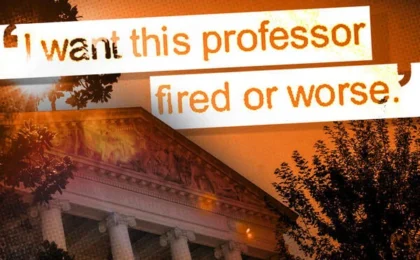
In 1892, Charlotte Perkins Gilman published "The Yellow Wallpaper," a harrowing short story detailing the psychological disintegration of a woman confined by her physician-husband under the guise of a "rest-cure." By stripping her of her writing, her professional agency, and her intellectual autonomy, the husband’s intervention effectively induced the very breakdown he claimed to be treating. Today, a striking parallel is emerging in the American landscape: critics of higher education, spanning the political spectrum, are prescribing a similar "rest-cure" to the nation’s universities. By casting faculty, administrators, and boards as fundamentally incompetent, these critics are attempting to strip higher education of its autonomy, effectively infantilizing the very institutions they once championed.
A Historical Anatomy of Anti-Intellectualism
The roots of this current hostility are deep and tangled. As historian Richard Hofstadter famously chronicled in his 1963 Pulitzer Prize-winning Anti-Intellectualism in American Life, the United States has always harbored a paradoxical relationship with its thinkers. Despite being founded by intellectuals, the nation has frequently relegated the academic to the status of an "outsider, a servant or a scapegoat."
This suspicion began in the Colonial period, where evangelical Protestants viewed formal education as a barrier to a direct, intuitive relationship with the divine. By the 19th century, this sentiment morphed into Jacksonian populism, which elevated the "self-made man" as a moral foil to the "corrupt, educated elite." This recurring narrative—that intellectuals are detached, elitist, and inherently suspicious—has provided the rhetorical foundation for every major wave of anti-intellectualism in the U.S.
From the Scopes Trial to the McCarthy Era
The 20th century saw these cultural suspicions codified into law and institutional policy. The 1925 Scopes "Monkey" Trial was the first modern manifestation of the state attempting to police the boundaries of scientific truth. By prohibiting the teaching of evolution, the Tennessee legislature asserted that the state had the right to override academic consensus in favor of religious dogma.
This paternalistic urge reached a fever pitch during the Cold War. Senator Joseph McCarthy’s crusade against "Red books" and academic dissenters in the 1950s utilized the same rhetorical tactics seen today. By framing libraries as hotbeds of subversion and professors as existential threats, McCarthyism created a chilling effect that silenced intellectual inquiry. Whether it was targeting the literary works of Langston Hughes or purging faculty from Harvard and Columbia, the message was clear: the public must be "protected" from the intellectual, and the university must be brought to heel.
The Modern "Deja Vu": A New Wave of Control
The current climate is, in many respects, a synthesis of these historical trends. Since 2021, PEN America has documented nearly 23,000 instances of book bans in public schools—a figure unprecedented in modern American history. These bans disproportionately target works addressing race, systemic racism, LGBTQ+ themes, and sexual violence.
However, the modern iteration is distinct. Today’s critics have moved beyond merely labeling scholars as "godless" or "subversive." They have shifted to a discourse of incompetence. By framing university leaders as children—incapable of managing their own hiring, curriculum, or donor relations—politicians and pundits are asserting that the academy requires constant, intrusive supervision. This is most evident in recent attempts by the Trump administration and various state legislatures to leverage funding as a cudgel to force compliance on topics ranging from transgender rights to diversity, equity, and inclusion (DEI) programming.
The Paradox of the Corporate University
The most complex aspect of this crisis is that the very forces now calling for tighter control—conservative think tanks, state legislatures, and even mainstream media outlets—are the same forces that spent the last century forcing the university into a corporate mold.
The Morrill Acts and the Utility Model
The transition began in earnest with the Morrill Land-Grant College Acts of 1862 and 1890. For the first time, the rationale for higher education shifted from the cultivation of civic virtue to the promotion of economic productivity. Universities were reconceived as factories for technical training, agricultural science, and national development. While this democratized access to higher education, it also laid the groundwork for the "accountability-to-taxpayers" argument that now serves as the primary justification for political interference.

The Veblenian Critique
In 1918, economist Thorstein Veblen issued a foundational warning in The Higher Learning in America. He criticized the rise of "captains of erudition"—presidents who adopted the methods of industrial CEOs. Veblen argued that the introduction of business logic—efficiency, marketability, and measurable outputs—was structurally incompatible with the disinterested pursuit of knowledge. He warned that treating faculty as mere employees would eventually strip the university of its intellectual soul.
The Rise of the "Multiversity"
The corporatization accelerated post-WWII, bolstered by massive federal research funding and the G.I. Bill. By 1963, Clark Kerr’s The Uses of the University cemented the concept of the "multiversity." Kerr argued that the university had no single purpose, but was instead a collection of corporate enterprises serving the "national purpose."
This model, while economically successful, invited the exact scrutiny the university now faces. When an institution claims to be a service provider for the state, the economy, and the public, it becomes difficult to argue against the idea that the "client" has the right to dictate the terms of service. The student uprisings of the 1960s, epitomized by Mario Savio’s "Bodies Upon the Gears" speech, were a direct response to this dehumanization. Savio warned that when the university becomes a machine, it inevitably ceases to function as a home for free thought.
Implications for the Future
The irony is palpable: critics have turned the university into a corporate entity, and are now using that corporate status to demand the right to manage it like a subsidiary. The rhetoric of infantilization—the assertion that boards and faculty cannot be trusted—is the final stage of this process.
Consequences of Administrative Intrusion
- The Chilling Effect on Research: When faculty fear that their professional decisions will be subject to political oversight, they self-censor. This stifles the very innovation that the "corporate" model of the university claims to prize.
- Erosion of Institutional Legitimacy: By constantly framing university leadership as incompetent, external critics are systematically destroying the public trust necessary for the institution to function.
- The Loss of Academic Autonomy: The legal protections established by cases like Dartmouth College v. Woodward (1819) are being hollowed out. While the courts once guarded the college charter as a private contract, current political maneuvers seek to bypass these protections by making state funding contingent on political compliance.
Conclusion: Reclaiming the Mission
The crisis facing higher education is not merely a matter of partisan politics; it is a structural failure born of a century of conflicting priorities. We have treated the university as a factory, a government agency, a commercial enterprise, and a social utility, all while expecting it to remain a sanctuary for radical intellectual inquiry.
The rhetoric of infantilization is a symptom of this identity crisis. If the university is to survive the current wave of anti-intellectualism, it must move beyond the "multiversity" model. This requires a return to the core principles of academic freedom and the recognition that an institution dedicated to the pursuit of truth cannot also be an instrument of state control or a subordinate of market forces.
As the history of the last hundred years shows, whenever the state or the public attempts to "cure" the university by stripping it of its agency, the result is not stability, but the systematic erosion of the very intellectual life that sustains a free society. To stop the cycle, we must stop treating the university as a child that needs discipline, and start recognizing it as an independent institution whose value lies precisely in its ability to resist the pressures of the day.
This is part one of a series chronicling the damaging rhetoric of anti-intellectualism in the U.S. In future installments, we will examine the impact of these policies on specific disciplines and the long-term economic consequences of a hollowed-out academic core.