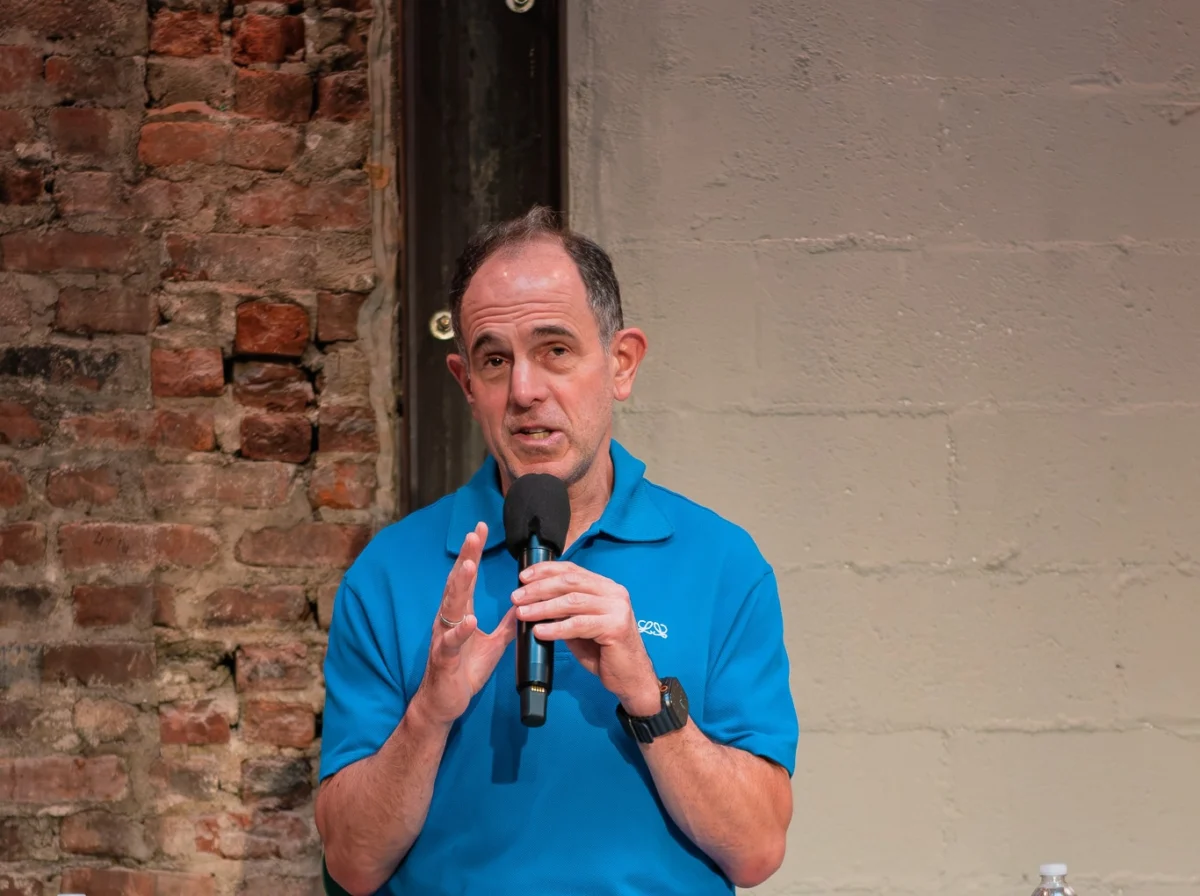
In a seismic shift for the venture capital landscape, Khosla Ventures—a firm synonymous with the prestige of Menlo Park’s Sand Hill Road—is planting its first official flag outside of California. Keith Rabois, a veteran partner at the firm and a long-time fixture of the Silicon Valley elite, confirmed Thursday night at TechCrunch’s StrictlyVC event in New York’s West Village that the firm is establishing a permanent office on 14th Street.
The move marks a departure from a 13-year tradition of centralized West Coast operations. For a firm that famously lacks even a satellite office in San Francisco, the decision to establish a dedicated hub in the heart of New York City represents a strategic evolution, acknowledging the shifting gravity of global innovation and the changing requirements of the modern venture capital model.
The Strategic Shift: Breaking the Sand Hill Road Monopoly
For decades, the "Sand Hill Road" address served as a badge of legitimacy for venture capital firms. Khosla Ventures has long operated as a bastion of this traditional model. However, the firm’s impending expansion into Manhattan—slated for this fall—suggests that the monopoly of the Bay Area on high-stakes venture capital is under pressure.
"We don’t even have an SF office, so this is a very big step for us," Rabois remarked during the event. While the construction timeline remains, in his own words, "very vague," the commitment is clear. The firm is not merely looking to rent desk space; it is looking to fundamentally change how it interacts with its portfolio companies and the broader ecosystem of Fortune 500 corporations.
The "Executive Briefing Center" Model
The most innovative aspect of the new New York office is its intended utility. Rather than functioning as a standard outpost for deal-sourcing or networking, the space is being designed as an "executive briefing center."
The firm plans to host cohorts of 10 to 12 portfolio companies on a rotating, four-day-a-week schedule. The primary objective? Direct, high-level interaction with Fortune 500 companies. By acting as a physical conduit between nimble startups and established corporate giants, Khosla Ventures aims to accelerate the sales cycle for its portfolio, providing them with immediate access to pilots and customer feedback loops that are often difficult to manufacture remotely.
Chronology of a Relocation
The decision to open the New York office is inextricably linked to the personal trajectory of Keith Rabois. Earlier this year, Rabois relocated to the East Coast to prioritize his family, moving closer to his husband, Jacob Helberg, who serves as the Under Secretary of State for Economic Growth, Energy, and the Environment.
This personal transition served as a catalyst for the firm’s broader re-evaluation of its geographical footprint. The timeline for this shift mirrors a broader trend among major venture firms that have begun to recognize that the "all-in-the-Bay-Area" approach may be insufficient for firms with global ambitions. While firms like Andreessen Horowitz and Sequoia Capital have maintained smaller, long-standing presences in New York, Khosla’s arrival signals a more deliberate, infrastructure-heavy approach to East Coast integration.
The Talent Paradox: Juniors vs. Seniors
Perhaps the most compelling insight Rabois shared during the event concerned the reality of talent density in New York compared to the Bay Area. When pressed on whether New York possesses the necessary depth to sustain high-growth tech firms, Rabois offered a nuanced, bifurcated perspective.
The Junior Talent Boom
At the junior level, Rabois is unequivocally bullish. He pointed to his success with Ramp, the fintech unicorn he has backed, as a case study. "Individual contributor level, right out of school, absolutely," he said. "We’ve been tapping into right-out-of-school graduates and been able to create a critical density of talent from the intern class onward that is extraordinary."
For Rabois, the influx of top-tier university graduates into New York’s tech scene has created a self-sustaining cycle of productivity that rivals, and in some ways surpasses, the traditional Bay Area pipeline.
The Senior Executive Bottleneck
The narrative shifts significantly when discussing "architect-level" engineers and senior executive talent. Rabois identifies a "pain point" that is less about the lack of talent and more about the friction of urban geography.
"If you have an in-office culture, most of the more senior people that reside in the New York area live outside the city," Rabois explained. The commute from the suburbs—a reality Rabois knows well from his own upbringing—creates a logistical barrier to the five-day-a-week office culture that many high-growth companies still covet.
"When you need to recruit proven executive talent—a CFO, an SVP of Sales—someone who has a lot of gravitas and experience, it’s really hard to have them in the office five days a week," he added. "Unless they are independently wealthy, they really can’t afford to raise a family right in the middle of the city."
Consequently, his strategy for companies like Ramp has been to eschew the hunt for external senior leadership entirely, opting instead to "build from the bottom up." While he admits this strategy is intentional, he acknowledges that for firms requiring rapid scaling via experienced leadership, the "New York commute" remains a significant competitive disadvantage compared to the more centralized, albeit aging, infrastructure of the Bay Area.
Supporting Data: The Shifting Tech Landscape
The move by Khosla Ventures arrives in the wake of a provocative report from commercial real estate services firm CBRE, which indicated that New York City has, for the first time in 13 years, surpassed the San Francisco Bay Area in total tech talent headcount.
Key Factors in the Shift:
- The AI Pivot: Large finance firms in New York have been aggressively recruiting AI-specialized talent, a trend that has bolstered the city’s tech-worker population.
- Bay Area Contraction: As major tech employers in the Bay Area have undergone rounds of layoffs and belt-tightening, the concentration of talent in California has seen a minor decline, while New York has remained relatively resilient.
- Institutional Adoption: The presence of established VCs like Khosla further validates the narrative that New York is no longer just a "finance hub" but a primary destination for deep-tech and software innovation.
However, skepticism remains. During the StrictlyVC event, the room was divided. While the data suggests a trend, many industry insiders—even those based in New York—expressed doubt that the city has truly unseated the Bay Area as the premier destination for high-growth, venture-backed companies.
Implications: A New Era for Venture Capital
What does the arrival of a titan like Khosla Ventures mean for the future of the industry?
- Decentralization as a Feature, Not a Bug: The era of the "single-office" firm is fading. As firms expand their footprint, they are moving closer to the customers (the Fortune 500 companies) and the talent pools that align with their specific portfolio needs.
- The Rise of the "Briefing Center": If the Khosla experiment succeeds, we may see other firms pivot their real estate investments away from "partner offices" and toward "value-add centers" that facilitate networking and business development for their portfolio companies.
- The Talent War Remains Geographical: Despite the promise of remote work, Rabois’s comments underscore that the "in-office" debate is far from over. For firms that demand face-to-face interaction, the geography of where talent lives—and how they commute—will continue to dictate the success of their recruiting strategies.
As Khosla Ventures prepares to open its doors on 14th Street this fall, the industry will be watching closely. Whether this is the beginning of a mass migration of venture capital or a one-off strategic expansion remains to be seen. But one thing is certain: the conversation about where the future of tech is built has officially moved beyond the borders of Northern California.