In the halls of Kentucky’s public universities, a quiet transformation has taken hold. Since the passage of House Bill 4 (HB 4)—a sweeping legislative mandate that dismantled Diversity, Equity, and Inclusion (DEI) offices and programs across the state’s higher education system—the relationship between state government and academic institutions has fundamentally shifted. Newly released public records reveal a landscape of increased political scrutiny, internal anxiety, and a complex, often ambiguous enforcement mechanism that has left administrators and faculty struggling to navigate the new legal reality.
The records, obtained by James Orlick, a doctoral candidate at the University of Louisville, provide an unprecedented window into the enforcement of HB 4. They detail a series of communications between state legislators, the Attorney General’s office, and university leadership, highlighting how the law is being interpreted, contested, and applied in real-time.
The Anatomy of Political Oversight
The scrutiny begins at the top. The emails show that the office of the Kentucky Attorney General has become a central clearinghouse for allegations of noncompliance. When state senators or private activists believe a university has stepped out of line, they often turn directly to the General Counsel of the Attorney General’s office, Christopher Thacker.
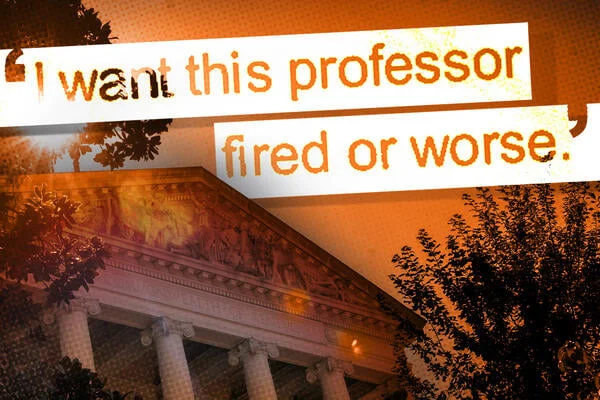
In one notable instance from last October, Republican State Senator Gary Boswell contacted the Attorney General’s office with a personal grievance. His granddaughter, a student at Murray State University, had reported that a professor allegedly claimed to have altered a course title specifically to circumvent state law. Boswell did not mince words in his correspondence. "I want this professor fired or worse," he wrote, alleging that the course material relied on works by Ibram X. Kendi, the author of How to Be an Antiracist.
This email, while personal in origin, underscores a broader trend: the direct reporting of faculty behavior by students and family members to political authorities. While the Attorney General’s office reached out to Murray State to investigate, the trail ends in the provided records without a clear resolution. This ambiguity—where accusations are logged but outcomes are rarely publicized—has created a climate of uncertainty for educators across the Commonwealth.
Chronology of a Legislative Shift
To understand the current tension, one must look back to the 2025 legislative session. After Democratic Governor Andy Beshear vetoed the bill, the Republican-led General Assembly moved quickly to override the veto, enshrining HB 4 into law. The statute is broad, aiming to eliminate DEI-related offices, training, and affirmative action policies.
- Early 2025: HB 4 is passed by the legislature, overriding the Governor’s veto.
- Spring/Summer 2025: Universities begin the painful process of dismantling DEI departments and revising student organization policies to ensure they do not run afoul of the new prohibition on "differential treatment" based on identity.
- September 2025: The Attorney General’s office, led by Thacker, formalizes the monitoring process by inviting university presidents to a summit, noting that "our review identified a few areas of apparent non-compliance."
- Late 2025–Present: A steady stream of complaints, bolstered by undercover videos from conservative groups like Accuracy in Media (AIM), continues to flow into state offices, keeping university legal teams on high alert.
The Northern Kentucky University Precedent
Perhaps the most concrete example of the law’s reach is the case of Northern Kentucky University (NKU). The records show that in June 2025, the university revoked long-standing benefits for campus ministers, including university email addresses, parking passes, and recreation center discounts.
The administration cited HB 4 as the catalyst for these changes, arguing that as a public institution, they could no longer provide "special benefits" to religiously affiliated groups that were not available to other organizations. This move drew immediate fire from the Kentucky Baptist Convention. Lawrence Smith, a spokesperson for the group, characterized the move as an "overreach" and noted that no other public institution in Kentucky had interpreted the law in such a restrictive manner.
Despite the backlash, NKU has remained firm, maintaining that their actions were necessary to align with both the First Amendment and the strictures of HB 4. The Attorney General’s office, after receiving complaints about the policy change, reviewed the university’s actions and ultimately required no changes, effectively setting a precedent for how public institutions might navigate the intersection of religious freedom and state-mandated secularism.
Testing the Limits: Academic Freedom vs. Indoctrination
The legislation specifically prohibits requiring courses whose "primary purpose is to indoctrinate participants with a discriminatory concept." However, the records reveal a fascinating tension between those who drafted the law and those who seek to enforce it.
Representative T.J. Roberts, a key supporter of the law, has been actively involved in facilitating investigations into university conduct, connecting activists like Accuracy in Media’s Adam Guillette with the Attorney General’s office. Yet, even within the pro-enforcement camp, there is disagreement on strategy.
Representative Jennifer Decker, the lead sponsor of HB 4, cautioned against overzealous enforcement in an email to Guillette and Thacker. She noted that the law was "drafted intentionally to avoid First Amendment challenges" and explicitly protects academic instruction and faculty speech. She warned that flagging standard curriculum discussions as violations could undermine the credibility of the entire initiative. "If advocates overreach," she wrote, "it risks undermining credibility when we ask for enforcement to stop true noncompliance."
This internal debate highlights a fundamental problem: who decides where the line is between "academic instruction" and "indoctrination"? For professors, this creates a chilling effect, where the fear of being "flagged" by an undercover video or a student report may lead to self-censorship, even if the law technically protects their classroom autonomy.
Implications for the Future of Higher Education
The ramifications of these developments extend far beyond the borders of Kentucky. As states across the country consider similar anti-DEI legislation, the Kentucky experience serves as both a roadmap and a cautionary tale.
For students and faculty, the shift represents a profound change in the campus atmosphere. James Orlick, the researcher who obtained the documents, argued that the current oversight mechanisms mirror tactics found in more authoritarian regimes. "State monitoring, political oversight, institutional restructuring and restrictions on university autonomy are tactics that we associate with governments such as Orbán’s Hungary or Putin’s Russia," Orlick said. "Seeing some of these same mechanisms emerge in public higher ed should concern us."
Conversely, proponents of the law argue that it is a necessary correction to a system that they believe has prioritized ideological conformity over meritocracy. For them, the monitoring of universities is not an infringement on freedom, but a required safeguard to ensure that public institutions remain neutral and inclusive of all viewpoints.
Conclusion: A Fragile Balance
As the dust settles on the first full year of HB 4’s implementation, the state of Kentucky remains locked in a debate over the purpose of public higher education. The Attorney General’s office continues to receive reports, university lawyers continue to scrutinize curricula and student policies, and faculty continue to operate under the shadow of potential political intervention.
What is clear from the records is that the "DEI ban" is not merely a policy change; it is a fundamental reconfiguration of the relationship between the state and the ivory tower. Whether this leads to a more "neutral" university system or one that is hampered by political fear remains to be seen. For now, the only certainty is that the oversight is here to stay, and the boundaries of academic freedom in Kentucky are being redrawn, one email at a time.