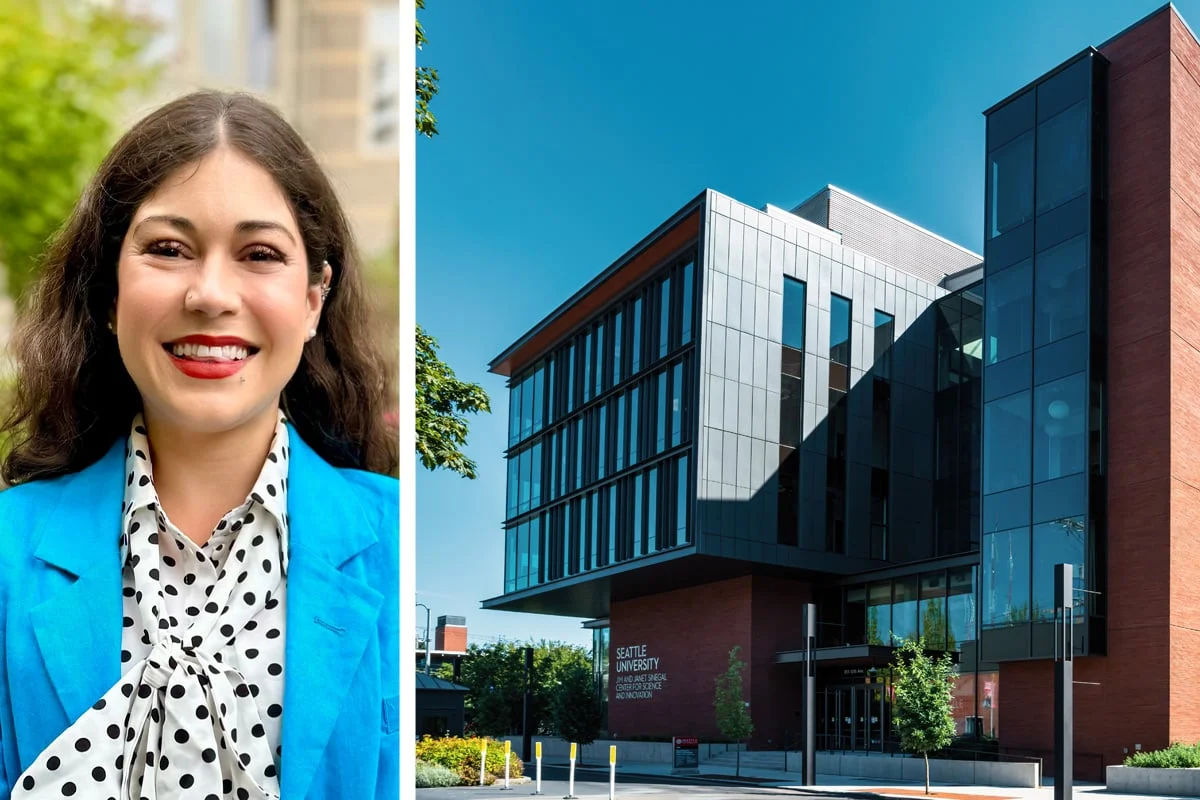
The intersection of academic freedom, institutional reputation, and the heated political climate surrounding the Israel-Palestine conflict has claimed another casualty in higher education. Carmen Rivera, a non-tenured criminal justice professor at Seattle University, saw her employment abruptly terminated on June 30, just two weeks after she published a viral social media critique of the university’s provost.
While Seattle University administration maintains that the non-renewal of Rivera’s contract was a standard administrative maneuver necessitated by structural changes and a lack of available teaching load, the timing and context of the decision have sparked a firestorm of controversy. Rivera, who served in a dual capacity as both an educator and an assistant dean, contends that the university’s stated reasoning is a thin veil for retaliation against a faculty member who dared to hold the institution’s leadership accountable in a public forum.
The Catalyst: A Viral Video and a Disputed Gesture
The sequence of events leading to Rivera’s dismissal began on June 14, during Seattle University’s commencement ceremony. As a graduating student approached Provost Shane Martin on the stage, she unfurled a Palestinian flag. Video footage captured the moment Martin grabbed the flag from the student’s hands. A brief, visible struggle ensued before Martin pulled the flag behind his back, effectively concealing it while the pair posed for a formal photograph. He subsequently returned the flag to the student as she exited the stage.
Rivera, who witnessed the event, took to Instagram later that day to post the video. Before hitting "publish," she reached out to the Dean of the College of Arts and Sciences, Monica Casper, not to seek authorization, but to inform her of the impending post—a gesture of professional courtesy she believed was prudent.
In her post, which quickly garnered over 900,000 views, Rivera expressed deep professional and personal discomfort. "I am disturbed by how the provost handled this situation. I believe I’ve seen other flags waved by students and not receive this response," she wrote. Her commentary went beyond the immediate incident, touching on the broader culture of fear within academia: "I understand I may receive backlash for highlighting anything negative that could damage the institution, and institutions are made of people. They’re not real. People are real and I know too many who are afraid to say anything. I am privileged and fed up enough to not be afraid."
Provost Martin later issued a statement apologizing for the incident, claiming he had misinterpreted the student’s body language and was attempting to avoid physical contact in respect of the student’s Muslim faith. Notably, the statement made no reference to the flag itself or the act of confiscation.
A Chronology of Escalation
The fallout for Rivera was swift and, according to her account, increasingly coercive. The days following the post were marked by high-tension communications with university leadership.
- June 14: Rivera posts the video of the commencement incident to her Instagram account.
- June 15–16: Rivera engages in two separate telephone conversations with Dean Monica Casper. Rivera alleges that during these calls, she was informed that she was "unofficially" in trouble and that Dean Casper’s own job security had been threatened by senior leadership because she was unable to "control" Rivera’s social media presence.
- Late June: Rivera reports being told by colleagues that the offices of both the university president and the provost were actively seeking her departure.
- June 25: In a one-on-one meeting, Dean Casper reportedly claimed ignorance regarding the status of Rivera’s contract.
- Late June: Rivera receives official notification that her contract will not be renewed. The university cites a reorganization of the dean’s leadership team—specifically the elimination of the assistant dean position—and a lack of available courses to fill a full-time teaching load.
- June 30: Rivera’s employment at Seattle University officially concludes.
The Discrepancy: Administrative Logic vs. Departmental Needs
The justification provided by Seattle University has been met with skepticism from Rivera and several members of the faculty. The university’s formal email stated that they could not offer her a full-time position because there were not enough courses available to offset the reduction in her administrative responsibilities.
However, Rivera disputes this narrative entirely. She points to conversations held as recently as March, during which her department chair confirmed that she would be expected to carry a full course load for the 2027–28 academic year, coinciding with the university’s transition from a quarter system to a semester calendar. Furthermore, Rivera notes that the Criminal Justice and Psychology departments are among the largest in the College of Arts and Sciences, and they routinely face a shortage of instructors required to meet accreditation standards.
"I know we don’t have enough instructors," Rivera stated. "For them to just blatantly say that they don’t have enough classes for me is false."

Institutional Policy and Academic Freedom
The Seattle University Faculty Handbook provides a framework for "extramural speech," stipulating that faculty members, when speaking as citizens, should remain free from institutional censorship. It explicitly states that "academic freedom is supported and sustained by robust processes and practices of shared governance, which affirm the right of faculty members to discuss, criticize, and debate university policies and priorities."
Yet, the handbook also includes a caveat: faculty should remember that the public may judge their profession and the university based on their communications. This ambiguity is at the heart of the current dispute. While the university has no explicit policy governing social media usage, the interpretation of what constitutes a "disruption" to the institution appears to be wielded as a tool for disciplinary action against dissenting voices.
A Growing Trend in Higher Education
Rivera’s case is far from an isolated incident. Across the United States, universities are grappling with a wave of faculty discipline related to pro-Palestinian speech and activism. The trend has created a climate of uncertainty for non-tenured faculty, who lack the robust job protections afforded to their tenured counterparts.
Recent examples include:
- San José State University: Professor Sang Hea Kil was fired for participating in pro-Palestinian demonstrations, only to be reinstated following an arbitrator’s ruling.
- School of the Art Institute of Chicago: Professor Savneet Talwar was placed on leave after providing students with a case study involving a woman upset by violence in Gaza.
- University of Michigan: Professor Derek Peterson faced calls for termination from university board members after delivering a commencement speech that praised pro-Palestinian protesters.
These cases suggest a broader, systemic struggle within higher education institutions to balance the mandates of institutional neutrality, donor relations, and the protection of free inquiry.
Implications for the Future of Faculty Dissent
Rivera, who has consulted with legal counsel, intends to challenge the university’s decision in court. For her, the battle is not merely about her personal employment but about the integrity of the university as a space for critical thought.
"It’s incredibly discouraging and demoralizing," Rivera said. "I fully believe they are doing this on purpose to scare other faculty members. I believe they are making an example of me."
The implications of this case are profound. If faculty members can be dismissed—under the guise of administrative restructuring—for criticizing university leadership or engaging in political speech, the scope of academic freedom becomes severely constricted. For Seattle University, the silence of a spokesperson, who cited the policy of not commenting on "individual personnel matters," leaves the institution’s public image in a precarious position.
As the legal battle looms, the university community is left to wonder: in an era where social media archives every critique and public scrutiny is constant, what space remains for the faculty member who refuses to remain silent? For Carmen Rivera, the answer is clear—she intends to find out in a court of law.