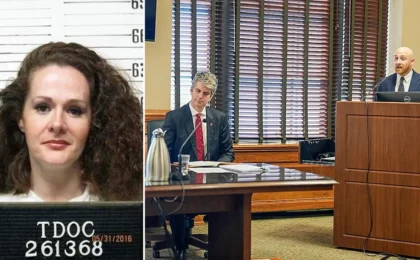
In a decisive display of legislative authority, the United States House of Representatives officially held billionaire investor and Apollo Global Management co-founder Leon Black in contempt of Congress on Wednesday. The resolution, passed by unanimous consent, marks a significant escalation in the House Oversight Committee’s sprawling probe into the network surrounding the late convicted sex offender Jeffrey Epstein.
The move follows Black’s persistent refusal to comply with multiple congressional subpoenas, setting the stage for a potential criminal referral to the Department of Justice. As lawmakers intensify their scrutiny of the Epstein-Maxwell circle, the case of Leon Black has become a focal point for questions regarding accountability for high-net-worth individuals who maintained close financial relationships with the disgraced financier.
Chronology of the Investigation
The current legal standoff is the culmination of months of friction between the House Oversight Committee and the billionaire financier. To understand how the situation reached the floor of the House, one must examine the timeline of interaction between the legislative branch and Black’s legal team.
The Initial Engagement (June 2024)
In June, Leon Black voluntarily appeared before the House Oversight Committee. During this testimony, he sought to address growing public and political concern regarding his past business dealings with Jeffrey Epstein. Black confirmed that he had paid Epstein approximately $158 million for services described as "tax and estate-planning advice." During this session, Black maintained that he was entirely unaware of the scope and nature of Epstein’s criminal activities, characterizing their relationship as strictly professional and financial.
The Breakdown of Cooperation (September 2024)
The committee’s mood shifted from cooperation to confrontation in early September. After the initial hearing, investigators identified gaps in the information provided, specifically regarding various nondisclosure agreements (NDAs) Black had signed. A deposition was scheduled for September 3, 2024, which Black failed to attend. Furthermore, he failed to produce the requested documents related to his financial arrangements with Epstein, prompting the committee to issue formal subpoenas.
The Legislative Response (October 2024)
Following the expiration of deadlines for the subpoenas, the House Oversight Committee met on Tuesday to vote on the contempt resolution. The committee voted unanimously to recommend the action to the full House. By Wednesday, the resolution was adopted by the chamber without a recorded vote, underscoring a bipartisan sense of urgency regarding the committee’s oversight mandate.
The Core of the Conflict: Why the Subpoenas Matter
At the heart of this confrontation is the committee’s effort to map the "Epstein network." Lawmakers are not merely investigating Epstein’s individual crimes; they are examining the systemic failure of oversight and the institutional connections that allowed his activities to persist for decades.
The $158 Million Question
While Black has publicly stated that his payments to Epstein were for tax and estate planning, the sheer volume of these payments has raised red flags among investigators. The committee is interested in whether these funds were used to facilitate, hide, or insulate Epstein from legal scrutiny. By withholding documents—specifically the NDAs—Black has effectively blocked the committee’s ability to determine if there were broader legal arrangements designed to protect the financier and his associates.
The Role of Nondisclosure Agreements
Nondisclosure agreements have become a central element of the committee’s probe. Lawmakers argue that these legal instruments were frequently used by Epstein and his associates to silence victims and witnesses. By refusing to turn over these documents, the committee alleges that Black is obstructing a federal inquiry into how the federal government handled the initial criminal cases against Epstein and his long-time associate, Ghislaine Maxwell.
Official Responses: A Clash of Perspectives
The standoff has produced a sharp divergence in narrative between the legislative committee and Black’s legal counsel.
The Committee’s Stance
Panel Chairman Jamie Comer has been unequivocal in his rhetoric. Following the House vote, Comer released a statement emphasizing the principle of legal equality. "No one is above the law," Comer stated. "Leon Black defied two subpoenas, and the US House of Representatives acted swiftly to find him in contempt of Congress."
Comer further emphasized that the investigation is about providing "transparency for the American people and justice for survivors." The committee’s goal, as stated, is to peel back the layers of the federal government’s handling of the Epstein and Maxwell cases, investigating whether institutional influence played a role in the initial, controversial plea deals granted to Epstein in the mid-2000s.
The Defense’s Argument
Conversely, Black’s legal team has characterized the House’s actions as an overreach and a violation of due process. In statements released to US media outlets, his lawyers labeled the contempt citation "outrageous," accusing the Oversight Committee of rushing the process to score political points rather than seeking legitimate information. They have signaled their intention to continue a court challenge against the subpoenas, arguing that the committee’s requests are overly broad and seek information protected by attorney-client or business confidentiality.
Supporting Data: The Epstein Scandal’s Lasting Shadow
The investigation into Epstein, who died in a Manhattan federal jail cell in 2019 in what was ruled a suicide, continues to yield ripples across the American establishment.
- The Scale of Influence: Epstein’s network spanned the worlds of academia, science, politics, and finance. The House Oversight Committee’s interest in Black is part of a broader effort to audit these connections.
- Governmental Accountability: The committee is specifically tasked with investigating the Department of Justice’s and the Bureau of Prisons’ failures. The focus is on the 2008 non-prosecution agreement that allowed Epstein to avoid federal charges, a deal that has been widely criticized as being influenced by powerful political and business figures.
- The Maxwell Trial: The conviction of Ghislaine Maxwell in 2021 provided further evidence of the systemic nature of the abuse, yet questions remain about who facilitated her and Epstein’s operations. The committee argues that without the full cooperation of individuals like Black, the public may never fully understand the extent of the facilitation network.
Implications: What Comes Next?
The referral of the contempt of Congress charge to the Justice Department introduces a new layer of complexity to the legal landscape.
Potential Criminal Charges
While the House has voted to hold Black in contempt, the ultimate decision to prosecute lies with the US Department of Justice. Historically, contempt of Congress referrals are complex, involving lengthy legal battles. Should the DOJ decide to pursue charges, it would signify a major confrontation between the executive branch’s prosecutorial power and the private sector’s legal defenses.
Impact on Financial Transparency
Beyond the immediate legal peril for Black, this case sets a significant precedent. It signals that high-net-worth individuals who have previously operated in the shadows of the Epstein scandal may no longer be able to rely on private settlements and non-disclosure agreements to shield their interactions from congressional oversight.
The Political Fallout
For the House Oversight Committee, the successful passage of the contempt resolution is a significant procedural victory. However, it also raises the stakes. If the DOJ does not move forward, the committee risks appearing toothless. If it does, the legal proceedings could drag on for years, keeping the Epstein scandal firmly in the headlines during a period of intense public distrust of both the political and financial elite.
Conclusion
The decision to hold Leon Black in contempt of Congress is a landmark moment in the post-mortem investigation of the Jeffrey Epstein scandal. It highlights the friction between a legislative body determined to uncover the mechanics of a criminal network and a private citizen who believes his constitutional rights and contractual obligations to privacy are being violated.
As the matter shifts to the Justice Department, the nation will watch to see if the legal system can pierce the veil of secrecy that has surrounded the Epstein case for nearly two decades. Whether this action leads to a new wave of transparency or becomes another stalled chapter in the long-running saga, it confirms that the legislative interest in the financier’s inner circle remains as potent as ever. The pursuit of "justice for survivors" and "transparency for the American people," as articulated by Chairman Comer, remains the stated bedrock of this investigation—a goal that is now inextricably tied to the outcome of the case against Leon Black.