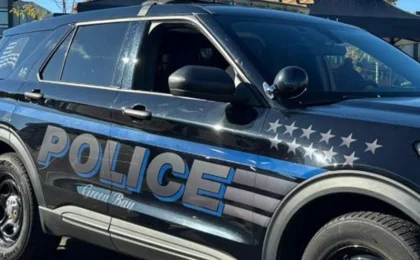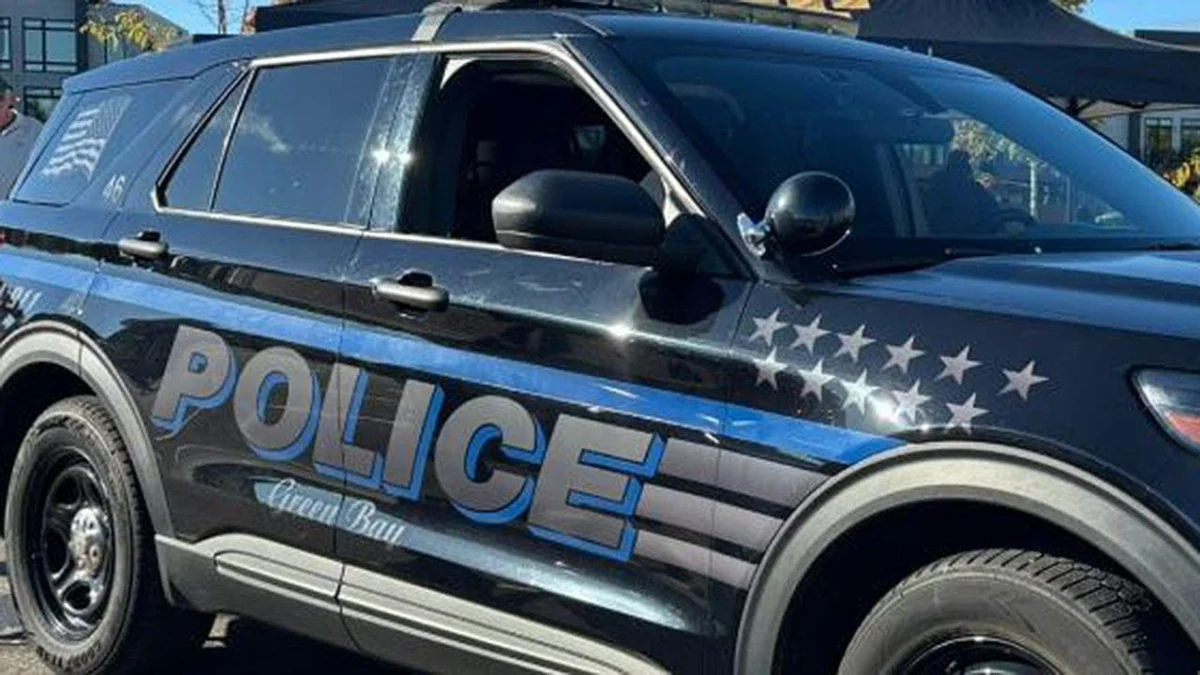
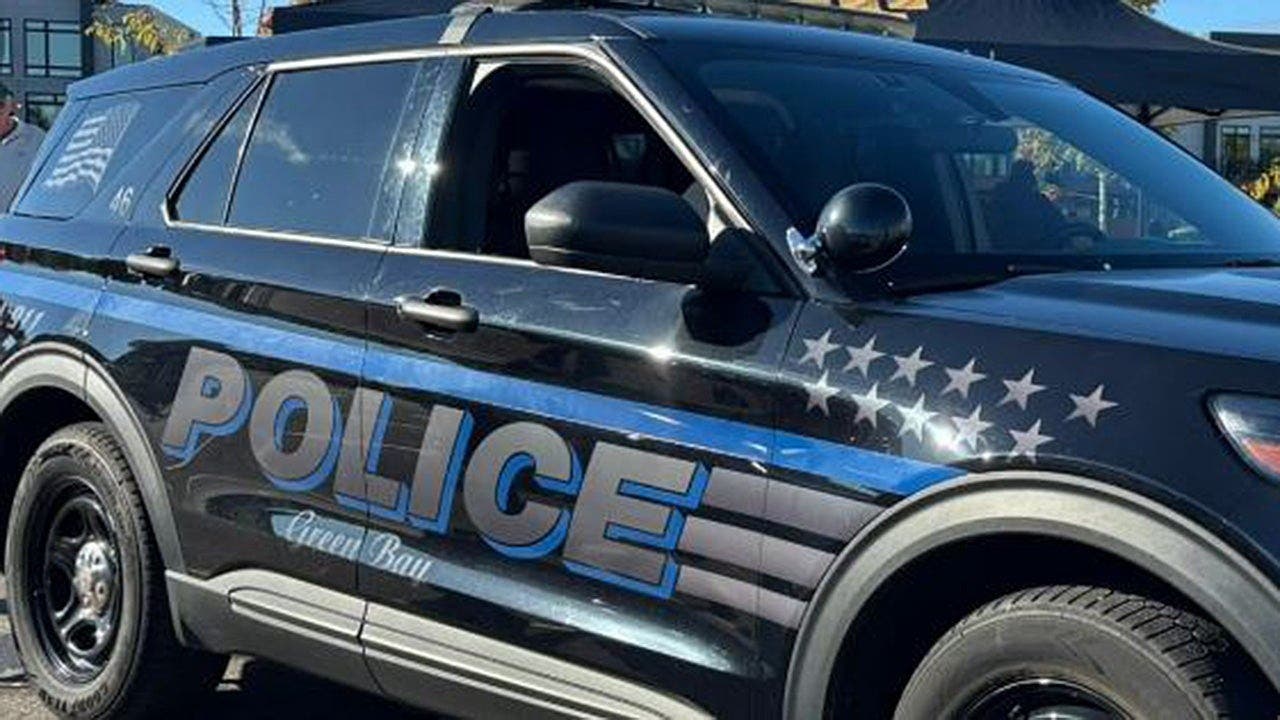
A chaotic sequence of events unfolded in Green Bay, Wisconsin, in the early hours of Saturday morning, leaving four law enforcement officers injured and sparking a multi-agency investigation. What began as a response to a routine late-night disturbance at a local food truck rapidly escalated into a vehicle assault on a crowd, an officer-involved shooting, a high-stakes police pursuit, and the ultimate arrest of a suspect on suspicion of driving while intoxicated.
This comprehensive report details the primary facts of the incident, provides a minute-by-minute chronology of the escalation, analyzes the tactical and legal frameworks surrounding the police response, highlights official statements from leadership, and explores the broader implications for late-night policing and public safety.
Main Facts of the Incident
On Saturday morning, at approximately 2:15 a.m., officers with the Green Bay Police Department responded to reports of a physical disturbance near a mobile food vendor. As officers attempted to de-escalate the situation and take several non-compliant individuals into custody, a vehicle suddenly accelerated toward the assembled crowd of bystanders and active-duty police officers.
In response to the imminent threat of death or great bodily harm posed by the oncoming vehicle, at least one Green Bay police officer discharged their service weapon. The suspect driver eluded the immediate scene, initiating a motor vehicle pursuit. The chase was brought to an end when officers executed a tactical Precision Immobilization Technique (PIT) maneuver, forcing the suspect vehicle to a stop.
The driver was apprehended without further incident and faces charges related to Operating a Vehicle While Intoxicated (OWI), among other potential felony charges. Four police officers sustained non-life-threatening injuries during the multi-phased incident. Fortunately, no injuries were reported as a result of the officer-involved shooting.
Chronology of Events
[02:15 AM] GBPD responds to a food truck disturbance; physical altercation ensues during arrest attempts.
   │
   ▼
[02:20 AM] A vehicle accelerates toward the crowd/officers; an officer opens fire; the suspect flees.
   │
   ▼
[02:25 AM] Officers initiate a pursuit; a tactical PIT maneuver is executed to stop the fleeing vehicle.
   │
   ▼
[02:30 AM] Suspect is arrested on OWI suspicion; four injured officers receive medical treatment.
The Initial Disturbance at the Food Truck
At approximately 2:15 a.m.—a time that coincides with the closing of local bars and entertainment venues—Green Bay Police Department officers were dispatched to a food truck location. Upon arrival, officers encountered an active physical disturbance involving multiple individuals. As officers intervened to restore order and place several suspects under arrest, a physical struggle ensued. During this initial phase of the encounter, at least two officers sustained physical injuries while attempting to secure compliance from the combative individuals.
The Escalation and Vehicle Attack
While officers were actively engaged in making arrests and managing a crowd of onlookers, a vehicle unrelated to the initial police arrests drove directly toward the gathering of bystanders and law enforcement personnel. Witnessing a multi-ton vehicle accelerating toward vulnerable pedestrians and officers, a Green Bay police officer drew their service weapon and fired multiple rounds in an attempt to neutralize the vehicle threat. Despite the gunfire, the driver bypassed the officers and fled the immediate scene.
Pursuit and the Tactical PIT Maneuver
Green Bay police units immediately initiated a pursuit of the fleeing vehicle. Given the extreme danger the driver had already posed to the public, officers determined that the pursuit needed to be terminated rapidly to prevent further threat to the community.
Within minutes, pursuing officers aligned their patrol vehicle with the rear quarter-panel of the suspect’s car and executed a strategic PIT maneuver. The tactical contact forced the suspect’s vehicle to spin sideways, lose traction, and come to a safe, controlled stop, effectively ending the pursuit.
Arrest and Medical Treatment
Following the PIT maneuver, officers conducted a high-risk traffic stop and took the driver into custody without further resistance. The suspect was arrested on suspicion of Operating While Intoxicated (OWI).
Simultaneously, medical personnel responded to evaluate the injured officers and bystanders. The four injured officers were transported to a local medical facility, where they received treatment for non-life-threatening injuries. Officials confirmed that no individuals were struck or injured by the police officer’s discharged rounds.
Supporting Data and Operational Context
Understanding the PIT Maneuver
The Precision Immobilization Technique (PIT maneuver) is a highly specialized tactical intervention used by law enforcement to terminate pursuits.
- History: Developed by the Fairfax County Police Department in Virginia during the 1980s, the PIT maneuver is designed to spin a fleeing vehicle 180 degrees, stalling the engine and bringing the vehicle to a halt.
- Execution: An officer aligns the front bumper of the patrol vehicle with the rear quarter-panel of the target vehicle. With a deliberate steer into the target, the officer breaks the traction of the fleeing vehicle’s rear tires.
- Risk Assessment: The maneuver is generally restricted to specific speed limits—typically under 50 miles per hour—and is avoided near hazards such as steep ditches, utility poles, or dense pedestrian areas to minimize the risk of rollovers or severe secondary collisions.
Wisconsin OWI Laws and Enforcement Challenges
Operating While Intoxicated (OWI) remains a major focus of public safety in Wisconsin. Unlike many states where a first-offense DUI is treated as a misdemeanor criminal offense, a first-offense OWI in Wisconsin is typically prosecuted as a civil traffic forfeiture, unless aggravating factors are present.
| Offense Level | Typical Classification | Key Aggravating Factors |
|---|---|---|
| 1st Offense | Civil Forfeiture | Presence of minor passenger, injury to others, or fleeing. |
| 2nd & 3rd Offense | Criminal Misdemeanor | Prior convictions within a specific statutory window. |
| 4th Offense + | Felony | Classified as a felony regardless of circumstances. |
In this specific case, the suspect faces significant felony exposure. Operating a vehicle while intoxicated and using it to endanger officers or bystanders elevates the incident from a standard OWI to a series of high-level felony charges, including:
- First-degree recklessly endangering safety.
- Fleeing and eluding an officer.
- Battery to a law enforcement officer.
Challenges of Late-Night Entertainment District Policing
The incident highlights the operational vulnerabilities faced by law enforcement during "bar close" hours, which typically occur between 2:00 a.m. and 2:30 a.m. Food trucks and late-night eateries often become congregation points for highly intoxicated individuals leaving nearby establishments.
When large, intoxicated crowds gather in confined spaces alongside vehicular traffic, the potential for rapid escalation increases. Officers must simultaneously manage crowd control, physical altercations, and traffic safety, leaving them highly vulnerable to sudden, unpredictable external threats like an oncoming vehicle.
Official Responses and Statements
Green Bay Police Chief Chris Davis’s Briefing
Following the incident, Green Bay Police Chief Chris Davis held a press conference to clarify the timeline and address the ongoing investigation.
Chief Davis emphasized that the department is working to determine the exact relationship, if any, between the suspect driver and the initial disturbance at the food truck.
"At this point in the investigation, we do not know if the driver of the vehicle was connected to the initial disturbance that our officers were responding to near the food truck," Chief Davis stated.
He also clarified the timing and nature of the officers’ injuries, noting that the physical harm suffered by his staff was multi-causal. "A couple of the officers’ injuries occurred during the initial struggle to take individuals into custody from the food truck fight, prior to the vehicle accelerating toward the crowd," Davis explained. He expressed gratitude that the injuries sustained by all four officers were non-life-threatening and praised the swift action of the responding units to prevent further harm.
Independent Investigation Protocols
In accordance with Wisconsin state law and standard best practices for officer-involved shootings, the Green Bay Police Department will not investigate the discharge of its own officer’s firearm.
The Brown County Sheriff’s Office has been designated as the external lead agency to conduct an independent, transparent investigation into the officer-involved shooting. This protocol ensures impartiality and helps maintain public trust in the integrity of the investigative process. Once the Brown County Sheriff’s Office completes its inquiry, the findings will be forwarded to the local District Attorney’s office to determine if the use of force was legally justified.
Implications and Public Safety Analysis
Vehicles as Weapons of Opportunity
This incident in Green Bay reflects a challenging trend in modern public safety: the utilization of passenger vehicles as weapons of opportunity against crowds and first responders. Unlike traditional weapons, vehicles are ubiquitous, highly destructive, and difficult to neutralize without immediate, decisive action.
Law enforcement training has increasingly focused on "active vehicle threats," instructing officers on how to seek cover, utilize physical barriers, and understand the ballistic limitations of service weapons when attempting to stop a moving vehicle.
[Vehicle Threat Detected] ──► [Evaluate Backdrop / Bystanders] ──► [Lethal Force Authorized if Imminent Threat]
                                                                          │
                                                                          ▼
                                                              [Deploy Pursuit Countermeasures]
Policy Implications for Late-Night Urban Commerce
The violent escalation near a mobile food vendor may prompt municipal leaders in Green Bay and across Wisconsin to re-evaluate the zoning, licensing, and security requirements for late-night food trucks. Potential policy interventions include:
- Designated Pedestrian Zones: Temporarily closing certain high-traffic streets to vehicular traffic during weekend bar-closing hours to protect late-night patrons.
- Physical Barriers: Mandating the placement of temporary bollards or heavy city vehicles near popular food truck hubs to prevent vehicle-ramming incidents.
- Increased Security Mandates: Requiring mobile food vendors operating during late-night hours to fund private security or pay for a dedicated off-duty police presence to manage crowd dynamics.
As the joint investigation by the Green Bay Police Department and the Brown County Sheriff’s Office continues, the legal proceedings against the suspect driver are expected to shed more light on the motivations behind the assault. Meanwhile, the four injured officers are recovering, and the local community is left grappling with the volatility of late-night urban policing.