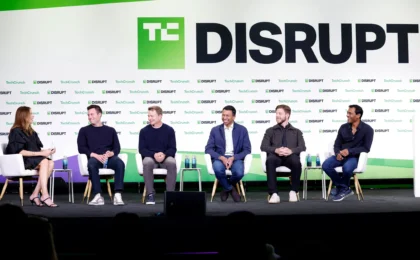
In the annals of Silicon Valley history, few names evoke as much nostalgia—or as much frustration—as Foursquare. Once the darling of the check-in revolution, the company that defined the early mobile social era has finally reached its curtain call. Following its acquisition by the advertising giant Infillion last month, the company’s co-founder, Dennis Crowley, has publicly confirmed a devastating reality for the startup’s stakeholders: the sale provided no financial return for its investors, nor its common stockholders.
The acquisition, which occurred for an undisclosed sum, serves as the final chapter in a 17-year saga that saw Foursquare evolve from a gamified social network into a data-driven enterprise platform, only to see its valuation evaporate in its final days.
The Anatomy of an Exit: A Zero-Return Reality
The news of the acquisition, while initially framed as a consolidation within the ad-tech space, took a somber turn when Dennis Crowley, who co-founded Foursquare in 2009, penned a candid reflection on his Substack. Crowley, who had long since stepped back from day-to-day operations, expressed his deep disappointment regarding the financial outcome of the Infillion deal.
Citing a breakdown of the transaction provided by an early angel investor, it became clear that the payout structure was such that neither preferred nor common shareholders realized any value from the exit. For a company that once commanded a massive cultural footprint and raised over $411 million in venture capital, this "zero-return" exit is a jarring conclusion.
"I was heartbroken by this ending," Crowley wrote. "So many people put so much time and energy and passion and love into building Foursquare—the company, the products, the brand, the culture. To our ~1,600 former employees over 17 years, I am sorry the Foursquare story ended in such a way that makes it seem like our collective efforts were worth… nothing?"
Chronology: From Check-ins to Enterprise Data
To understand the magnitude of this collapse, one must look at the arc of Foursquare’s existence.
The Golden Age (2009–2013)
Launched at South by Southwest (SXSW) in 2009, Foursquare popularized the "check-in." It turned the mundane act of visiting a coffee shop or a park into a game of strategy, complete with "Mayorships" and digital badges. It was the premier tool for local discovery, setting the blueprint for how we navigate physical spaces using mobile technology.
The Strategic Pivot (2014–2018)
Recognizing that the social network market was becoming crowded and fickle, Foursquare pivoted toward B2B services. It leveraged its massive, crowdsourced location database to provide insights for advertisers, mapping companies, and retail giants. The app was split into two: Foursquare (for social) and Swarm (for the gamified check-ins).
The PE Transition and Revenue Growth (2019–2021)
In 2019, the company secured a significant infusion of capital from a private equity firm. This shift toward a more corporate, revenue-focused model saw the company hitting consistent annual revenues exceeding $100 million. In 2021, the firm appointed a new CEO—a banking veteran who had led the previous funding round—to steer the ship toward a more traditional, profit-oriented trajectory.
The Final Decline (2022–2026)
Despite the pivot to enterprise data, the company struggled to maintain its relevance in an era dominated by Google Maps and integrated platform data. The iconic Foursquare app was officially shuttered in 2024, signaling the end of the consumer-facing brand. The subsequent acquisition by Infillion in October 2026 is the final punctuation mark on a long-fading entity.
Supporting Data: The Venture Capital Paradox
The disconnect between Foursquare’s perceived value and its ultimate exit price highlights a recurring issue in the venture capital ecosystem: the "liquidation preference" trap.
Over its lifespan, Foursquare secured approximately $411 million in funding. When a company raises this level of capital, it often does so through "preferred" shares, which grant investors priority in the event of a sale. If a company is sold for a price lower than the cumulative investment (including any accrued dividends or liquidation preferences), the common stockholders—including the founders and the employees who held stock options—often end up with nothing.
The data from PitchBook and the candid accounts from investors suggest that the company’s enterprise valuation had slumped so drastically that the acquisition price by Infillion was likely insufficient to cover the preferred investors’ capital, let alone provide a return for the employees. This outcome effectively wipes out the "equity" that was meant to be the reward for 17 years of innovation and labor.
Leadership and Management: A Failure to Pivot?
Dennis Crowley’s post-mortem analysis does not shy away from placing blame on the shift in leadership that occurred in 2021. While the company was technically successful in generating revenue, the transition to a banker-led management team appears to have been the beginning of the end.
Crowley argues that while the company had the raw materials for success—a world-class location database and a robust revenue stream—the management failed to foster the innovation or the cultural identity required to preserve value. He implies that the obsession with "financial engineering" and quarterly performance may have blinded leadership to the long-term potential of the platform.
The irony is that Foursquare’s intellectual property, particularly its location-mapping data, remains highly valuable. Yet, under the stewardship of the management team that oversaw the final years, that value was not successfully realized for the people who built it.
Implications: The Legacy of a Digital Pioneer
The closure of Foursquare is more than just a failed financial deal; it is the death of an internet philosophy. Foursquare taught a generation how to interact with the world through a screen. It influenced everything from the "check-in" features on Facebook to the social-mapping capabilities currently being deployed by Snapchat, Instagram, and even niche startups like Zenly and Jagat.
A Blueprint for Modern Social Maps
The industry has not abandoned the concept of social location-sharing. Instead, it has been absorbed by the giants.
- Snap Map: Snapchat integrated the "where are my friends" concept that Foursquare once pioneered, turning it into a core engagement feature.
- Instagram Map: Meta’s recent efforts to push maps as a discovery tool for local businesses are essentially a refined version of the original Foursquare value proposition.
- The Survival of the Concept: Startups like Jagat continue to iterate on the idea of real-life, location-based social networks, proving that the user behavior Crowley helped create is still very much in demand—it simply migrated to platforms with larger user bases.
Conclusion: A Bitter End for a Cultural Icon
As the tech world looks back on the acquisition of Foursquare, it serves as a sobering reminder of the volatility of the tech startup cycle. For those who spent their careers building the platform, the lack of a financial exit is a profound injustice that obscures the immense contribution they made to the digital landscape.
Foursquare did not fail because it lacked utility or vision; it failed because it became a casualty of its own complex financial structure and a shifting competitive landscape that favored consolidation over innovation. While Infillion may gain access to a treasure trove of historical location data, the "soul" of Foursquare—the vibrant community of users, the gamified check-ins, and the sense of discovery—effectively ceased to exist long before the papers were signed.
For Crowley and the thousands of employees who poured their lives into the app, the legacy remains, even if the bank accounts do not. Foursquare may be gone, but the maps we use every day are built on the foundations they laid. It is a hollow victory, perhaps, but a testament to a company that was, for a fleeting moment, the center of the mobile world.