
By International Affairs Desk
In a political landscape long defined by stagnant hierarchies and the consolidation of executive power, the recent electoral developments in Serbia have sent shockwaves across the European continent. Following 14 years of near-total political hegemony by President Aleksandar Vučić and his Serbian Progressive Party (SNS), the emergence of a student-led movement has signaled a potential tectonic shift in the region’s democratic trajectory.
Speaking to FRANCE 24’s François Picard, Helena Ivanov, an Associate Research Fellow at the Henry Jackson Society—the London-based foreign policy think tank—characterized the election not merely as a temporary setback for the incumbent administration, but as a "historic turning point" for the Serbian republic. The movement, which bypassed traditional party structures, has achieved what many analysts deemed impossible: a decisive electoral breakthrough rooted in sustained, grassroots mobilization.
I. Main Facts: The Anatomy of an Upset
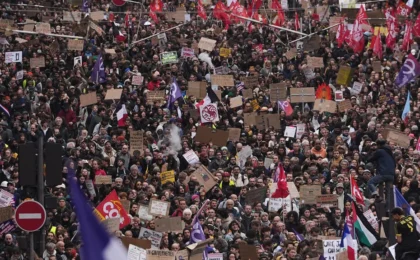
The core of this political transformation lies in the organizational novelty of the Serbian student movement. Unlike traditional opposition parties, which have struggled to gain traction against the deeply entrenched SNS machinery, this movement operated from the periphery. By maintaining momentum for two years, the coalition successfully translated widespread popular discontent regarding corruption, democratic backsliding, and economic malaise into tangible electoral outcomes.
Ivanov emphasizes that this victory is a masterclass in modern civic engagement. By operating outside the conventional party ecosystem, the student leaders avoided the pitfalls of established political rhetoric, which often alienates younger demographics and undecided voters. Their success raises a critical question for political scientists: can grassroots, non-partisan movements consistently replicate this success in environments where the state controls media narratives and local bureaucracy?
II. Chronology: The Road to the Ballot Box
The path to this electoral breakthrough was neither swift nor linear. The chronology of the movement reflects a methodical buildup of pressure that eventually culminated in the recent vote:
- Initial Mobilization (Phase I): Two years ago, the movement began as a series of isolated protests focused on specific civic grievances—ranging from environmental degradation to local corruption. During this period, the movement focused on digital outreach, building a decentralized network that proved difficult for state security services to infiltrate or disrupt.
- The Sustained Campaign (Phase II): Unlike sporadic protests that typically fizzle out, the student organizers implemented a "sustained engagement" model. They utilized town halls, social media, and community outreach to keep the issue of political renewal at the forefront of public consciousness, despite attempts by the ruling party to dismiss them as fringe elements.
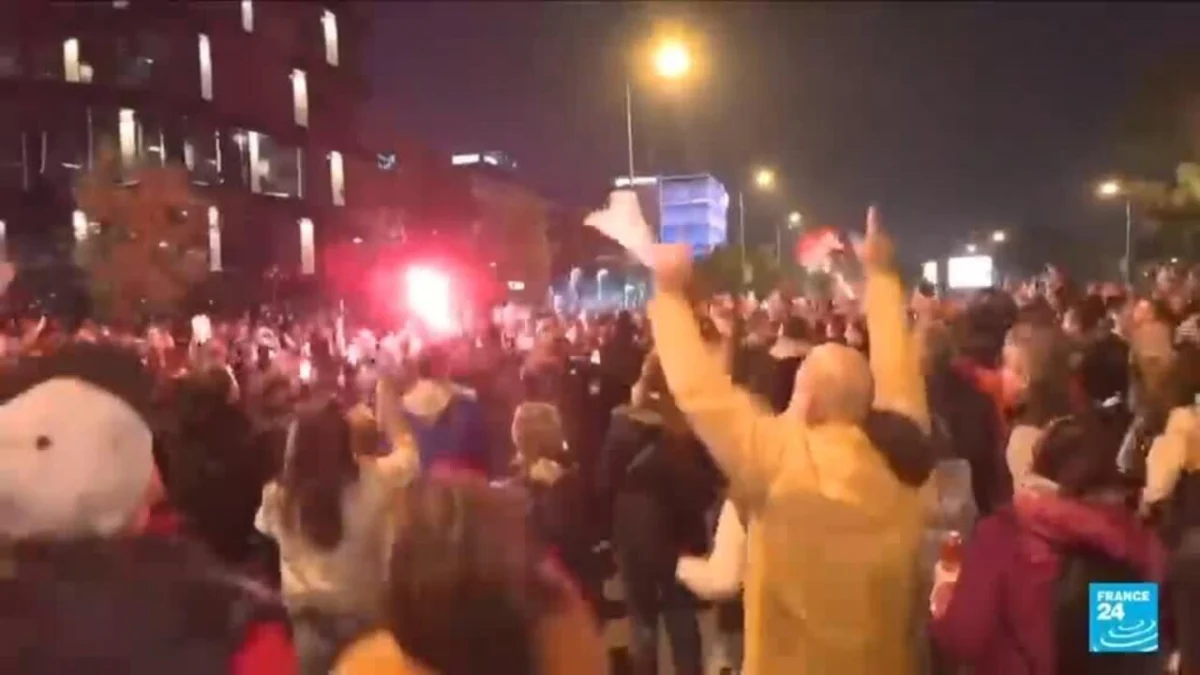
- The Electoral Breakthrough (Phase III): By the time the election date arrived, the movement had coalesced into a political force capable of mobilizing a significant portion of the electorate. They successfully leveraged the ballot box to circumvent the state-controlled television networks that had served as the primary instrument for Vučić’s political dominance.
- The Aftermath: Following the announcement of the results, the movement shifted its focus toward monitoring the integrity of the count, ensuring that their electoral gains were not eroded by the administrative irregularities often associated with entrenched regimes.
III. Supporting Data: Corruption and Accountability
The success of the Serbian movement must be viewed through the lens of regional democratic performance. According to data from international transparency watchdogs, Serbia has experienced a steady decline in its governance scores over the past decade. The prevalence of systemic corruption—often linked to the patronage networks established by the ruling SNS—has created a vacuum of trust between the populace and the state.
Ivanov notes that the Serbian experience mirrors the challenges faced in Hungary under Viktor Orbán. In both instances, the centralization of power led to a "captured state" scenario, where the lines between political parties and public institutions became dangerously blurred. The student movement in Serbia succeeded because it effectively identified and exploited the "accountability gap." By framing the election as a choice between status quo corruption and a future defined by transparency, the movement provided a compelling alternative that resonated with a cross-section of the Serbian public, from disillusioned urbanites to formerly loyal rural supporters.
IV. Official Responses: The "Foreign Interference" Narrative
The reaction from the incumbent administration was predictable. President Aleksandar Vučić, facing the most significant challenge to his authority in over a decade, pivoted immediately to a narrative of foreign subversion. Alleging that the protests were orchestrated by external powers—specifically pointing toward Western intelligence agencies—the President attempted to delegitimize the movement by painting its leaders as "proxies" for foreign interests.
Helena Ivanov strongly disputes these claims. In her analysis, such rhetoric is a standard defensive mechanism used by leaders who fear the loss of control. By framing domestic opposition as a "foreign plot," the regime seeks to exploit nationalist sentiments and shield itself from legitimate domestic criticism. Ivanov argues that the focus on "foreign interference" serves as a distraction from the fundamental failure of the government to address the valid grievances of its citizens. The movement’s organic nature—sustained by domestic youth—is the strongest rebuttal to these accusations.
V. Implications: A Regional Ripple Effect?
The significance of the Serbian election extends far beyond the borders of Belgrade. The movement’s success has sent a clear message to other regional leaders accused of authoritarian tendencies.
The Albanian Connection and Beyond
Ivanov specifically identifies Albania as a potential theater for similar civic mobilization. In countries where political renewal is stifled by entrenched leaders, the "Serbian model" provides a blueprint for how a decentralized movement can challenge the status quo. "In Albania, but also anywhere in the world, they should be afraid," Ivanov remarked, highlighting that the fear of a mobilized electorate is a powerful catalyst for political change.
The Power of the Ballot Box
Perhaps the most profound implication of this event is the reaffirmation of the democratic process. In an era of global democratic backsliding, where "strongman" politics have become increasingly fashionable, the Serbian movement serves as a reminder that the ballot box remains the ultimate instrument of accountability.
Ivanov’s final reflection on the matter is poignant: "All it takes is one pencil and a piece of paper, and you can choose someone else." This principle, while seemingly simple, represents a profound challenge to any leader who believes their power is absolute. The Serbian case demonstrates that even when the state apparatus is mobilized to maintain the status quo, the collective will of the people, when organized and sustained, can overcome the most entrenched political systems.
VI. Conclusion: The Path Forward
The movement’s challenge now shifts from the electoral arena to the legislative one. As these new figures enter the corridors of power, they will face the daunting task of dismantling the patronage networks that have defined Serbian politics for nearly a generation.
The Henry Jackson Society, along with other observers of democratic institutions, will be watching closely to see if the movement can maintain its integrity once it transitions from being an external critic to an internal participant. The stakes could not be higher. If the Serbian movement succeeds in implementing institutional reforms and restoring the independence of the judiciary and the media, it will become the gold standard for grassroots democratic renewal in the 21st century.
Conversely, if the movement fails to deliver, it could lead to widespread disillusionment, potentially fueling the very apathy that allowed the entrenched establishment to thrive for so long. For now, however, the Serbian election stands as a testament to the resilience of democratic ideals. It is a reminder that in the contest between a powerful, centralized state and a mobilized, informed public, the outcome is never truly a foregone conclusion. The "Serbian precedent" has been set, and its echoes are already being felt across the Balkans and the wider European neighborhood. The lesson is clear: no authority is so entrenched that it cannot be challenged, and no democracy is so far gone that it cannot be reclaimed by those willing to stand for it.