A chilling new report from the United Nations Office on Drugs and Crime (UNODC) has sounded a global alarm: Southeast Asia has become the epicenter of a "corporate-style" criminal revolution. The assessment, titled An Interconnected Criminal Ecosystem: Transnational Organized Crime Threat Assessment for South-East Asia (2026), paints a grim portrait of a region where criminal syndicates have evolved from fragmented local gangs into highly sophisticated, technologically integrated, and borderless franchises.
The Structural Shift: A Criminal Corporate Franchise
For decades, transnational organized crime was defined by regional silos. However, the UNODC report reveals a paradigm shift: criminal enterprises are now operating with the efficiency of a multinational corporation. By adopting a "franchise" model, syndicates have streamlined their operations, allowing specialized cells to handle distinct tasks—ranging from money laundering and human trafficking to software development and technical support.
This decentralization of tasks creates a "liquid" criminal infrastructure. If law enforcement pressure mounts in one jurisdiction, the syndicate simply shutters its local branch and migrates its operations to a more permissive territory, reinvesting its vast profits into smaller, harder-to-detect facilities. This agility makes individual actors difficult to track and even harder to prosecute, as the leadership often remains shielded behind layers of digital anonymity and geographical distance.
Chronology of a Crisis: From Local Smuggling to Global Cyber-Empire
The escalation of this criminal ecosystem did not happen overnight. The following timeline outlines the rapid development of the current crisis:
- Pre-2020: Criminal activity in the region was largely characterized by traditional drug trafficking originating from the "Golden Triangle"—the border region where Thailand, Laos, and Myanmar meet.
- 2021–2022: As global travel restrictions during the pandemic forced criminals to pivot, the industry shifted toward cyber-enabled fraud. The "scam center" model began to emerge, utilizing human trafficking to staff massive, fortified compounds.
- 2023–2024: The widespread adoption of generative Artificial Intelligence (AI) and deepfake technology allowed syndicates to scale their operations, targeting victims globally with unprecedented precision.
- 2025: A banner year for illicit revenue. The UNODC estimates that the cyber-crime economy in East and Southeast Asia, combined with Australian and New Zealand markets, reached a staggering $114.1 billion USD.
- 2026: The formal UNODC assessment confirms that regional and international efforts—while well-intentioned—are failing to keep pace with the hyper-adaptive nature of these syndicates.
Supporting Data: The Scale of the Digital and Physical Threat
The financial data provided by the UNODC is staggering, reflecting an economy that rivals the GDP of some mid-sized nations.
The Cyber-Fraud Economy
The integration of AI has been the "force multiplier" for criminal groups. By utilizing AI-generated deepfakes to impersonate authority figures or loved ones, syndicates have dramatically increased the success rates of "pig butchering" scams—a long-con fraud strategy. The report estimates that losses from cyber-enabled fraud, illegal gambling, and cryptocurrency scams in the region reached between $8.3 billion and $114.1 billion in 2025 alone.
The Human Toll
The report highlights the industrial-scale human rights abuses occurring within "scam compounds." Tens of thousands of victims, lured by fake job advertisements, are held against their will behind barbed wire and armed guards. In countries like Cambodia—specifically in centers like Sihanoukville and Poipet—these compounds operate with a level of impunity that has drawn international condemnation.
The Golden Triangle’s Enduring Profit
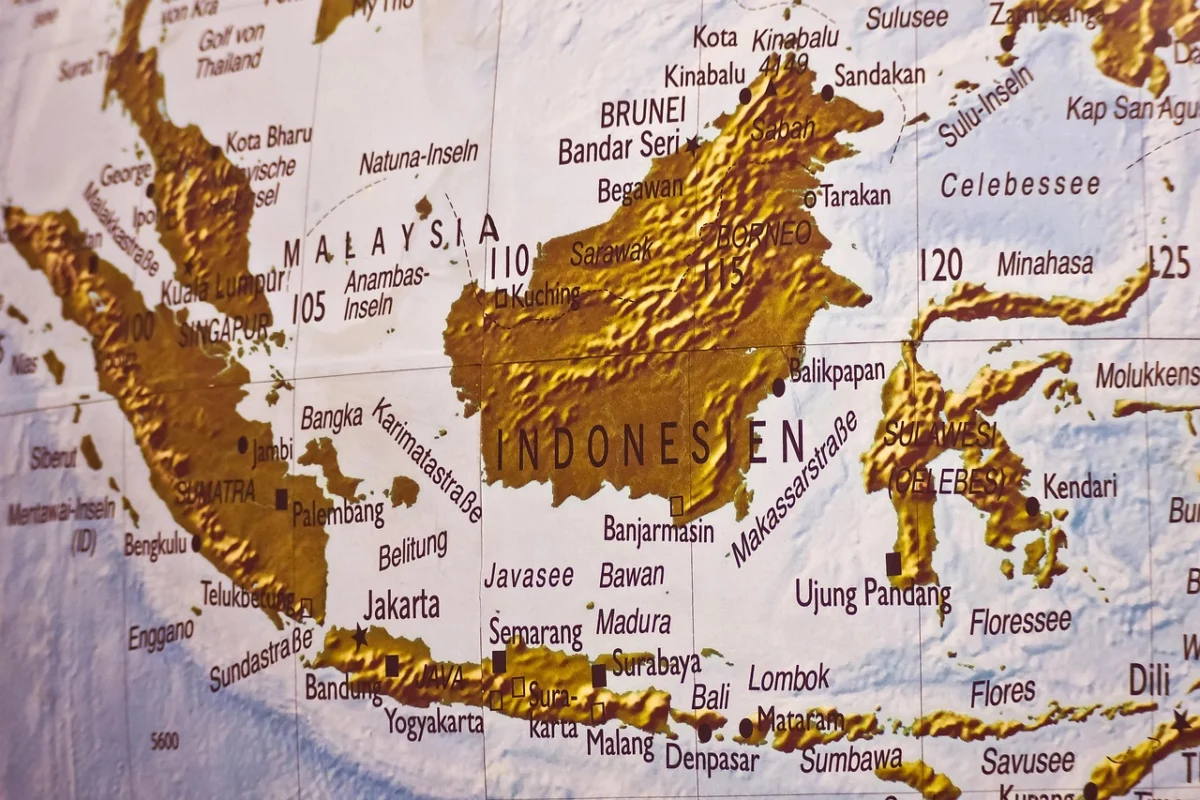
Beyond cyber-crime, the region remains a titan of narcotics production. The Sulu-Celebes Seas have emerged as a primary artery for maritime drug trafficking. Combined with the production capacity of the Golden Triangle, these operations generate an annual illicit revenue between $75 billion and $109.7 billion, with supply chains extending deep into Africa, Europe, and across the Asian continent.
Official Responses and the Failure of Enforcement
The UNODC’s lead analyst, Inshik Sim, offered a sobering assessment of the current state of affairs: "The scale and complexity of this expanding organized crime economy are outpacing existing responses, which were not structured to address such sophisticated criminal activity."
Bilateral and Multilateral Frustrations
Countries have attempted to intervene, but the "liquid" nature of the syndicates has rendered most initiatives ineffective:
- Security Dialogues: Thailand and China have engaged in high-level security dialogues to address cross-border crime, yet the syndicates remain one step ahead of bureaucratic processes.
- The Strike Force Strategy: The US-led "Scam Center Strike Force" has launched targeted operations against fortified compounds in Myanmar, Cambodia, and Laos. While these raids occasionally yield short-term successes, the syndicates simply move their "franchise" to new locations, often with the complicity of local corrupt officials.
- Legal Frameworks: While the ASEAN Convention Against Trafficking in Persons (ACTIP) and the Melaka Declaration on Combatting Transnational Crime exist to mandate intelligence sharing, they have been hampered by weak enforcement, jurisdictional disputes, and the endemic corruption that often protects these criminal hubs.
Implications: A Call for Global Reform
The UNODC report concludes with an urgent plea for the international community to move beyond fragmented, nation-state-based responses. The recommendations for mitigating the threat include:
- Targeted Legal Frameworks: Replacing broad, vague mandates with specific, enforceable statutes that hold corporations and jurisdictions accountable for hosting illicit cyber-infrastructure.
- Stricter Financial Regulation: Implementing global oversight on cryptocurrency transactions that facilitate the laundering of billions in illicit proceeds.
- Closing Cross-Border Loopholes: Standardizing data and intelligence sharing across ASEAN and beyond, ensuring that when a syndicate is identified, it cannot simply "port" its operations to a neighboring country.
- Addressing Corruption: The report notes that these criminal empires cannot thrive without the "grease" of systemic corruption. International pressure on local governments to investigate the "enablers"—politicians, business leaders, and police who facilitate these compounds—is viewed as essential.
Conclusion: The New Frontier
The "Interconnected Criminal Ecosystem" report serves as a wake-up call. The era of the "lone wolf" criminal or the small-town gang is over. In its place stands a borderless, tech-savvy, and terrifyingly efficient criminal machine that is currently winning the war against global law enforcement. Without a fundamental shift in how the international community addresses the intersection of technology, human trafficking, and corporate-style crime, Southeast Asia risks becoming a permanent sanctuary for a new, dark, and highly profitable era of transnational organized crime.