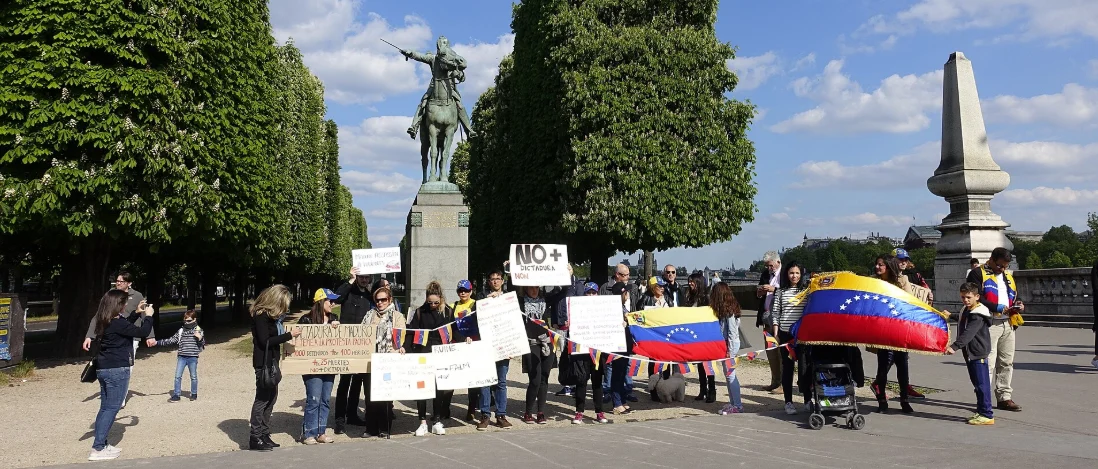
In a significant move aimed at safeguarding the progress of human rights in the wake of a tumultuous political transformation, a coalition of 21 prominent civil society organizations—including Amnesty International—has formally called for the extension of the United Nations Fact-Finding Mission (FFM) on Venezuela. The call, issued in a joint statement this week, underscores that despite the departure of former President Nicolás Maduro in January 2026, the country’s journey toward democratic stability remains fragile, with the structures of repression still requiring rigorous international scrutiny.
The upcoming vote, scheduled for the 63rd session of the UN Human Rights Council between October 5 and 7, 2026, represents a pivotal moment for international accountability. The coalition argues that the FFM’s mandate, which has been instrumental in documenting systemic abuses since 2014, must continue to ensure that the current interim government—led by Delcy Rodríguez—adheres to international standards of justice and human rights.
The Architecture of Repression: FFM Findings
The UN Fact-Finding Mission has long served as a vital mechanism for exposing the "repressive apparatus" of the Venezuelan state. Its latest reports have provided chilling evidence of gross human rights violations and international crimes occurring under a persistent veil of impunity.
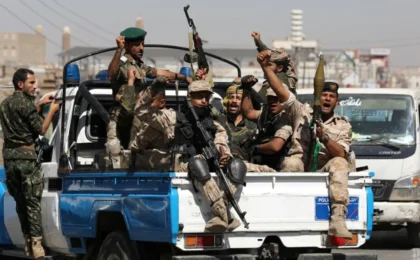
The FFM’s investigations have gone beyond general allegations, successfully mapping the chains of command within Venezuela’s intelligence services and security forces. By profiling high-ranking officials and mid-level perpetrators, the mission has created a public record that is essential for future judicial processes. Perhaps most damning is the FFM’s conclusion that the state operated under a deliberate policy of persecution against any civilian perceived as a critic of the government or its political ideology. This policy, which the mission asserts constitutes a crime against humanity, was enforced not only by official security forces but also through the mobilization of armed civilian groups—often referred to as colectivos—to suppress dissent.
Chronology of a Crisis: From Establishment to Transition
The Origins of Accountability (2019)
The establishment of the FFM on September 27, 2019, via UN Human Rights Council Resolution 42/25, marked a turning point in international efforts to address the Venezuelan crisis. At the time, the country was suffering under a regime characterized by the systemic dismantling of democratic institutions and the brutal suppression of street protests. The mandate was clear: to investigate and scrutinize gross human rights violations committed since 2014, providing a voice to the victims who had been silenced by the state.
The Cycle of Renewal (2020–2024)
Recognizing the ongoing nature of the violations, the UN Human Rights Council voted to extend the mission’s mandate for two-year cycles in 2020, 2022, and 2024. These renewals reflected the international community’s consensus that the FFM was not merely a temporary investigative body, but a necessary safeguard against the normalization of authoritarianism in the region.
The Shift in Governance (January 2026)
The geopolitical landscape changed dramatically in January 2026 when Nicolás Maduro was captured, triggering a transition in leadership. Under the interim presidency of Delcy Rodríguez, the state has exhibited a shift in conduct. According to analysis from the Washington Office on Latin America (WOLA), this period has seen "positive changes," including the partial release of hundreds of political prisoners and the dismantling of corrupt, state-run food distribution programs that had long been linked to organized crime and the enrichment of regime loyalists.
Supporting Data: The Cost of Silence
The necessity of the FFM is bolstered by the historical context of the Maduro era, during which the erosion of civil liberties was absolute. Research by organizations like Human Rights Watch documents a systematic campaign to destroy independent media. The regime’s hostility toward freedom of expression resulted in the closure of at least 60 newspapers and 200 radio stations. Digital media outlets were subjected to aggressive censorship, forcing many journalists into exile.
These actions were in direct violation of Article 19 of the International Covenant on Civil and Political Rights (ICCPR), which guarantees the right to freedom of expression. The FFM’s role in documenting these violations has provided a historical record that prevents the current administration from rewriting the narrative of the past decade. The coalition of 21 organizations stresses that the "volatile leadership structure" currently in place means that the progress made since January remains reversible. Without the FFM’s oversight, there is a significant risk that the apparatus of repression—while currently dormant or being dismantled—could be repurposed by new factions.
Official Perspectives and Civil Society Goals
For the 21 organizations petitioning the UN, the FFM is a "victim- and justice-centered mandate." Unlike political negotiations, which prioritize power-sharing and stability, the FFM prioritizes the documentation of truth.
The civil society coalition has outlined several key objectives for the potential extension of the mandate through 2028:
- Clarification of Purpose: To provide clarity on the ongoing necessity of the mission in a post-Maduro landscape.
- Complementary Action: To ensure that the FFM’s work continues to bolster the activities of the UN’s Human Rights Office, creating a dual-layered system of monitoring.
- Future-Proofing: To ensure that the investigation positively influences Venezuela’s long-term democratic reconstruction by maintaining a record of accountability that cannot be ignored by future policymakers.
"We are at a juncture where we must decide if we want to build a sustainable democracy or simply trade one set of power-brokers for another," said a spokesperson for the coalition. "The FFM is the insurance policy against the latter."
Implications for Venezuela’s Future
The implications of the upcoming vote extend far beyond the borders of Venezuela. A decision to discontinue the mission could be interpreted as a premature endorsement of the status quo, potentially emboldening those within the current government who may wish to stall democratic reforms. Conversely, an extension sends a clear signal that international support is contingent upon the continued dismantling of the repressive state apparatus and the full restoration of the rule of law.
Furthermore, the FFM’s work is highly regarded for its independence. Composed of international legal experts, the mission provides a level of legitimacy that is often absent in regional geopolitical maneuvering. As the country seeks to secure lasting economic stability and re-engage with international financial entities, the presence of the FFM acts as a benchmark for the government’s commitment to the international order.
Conclusion
As the UN Human Rights Council prepares for the session in October, the eyes of the international human rights community are on the potential vote. The argument put forth by the 21 civil society organizations is compelling: the FFM is not a relic of a past conflict, but a vital tool for managing a fragile present. By providing regular, reliable, and independent information, the mission remains a critical component of the international effort to support the Venezuelan people in their pursuit of justice, truth, and a future free from the shadow of state-sanctioned violence.
The renewal of the mandate would not only be a victory for human rights in Venezuela but also a testament to the effectiveness of international mechanisms in promoting accountability, even in the face of profound political shifts. Whether the international community chooses to maintain this level of scrutiny will define the parameters of the transition for years to come.