Introduction: A Fragile Balance in the Digital Age
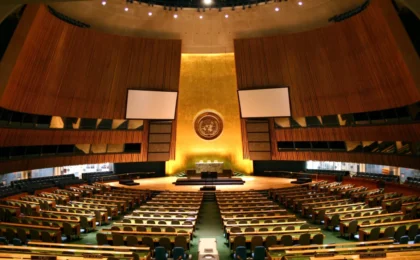
The global discourse surrounding freedom of expression has reached a critical inflection point. As the boundaries of the digital landscape expand, so too does the capacity for hate speech to transcend virtual forums and manifest as tangible, real-world violence. On the 2026 International Day for Countering Hate Speech, United Nations Secretary-General António Guterres issued a stark warning: the misuse of fundamental expressive rights is fueling a dangerous cycle of dehumanization, disproportionately targeting vulnerable communities and undermining the social fabric of nations worldwide.
While freedom of speech remains a cornerstone of democratic society, the UN leadership argues that this right is being systematically exploited. The emergence of unregulated digital platforms, coupled with the rapid integration of artificial intelligence (AI), has created a "perfect storm" where division is profitable and hatred is viral.
The Core Argument: When Expression Becomes a Tool for Division
In his address, Secretary-General Guterres challenged the long-standing assumption that any regulation of speech is inherently an infringement on liberty. He argued that the current trajectory of digital communication is not merely a byproduct of free discourse but a calculated exploitation of algorithmic architecture.
"In our digital age, hate speech spreads faster than ever, amplified by unregulated platforms and intensified by artificial intelligence," Guterres stated. He pointed to a troubling economic reality within the tech industry: "Too many algorithms reward outrage and division, incentivizing lies for likes and promoting violence for views."
This critique highlights a fundamental shift in how public opinion is formed. When platforms prioritize engagement metrics over civic responsibility, the most inflammatory, polarizing, and dehumanizing content often receives the greatest visibility. Consequently, anonymity—once touted as a shield for political dissidents—is now frequently utilized as a cloak for perpetrators of harassment, making accountability increasingly difficult to enforce.
The Gendered Frontline: AI and the Weaponization of Misogyny
The impact of this digital degradation is not distributed equally. Kalliopi Mingeirou, Chief of the Ending Violence against Women Section at UN Women, provided a chilling analysis of how technology is being leveraged to exacerbate systemic misogyny.
Mingeirou clarified that while AI did not invent the structural oppression of women, it has significantly lowered the barriers to executing it. "The wider ecosystem of influencers, forums, social media content, podcasts, gaming spaces, and even algorithm-driven content has facilitated the easier and quicker transmission of misogyny," she noted.
The rise of "synthetic abuse" represents the next evolution of this threat. Abusers are now utilizing AI to generate deepfakes, sexualized imagery, and impersonation content with unprecedented ease. These tools allow for the rapid, low-cost creation of targeted attacks that can destroy reputations and incite real-world harm. For victims, the digital landscape has transformed from a space of potential empowerment into an arena of constant, high-tech surveillance and harassment.
Chronology of a Mounting Global Crisis
The tension between protecting speech and preventing harm is not a localized issue; it is a global phenomenon playing out in legislatures and academic halls alike.
- Early 2025: Debates intensify across Europe regarding the role of "political correctness" and "cultural sensitivity" in stifling public discourse. Critics, including former UK Prime Minister Rishi Sunak, argue that over-correction has led to the systemic silencing of victims—notably in cases of grooming gangs—where authorities feared being labeled as "insensitive" for addressing uncomfortable truths.
- May 2025: Academics and human rights advocates begin documenting the dangers of "selective censorship" in universities. Evidence suggests that institutional efforts to maintain "safe spaces" have, in some instances, devolved into the marginalization of minority voices who are excluded from the conversation entirely.
- June 2026 (Early): The Canadian Senate becomes a focal point for this debate. A high-profile proposal to criminalize "residential school denialism" within the nation’s hate crime bill sparks intense backlash from free speech advocates.
- June 2026 (Mid-Month): The Canadian Senate ultimately rejects the specific inclusion of "denialism" as an offense, opting for a broader hate crime framework. The bill is enacted, yet it leaves the underlying tension unresolved: how does a state define hate speech without encroaching on the historical and political inquiry?
- June 2026 (International Day for Countering Hate Speech): Secretary-General Guterres delivers his address, formalizing the UN’s stance that the current digital environment is a catalyst for violence.
Supporting Data: The Algorithmic Incentive Structure
The UN’s assertion that "outrage pays" is supported by a growing body of social science research. Studies indicate that content eliciting "high-arousal" emotions—specifically anger and fear—tends to generate significantly higher interaction rates (shares, comments, and views) than neutral or constructive content.
When these human psychological tendencies are paired with machine learning, the result is a feedback loop. AI models, designed to maximize time-on-site, inevitably steer users toward increasingly extreme content to keep them engaged. This "radicalization funnel" has been documented in various political contexts, where moderate users are gradually exposed to increasingly dehumanizing rhetoric regarding immigrants, women, and religious minorities.
Furthermore, the "anonymity gap" identified by Guterres remains a statistical hurdle. In many jurisdictions, legal recourse for online harassment is prohibitively expensive or technically impossible when the perpetrator is obscured by VPNs, botnets, or decentralized server structures.
Official Responses and Political Implications
The international community remains deeply divided on the path forward.
The Pro-Regulation Stance
The UN and several European governments advocate for stricter "duty of care" obligations for tech companies. This approach suggests that if a platform’s business model inherently amplifies violence, that platform should be held legally liable for the downstream consequences of that content. The goal is to force companies to prioritize safety-by-design over rapid growth.
The Civil Liberties Counter-Argument
Conversely, organizations dedicated to digital rights argue that empowering governments to determine what constitutes "hate speech" is a slippery slope. They point to the Canadian experience as a warning: if "denialism" is criminalized, who defines the limits of historical debate? Critics argue that even well-intentioned legislation can be weaponized by future administrations to silence political opposition, academic inquiry, and whistleblowers.
The Academic and Institutional Crisis
The debate has also seeped into academia. The concern is that the pursuit of "solidarity" through exclusionary practices—such as boycotts or the banning of controversial speakers—actually creates an environment where vulnerable groups are more isolated. As noted in the critique of institutional silence in the UK, when the fear of causing offense outweighs the necessity of objective reporting, the most vulnerable citizens are often the ones who suffer, as their grievances go unaddressed by the very institutions meant to protect them.
Implications: The Path Toward a Secure Digital Future
The warning issued by Secretary-General Guterres serves as a wake-up call for a world that has arguably been too slow to regulate the digital frontier. The implications of inaction are severe:
- Erosion of Trust: As online discourse becomes more volatile, public trust in institutions, media, and even democratic processes continues to decline.
- Increased Polarization: The fragmentation of the digital public square into "siloed" echo chambers makes it nearly impossible to build consensus on existential threats, such as climate change or global health.
- Physical Instability: The transition from "online vitriol" to "real-world violence" is no longer a theoretical risk; it is a documented reality. From targeted harassment campaigns to organized violence, the boundary between the two is dissolving.
Toward a New Social Contract
Addressing this crisis requires more than just government censorship. It necessitates a multi-stakeholder approach that includes:
- Algorithmic Transparency: Mandating that tech companies provide third-party access to their content-ranking models to ensure they are not optimizing for hatred.
- Digital Literacy: Investing in education to help users navigate the digital landscape, recognize synthetic content (deepfakes), and identify the psychological triggers used by algorithms.
- Accountability Mechanisms: Creating streamlined, global legal frameworks that allow victims of severe digital harassment to seek justice without needing to possess advanced technical expertise.
Conclusion
The challenge of our time is not to choose between freedom of speech and the prevention of hate, but to engineer a digital environment where both can coexist. If the current trajectory of "lies for likes" remains unchecked, the very technology that promised to connect the world will continue to tear it apart. As the UN signals a shift toward a more proactive, regulatory posture, the international community must decide whether it will allow the digital "wild west" to dictate the future of human rights or if it will finally impose a framework of accountability upon the platforms that shape our modern reality.