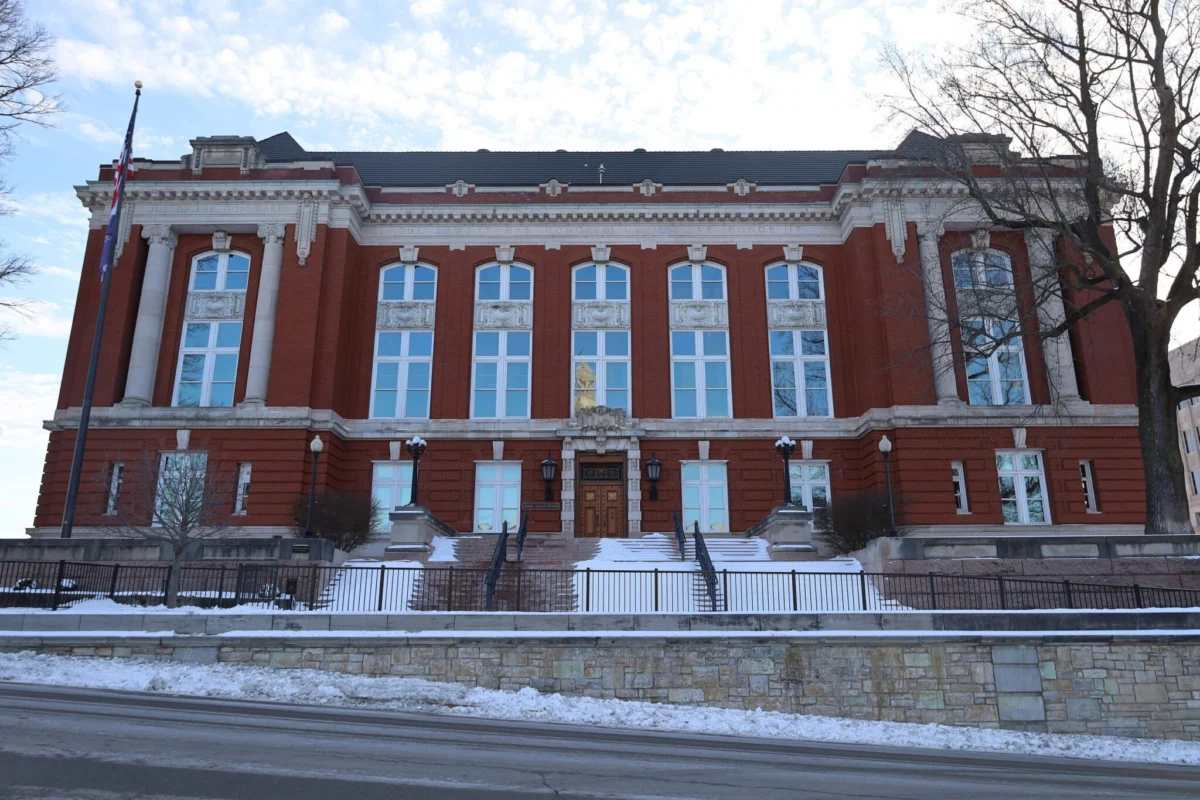
In a significant blow to Missouri Republican leadership, the U.S. Supreme Court has denied an emergency request to implement a controversial, newly redrawn congressional map for the upcoming November midterm elections. Justice Brett Kavanaugh, acting as the circuit justice for the region, issued the order on Tuesday in Hoskins v. von Glahn. The decision effectively leaves the state’s 2022 congressional boundaries in place, upholding a unanimous ruling by the Missouri Supreme Court that declared the state’s attempt to bypass voter-led referendums unconstitutional.
The legal standoff centers on House Bill 1 (HB 1), a redistricting measure passed during a September 2025 special legislative session. The move to block the map’s implementation marks the latest chapter in a heated, years-long struggle over electoral integrity, constitutional authority, and the boundaries of partisan gerrymandering in the Show-Me State.
The Chronology of a Constitutional Crisis
The path to this week’s Supreme Court decision is paved with procedural delays, legislative maneuvers, and a high-stakes clash between the Missouri General Assembly and grassroots voting rights advocates.
September 2025: The Special Session
The controversy began in September 2025, when the Missouri General Assembly convened a special session to address the state’s congressional districts. Following intense pressure from Republican leadership and an endorsement from President Donald J. Trump, lawmakers pushed through HB 1 in a narrow 21-11 vote. The map was explicitly designed to reshape the Fifth Congressional District, historically represented by Democratic Congressman Emanuel Cleaver, to favor a conservative successor. Rep. Cleaver immediately decried the move as an "unconstitutional gerrymander," signaling the legal battles that would soon follow.
December 2025: The Referendum Push
Immediately following the passage of HB 1, a coalition led by respondent Richard von Glahn and the organization "People Not Politicians Missouri" launched a massive petition drive. By December 2025, they had successfully gathered and submitted over 300,000 signatures—far exceeding the constitutional threshold required to trigger a statewide referendum. Under the Missouri Constitution, the filing of a sufficient referendum petition acts as a stay on the legislation in question, preventing it from taking effect until the voters have the final say at the ballot box.
August 2026: The Secretary’s Rejection
For eight months, the status of the petition remained in bureaucratic limbo. On August 4, 2026—the very day Missouri held its primary elections—Secretary of State Denny Hoskins finally issued a formal rejection of the petition. Hoskins argued that the Missouri Constitution did not permit citizens to use the referendum process to challenge congressional redistricting laws. Critics and legal observers noted that the timing of this rejection appeared calculated to create an "irreversible" situation, forcing the state to proceed with the new maps regardless of the legal validity of the legislation.
September 2026: Judicial Intervention
The Missouri Supreme Court intervened on September 3, 2026, delivering a scathing unanimous opinion. The justices reversed the Secretary of State’s decision, ruling that HB 1 was "not the law and has never been the law." They ordered the state to revert to the 2022 congressional map and mandated that the referendum question be placed on the November ballot as Proposition A.
Supporting Data and Legal Arguments
The legal battle before the U.S. Supreme Court hinged on the question of whether the federal judiciary should intervene to "save" the state from an administrative crisis of its own making.
The "Election Administration Disaster"
In their emergency application for a stay, Missouri officials argued that implementing the 2022 map after the August primaries—where over 1.2 million citizens had already cast ballots under the HB 1 boundaries—would create a "federal-election-administration disaster." The state contended that the confusion caused by switching map configurations mid-cycle would disenfranchise voters and place an insurmountable burden on local election officials.
The Self-Inflicted Delay
Conversely, attorneys for the respondents presented evidence that the timing issues cited by the state were entirely self-inflicted. They pointed to public statements made by the Missouri Attorney General in January 2026, where the office suggested that "delay works in our favor." By stalling the validation of the signatures until the primary election was already underway, the state effectively engineered the chaos it later cited as grounds for emergency federal intervention. The Supreme Court’s refusal to grant the stay suggests a lack of sympathy for the state’s argument that its own administrative obstructionism should be rewarded with judicial relief.
Official Responses and Political Fallout
The response to the Supreme Court’s decision has been fragmented, reflecting the deep polarization surrounding the issue. While the Supreme Court ruling provides a clear path for the 2022 maps, a parallel and conflicting legal development has created a constitutional "gray zone."
The Federal-State Conflict
Complicating the matter, Chief Judge Stephen Clark of the U.S. District Court issued a separate temporary restraining order (TRO) that effectively mandates the use of the HB 1 map. This has placed Missouri officials in a precarious position, caught between the Missouri Supreme Court’s directive to use the old map and a federal court order to use the new one.
Missouri Attorney General Catherine Hanaway has stated that the state will comply with Judge Clark’s federal order. On X (formerly Twitter), Hanaway emphasized the necessity of following federal judicial guidance, yet this stance places her in direct opposition to the Missouri Supreme Court’s definitive ruling.
Voices from the Capitol
The political reaction has been equally sharp. Supporters of the redistricting effort maintain that the legislature holds the primary authority to draw district lines and that the judiciary has overstepped its bounds. Meanwhile, voting rights advocates celebrate the U.S. Supreme Court’s decision as a victory for the democratic process, arguing that the people of Missouri have a constitutional right to challenge legislative acts they believe to be gerrymandered or unfair.
Implications for Missouri and Beyond
The ongoing conflict raises profound questions about the nature of American democracy in the 21st century.
The Limits of Legislative Power
If the legislature can bypass the referendum process by simply waiting until the last possible moment to challenge signatures, the democratic safety valve of the referendum is effectively rendered toothless. The Missouri Supreme Court’s ruling serves as a defense of the constitutional role of the electorate. However, the defiance by state officials in following a federal TRO suggests that the battle may move into a new phase of jurisdictional conflict.
The Shadow of the 2026 Midterms
As the November election approaches, the uncertainty surrounding the maps is creating significant logistical challenges for Missouri voters. County clerks are currently preparing for the possibility of last-minute changes to ballot printing and district assignments.
Future Precedents
This case may ultimately serve as a bellwether for how the U.S. Supreme Court views the interplay between state constitutional referendums and federal election administration. By denying the stay, Justice Kavanaugh has declined to set a precedent that would allow states to bypass voter referendums by waiting for election deadlines to pass.
As Missouri navigates this constitutional crisis, the eyes of the nation are fixed on the state’s ability to resolve these competing mandates. Whether the state moves forward under the 2022 maps or finds a way to force the HB 1 map into use, the conflict highlights the growing tension between legislative ambition and the foundational principle that, in a democracy, the ultimate authority rests with the voters.
For now, the legal skirmish remains unresolved. The conflict between the state’s supreme court and the federal district court suggests that the matter may be headed back to higher courts for clarification. Until then, Missouri voters remain the ultimate observers in a political drama that challenges the very mechanics of how they are represented in Washington.