For over a hundred years, the white button mushroom (Agaricus bisporus) industry has been locked in a silent, costly struggle with a persistent adversary: bacterial blotch. Characterized by unsightly brown or yellow lesions that mar the pristine surface of the mushroom, this disease has long been the bane of growers, causing significant economic losses and threatening the shelf life of one of the world’s most popular specialty crops.
For decades, the agricultural community operated under a singular assumption: that this blight was the work of one specific, well-known pathogen. However, groundbreaking research from the University of Florida Institute of Food and Agricultural Sciences (UF/IFAS) has fundamentally shattered this paradigm. By peeling back the layers of this microbial mystery, researchers have discovered that the disease is not the work of a lone culprit, but rather a surprisingly diverse and complex coalition of over 17 distinct bacterial species. This revelation not only explains the historical difficulty in controlling the disease but also paves the way for a new generation of sustainable, science-backed agricultural solutions.
The Economic and Nutritional Stakes of the Mushroom Industry
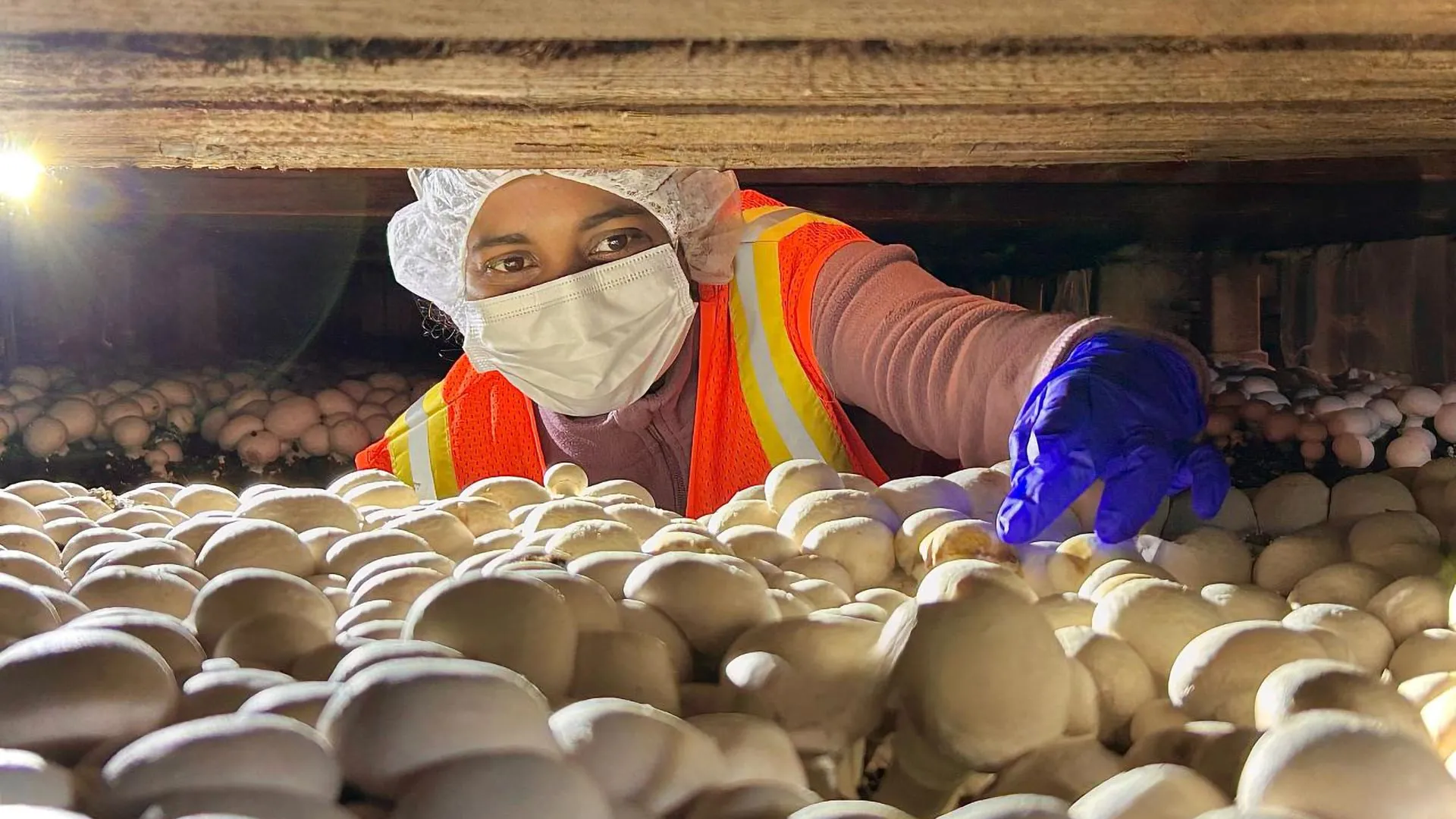
White button mushrooms are more than just a culinary staple; they are a nutritional powerhouse. Often championed under the “food as medicine” philosophy, these fungi are prized for their versatility in everything from gourmet appetizers to daily meals, providing essential vitamins, minerals, and fiber to the modern diet. As a high-value specialty crop, their production is a delicate balance of science and art, requiring strictly controlled, high-humidity indoor environments to thrive.
However, this specialized cultivation environment is exactly what makes them vulnerable. When bacterial blotch strikes, the impact is swift and devastating. Beyond the immediate loss of yield, the disease ruins the aesthetic appeal of the product, rendering entire harvests unsalable. Perhaps most frustrating for producers is the “delayed symptom” phenomenon, where mushrooms appear healthy at the point of harvest only for brown, necrotic blotches to materialize during transit or while sitting on grocery store shelves. This volatility makes inventory management a nightmare for growers and creates significant waste within the supply chain.
Chronology of a Scientific Misunderstanding
The history of bacterial blotch research is a narrative of evolving technology. For most of the 20th century, the prevailing scientific consensus pointed toward a single causative agent. Because this pathogen was relatively easy to identify in a petri dish, it became the primary focus of all mitigation efforts. Growers utilized various chemical treatments and sanitation protocols designed to neutralize this specific bacterium, yet the results remained maddeningly inconsistent.
“For years, the industry has struggled with treatments that provide inconsistent results against bacterial blotch,” explains Samuel Martins, co-author of the study and an assistant professor in the UF/IFAS Department of Plant Pathology.
The turning point in this century-old puzzle arrived when the UF/IFAS team, supported by a $7 million grant from the U.S. Department of Agriculture (USDA), decided to re-examine the disease through a modern lens. Collaborating with experts from Penn State and the University of Delaware, the team launched an extensive diagnostic project to analyze the microbial communities residing on damaged mushrooms collected from various production facilities across the southern United States. By moving beyond traditional culturing techniques—which only highlight bacteria that can be easily grown in a lab—the researchers employed cutting-edge DNA sequencing and chemical profiling to capture the full spectrum of the microbial population.
Unveiling the Microbial "Coalition"
The results of the DNA analysis were nothing short of startling. Instead of identifying a single pathogen, the researchers uncovered a complex ecosystem of at least 17 different bacterial species contributing to the blotching symptoms.
Sameerika Mudiyanselage, the study’s lead author and a doctoral student at the UF/IFAS Tropical Research and Education Center, noted the significance of these findings. “While two well-known bacterial pathogens dominated the known disease profile, we also detected a surprisingly high level of another group of bacteria that has not previously been linked to the mushroom disease,” she stated.
This discovery suggests that the agricultural industry has been fighting a multi-front war while only focusing on two of the combatants. The presence of these previously overlooked bacterial groups explains why conventional, single-target treatments have failed to curb the disease effectively over the decades. When a pathogen is part of a larger, synergistic microbial community, treating it in isolation is akin to treating a complex infection with a single antibiotic that may not be effective against the rest of the biofilm.
Implications for Future Agricultural Management
The implications of this study are profound, suggesting a total shift in how mushroom growers must approach biosecurity and disease management. If the disease is, in fact, a collective effort by a diverse group of microorganisms, then the diagnostic tools used by farms must be upgraded to detect this broader range of threats.
Moreover, this research highlights the importance of the "microbiome" within the mushroom growing environment. It is no longer enough to look for a specific pathogen; farmers must understand the ecological balance of the substrate and the casing soil. The study suggests that managing the overall microbial health of the farm may be just as important as eradicating specific bacteria.
This is where the UF/IFAS team’s forward-looking approach becomes particularly valuable. By identifying that the disease is a systemic issue involving multiple players, they are now advocating for a move away from blunt-force chemical pesticides toward more holistic, sustainable, and eco-friendly management practices.
Toward Sustainable Solutions: Nature’s Defense
With the diagnostic phase of the research concluded, the UF/IFAS team is shifting its focus toward the development of sustainable, "green" interventions. Recognizing that traditional chemical treatments are often ineffective and increasingly unpopular with consumers, the researchers are investigating biological alternatives.
One of the most promising avenues involves the use of plant-based essential oils. Many plants produce volatile organic compounds as a natural defense mechanism against microbial invasion; these compounds, when harnessed correctly, can act as potent, broad-spectrum antimicrobials. The research team is testing whether these oils can disrupt the communication or growth of the 17-plus bacterial species identified in the study without harming the delicate mushroom crop.
Additionally, the team is exploring the role of "beneficial microbes." Much like the probiotics used in human health, certain beneficial bacteria can be introduced to the mushroom growing environment to outcompete, inhibit, or "crowd out" the harmful pathogens. By fostering a healthy microbial population that occupies the same ecological niche as the blotch-causing bacteria, growers may be able to naturally suppress the disease before it ever takes hold.
Conclusion: A More Resilient Future
The discovery by the University of Florida researchers is more than just an academic breakthrough; it is a vital step toward securing the future of the American mushroom industry. By replacing a century-old assumption with a nuanced understanding of microbial diversity, the research team has provided the industry with a roadmap for innovation.
"Ultimately, our goal is to provide growers with practical, science-based solutions that help strengthen mushroom farming systems," says Samuel Martins. "By understanding the complexity of bacterial blotch and the role of microbial communities, we can develop better eco-friendly management practices that reduce losses while improving sustainability."
As the project continues under the umbrella of the USDA-funded initiative, the hope is that these diagnostic and treatment strategies will be scaled up for real-world application. For the consumer, this could mean higher quality, longer-lasting, and more sustainable mushrooms on store shelves. For the grower, it represents a transition from a century of frustration to a future of precision agriculture, where the hidden microbial world is finally brought into the light and managed with the sophistication it deserves. The battle against bacterial blotch is far from over, but for the first time in 100 years, the industry finally knows exactly what it is fighting.