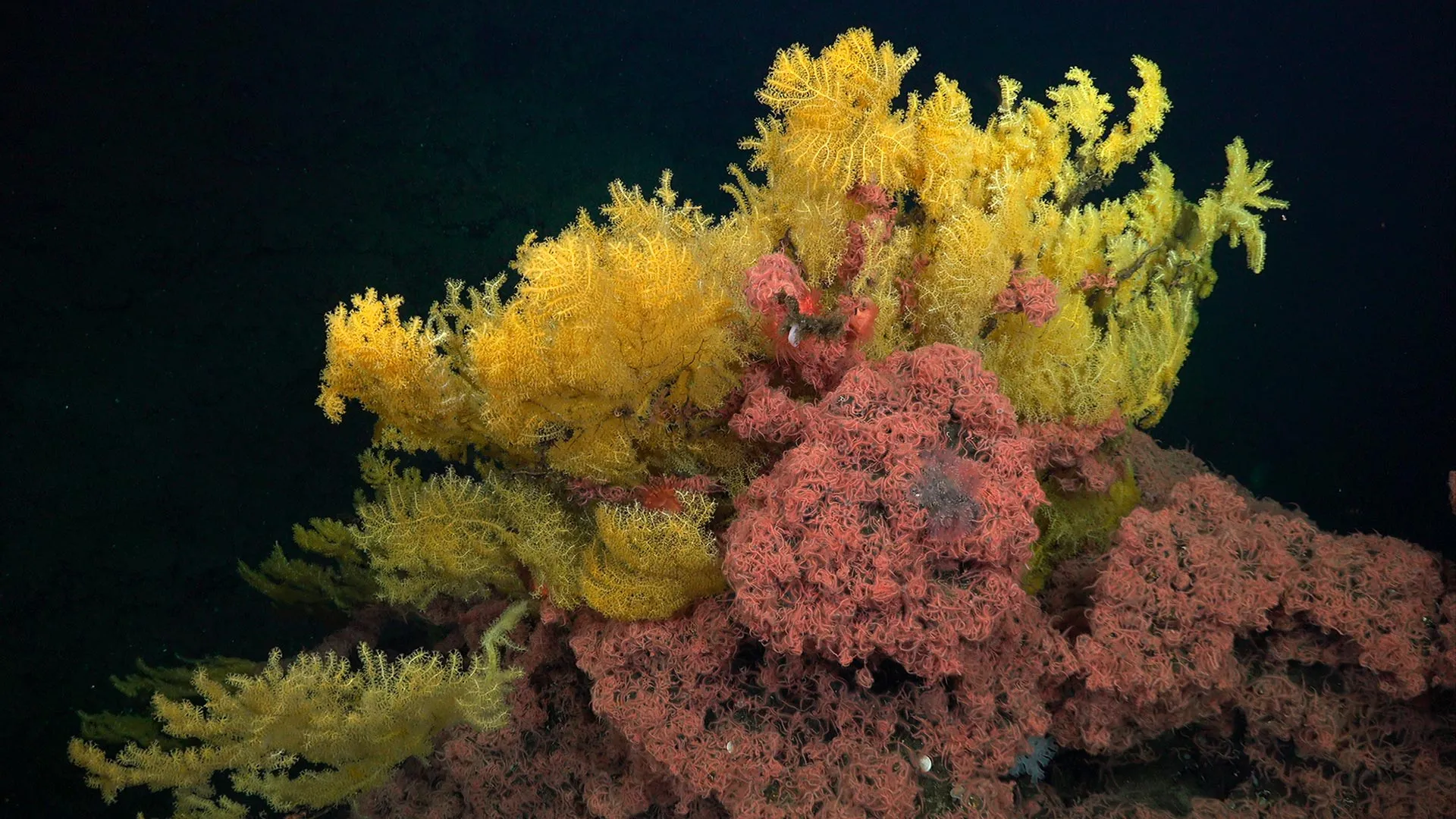
In the profound, crushing darkness of the Pacific Ocean, where sunlight has not penetrated for eons, a team of researchers has uncovered a biological treasure so distinct that it has rewritten the taxonomic record. During deep-sea expeditions off the coast of Costa Rica, scientists identified a radiant, tree-like coral that is so genetically and physically unique that it could not be shoehorned into any existing family. This discovery has led to the creation of an entirely new taxonomic family, a rare occurrence that underscores how little we truly know about the vast, alien worlds hidden beneath the waves.
The findings, recently published in the open-access journal ZooKeys, detail the discovery of Laurinque elenya—a name that pays homage to the imaginative linguistic mastery of J.R.R. Tolkien. As researchers continue to analyze the data, this "golden tree" of the deep has become a symbol of the untapped biodiversity residing in the shadows of our own planet.
The Chronology of a Discovery: From 2019 to the Present
The saga of Laurinque elenya began not in a laboratory, but on the deck of the research vessel Falkor. In 2019, while surveying the rugged, underwater mountains (seamounts) near Costa Rica’s Isla del Coco and along the nation’s Pacific margin, the research team caught their first glimpse of an extraordinary coral garden.
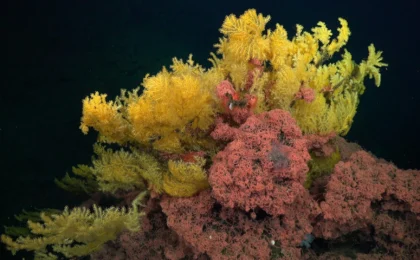
Using the SuBastian remotely operated vehicle (ROV)—a sophisticated piece of robotics capable of withstanding the immense pressures of the deep sea—the team navigated the rocky outcrops of the seafloor. What they saw defied expectations. Rising from the sediment were vibrant, yellow, branching structures that stood over a meter tall.
"I saw the octocoral garden for the first time in 2019 and I was impressed by the beauty of the landscape," said Dr. Odalisca Breedy of the Universidad de Costa Rica, the study’s lead researcher.
However, the initial 2019 expedition was only the beginning. While the visual beauty of the coral was immediately apparent, the scientific classification process proved to be a multi-year endeavor. It wasn’t until a follow-up expedition in 2023, conducted aboard the Schmidt Ocean Institute’s newer vessel, Falkor (too), that the team was able to collect the comprehensive biological samples necessary to unlock the secrets of this organism. The collaboration between the Schmidt Ocean Institute and the National Geographic Society allowed for the rigorous molecular and morphological analyses that would eventually place this coral in its own distinct branch of the tree of life.
A Landscape of Myth and Biology
The moniker Laurinque elenya is perhaps one of the most poetic names in modern marine biology. The researchers drew inspiration from Quenya, the high-elven language crafted by J.R.R. Tolkien.
The genus name, Laurinque, translates to "golden tree," a direct nod to the coral’s striking, sun-bright coloration and its branching, arborescent architecture. The species name, elenya, means "stellar" or "of the stars." This naming convention was inspired by the unique environmental niche the coral occupies.
During their surveys, the team observed that these golden trees were almost exclusively found on rocky outcrops blanketed by dense populations of brittle stars. When viewed through the lens of the ROV’s cameras, the bright yellow coral appeared to rise from the seafloor like luminous sentinels standing amidst a galaxy of shimmering, star-like organisms. To the researchers, the scene was not merely a biological site, but a "mystical elvish landscape."
The Genetic Conundrum: Solving the Evolutionary Puzzle
Determining the evolutionary lineage of Laurinque elenya was far from straightforward. When the team first attempted to classify the coral using traditional DNA barcoding—a method that uses three common genes to determine a specimen’s family—they were met with a baffling contradiction.
"Each gene suggested a different and unrelated family," the research team noted in their report.
This inconsistency suggested that the coral was either a hybrid, a massive evolutionary outlier, or that the current classification markers were insufficient. To resolve the conflict, the scientists turned to phylogenomics. Unlike traditional barcoding, which looks at a tiny snapshot of an organism’s genetic makeup, phylogenomics involves the simultaneous analysis of hundreds of genes.
By comparing the entire genomic structure of the sample, the researchers were finally able to see the bigger picture. The results were conclusive: Laurinque elenya did not belong to any previously described coral family. While it shares some distant evolutionary markers with the family Eunicellidae, its genetic and anatomical profile is distinct enough to warrant the creation of a new family: Laurinqueidae.
This breakthrough highlights the importance of modern genomic tools in taxonomy. Without the transition from simple barcoding to broad-scale phylogenomics, this species might have remained misclassified or ignored as an anomaly.
Official Responses and Scientific Context
The discovery of a new family is a career-defining moment for any marine biologist. Dr. Breedy reflected on the arduous process of discovery: "I thought the species could belong to a known family and genera, but after the preliminary morphological analysis, I realized that it was something very different that I could not match with the known taxa."
The success of the identification was a team effort, involving the molecular expertise of Cathy McFadden, Catalina Murillo, and Andrea Quattrini. "In 2023, we collected more samples and thanks to the exhaustive molecular analyses… we were able to determine the taxonomic placement of the stunning species, in one of the most enigmatic sites," Dr. Breedy added.
The support from the Schmidt Ocean Institute proved vital. By providing the cutting-edge technology of the SuBastian ROV and the advanced research capabilities of the Falkor vessels, they enabled scientists to reach depths of 360 to 529 meters—a zone that is often bypassed in favor of shallower reefs or extreme abyssal plains.
Implications: Why the Deep Sea Matters
The discovery of Laurinque elenya is more than a footnote in a biology journal; it is a stark reminder of the "unknown" that remains on our planet. While humans have mapped the surface of Mars and sent probes to the outer reaches of the solar system, two-thirds of our own Earth—the deep ocean—remains largely uncharted.
Biodiversity Hotspots
Coral gardens like the ones found off Costa Rica are not just visually spectacular; they are "vulnerable marine ecosystems." The complex, three-dimensional structure of these coral colonies provides essential shelter, breeding grounds, and hunting habitats for a diverse array of deep-sea life. By serving as structural architects of the deep, corals like Laurinque support a web of biodiversity that we are only just beginning to map.
The Threat of the Unknown
These findings also underscore the urgency of marine conservation. Deep-sea ecosystems are notoriously slow to recover from disturbance. As human activities—such as deep-sea mining, bottom trawling, and climate-driven ocean acidification—begin to reach deeper into the water column, we risk destroying species before we have even identified them.
The existence of a new family of coral proves that the deep ocean is a reservoir of genetic innovation and evolutionary history. If we do not protect these habitats, we risk losing biological lineages that have taken millions of years to evolve.
Future Research
The discovery of Laurinqueidae is likely just the beginning. The seamounts of Costa Rica have already yielded a high number of undocumented species, and scientists believe that further exploration will reveal even more. The team’s success serves as a call to action for the global scientific community to increase investment in deep-sea exploration. As Dr. Breedy and her colleagues have demonstrated, there are still "golden trees" waiting to be found in the starlit gardens of the abyss—if only we are willing to look.
In conclusion, the identification of Laurinque elenya serves as a bridge between the realms of high fantasy and rigorous scientific inquiry. It reminds us that nature often possesses a beauty and complexity that exceeds our own creative capacity to imagine it, and that our role as stewards of this planet is inextricably linked to our commitment to explore and understand the mysteries hidden in the dark.