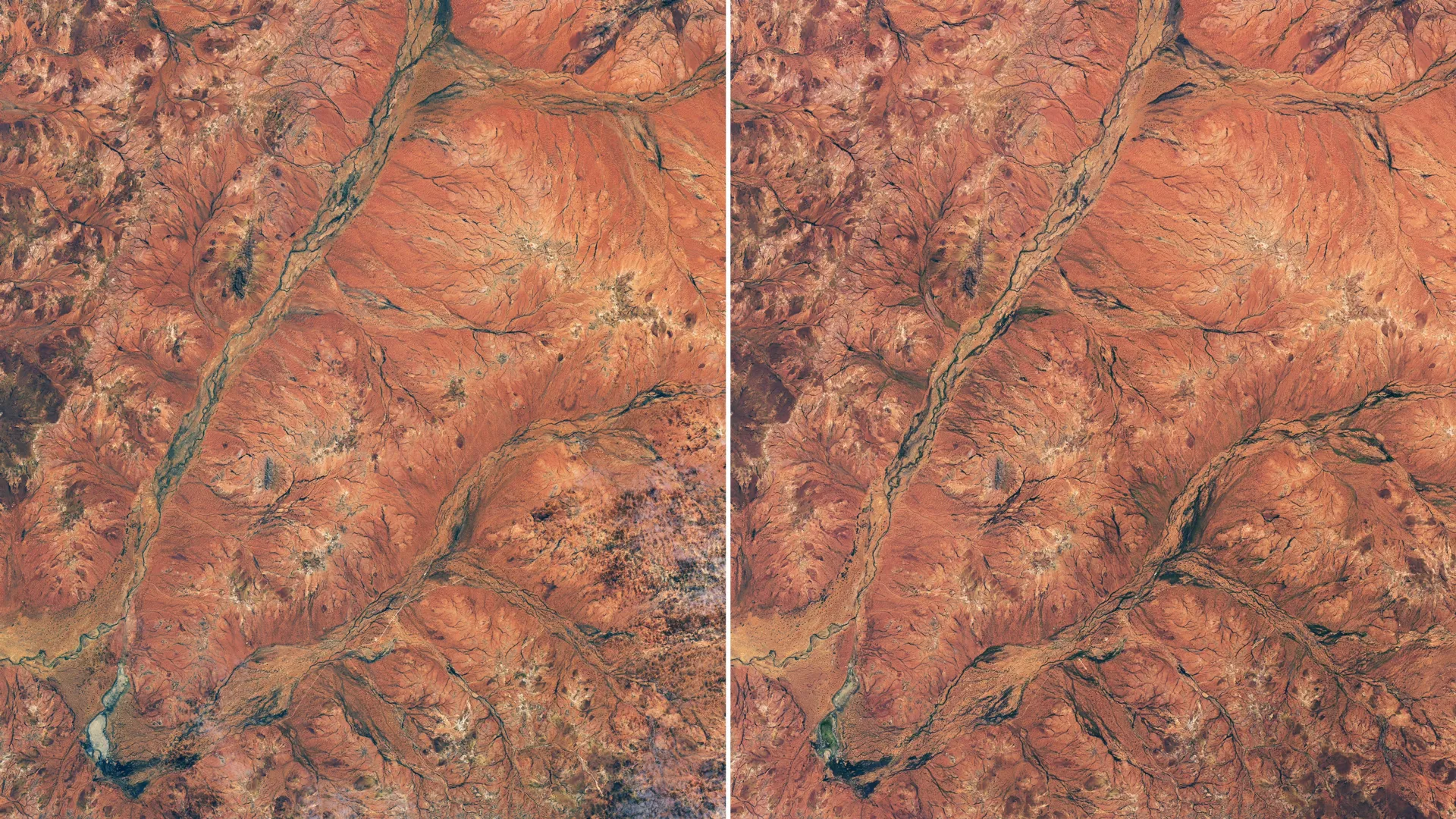
In an awe-inspiring convergence of meteorology and biology, the arid, rust-colored expanses of Western Australia have undergone a metamorphosis. By late August 2026, the harsh shrublands of the Murchison region—typically characterized by hardy, drought-resistant flora—were blanketed in a kaleidoscopic tapestry of green, yellow, and violet. This "superbloom," described by local botanists and regional observers as the most significant botanical event in nearly two decades, serves as a vivid reminder of the latent power held within the desert soil.
The transformation was not merely a local curiosity; it was a visible shift in the Earth’s surface reflected in high-definition satellite imagery. As climate patterns shift, this spectacular display of resilience has provided scientists with a rare window into the survival strategies of outback ecosystems and the delicate balance between environmental volatility and biological recovery.
The Meteorological Catalyst: A Winter of Abundance
The seeds for this year’s display were sown, quite literally, by a series of uncharacteristic weather events. While the Murchison region, located some 600 kilometers north of Perth, is accustomed to long stretches of extreme heat and minimal precipitation, the winter of 2026 defied historical norms.
According to data from Australia’s Bureau of Meteorology, the region experienced a sequence of cold fronts throughout the early winter months. June saw rainfall totals significantly higher than the long-term average, saturating the parched earth. This moisture was followed by a wet August, providing the sustained hydration necessary to trigger germination in dormant seeds that had been lying in wait beneath the dust for years, perhaps even decades.
These "ephemeral" species are evolutionary masters of the desert. They exist in a state of suspended animation, their seeds protected by tough coats that only break down under specific conditions of soil moisture and temperature. When the rain finally arrived, the landscape responded with a frenetic burst of growth, turning the normally muted palette of the outback into a vibrant, high-contrast spectacle.
Chronology of the Transformation: 2025 vs. 2026
The scale of this event is best understood through the lens of orbital observation. NASA’s Landsat 8 satellite, equipped with the Operational Land Imager (OLI), provided the definitive record of this ecological shift. By comparing images from late August 2025 with those from the same period in 2026, the contrast is stark.
- August 2025: Satellite imagery depicts a classic Murchison landscape—a patchwork of beige, deep ochre, and sparse, isolated clusters of vegetation. The land reflects the reality of a standard, arid cycle, with the hardy mulga trees and saltbush providing the only consistent greenery.
- Late 2025/Early 2026: Throughout the Southern Hemisphere’s summer and autumn, the soil remained largely dormant. However, the meteorological shift began in earnest as the winter cold fronts arrived.
- August 2026: The transformation is undeniable. The OLI sensors captured a landscape saturated with chlorophyl-rich vegetation. What was once barren ground became a sprawling, interconnected web of floral life, proving that the desert is never truly "dead"—only waiting for the right conditions to bloom.
The Science of Silence: The Inyarrimanha Ilgari Bundara Observatory
While the wildflowers captivated the public imagination, the ground beneath them remains the site of some of the most sensitive scientific instruments on the planet. The CSIRO Murchison Radio-astronomy Observatory, known as Inyarrimanha Ilgari Bundara, serves as a beacon for deep-space research.
The observatory is situated within a "radio quiet" zone, a vast, protected area where the use of human-made radio interference is strictly regulated. Because the facility is tasked with detecting the faint, ancient radio signals emitted by celestial objects, the silence of the outback is its greatest asset.
The irony of the 2026 bloom is profound: while astronomers within the facility looked outward, scanning the furthest reaches of the universe to decode the origins of galaxies, the ground beneath their telescope arrays was busy conducting its own, terrestrial miracle of life. The blooming of several threatened plant species within the observatory’s perimeter has added an ecological layer to the site’s mandate. Once used for intensive livestock grazing, the land is now being carefully monitored by scientists who are cataloging the resurgence of vulnerable flora alongside their astronomical data.
Historical Ties to Global Space Exploration
The prominence of the Murchison facility in the global scientific community is part of a much larger legacy of Australian contributions to space exploration. Australia has served as a critical node in the expansion of human knowledge for over 60 years.
The Murriyang radio telescope in Parkes, New South Wales, famously facilitated the transmission of images from the Apollo 11 Moon landing in 1969. Earlier, in 1962, the same facility was instrumental in tracking the Mariner 2 spacecraft—the first successful planetary science mission in history.
Today, the CSIRO manages the Canberra Deep Space Communication Complex, an essential component of NASA’s Deep Space Network. This complex is one of three stations globally that ensure constant, 24-hour contact with spacecraft navigating the solar system. The synergy between these sites—from the radio-quiet zones of the Murchison to the communication arrays in Canberra—underscores Australia’s role as the "ears" of the global space community. Most recently, these facilities provided vital support for the Artemis II mission in early 2026, proving that even as the landscape below undergoes seasonal change, the nation’s commitment to exploring the stars remains constant.
Ecological and Economic Implications
The 2026 wildflower explosion is more than a tourist attraction; it is an indicator of the ecosystem’s health. The Murchison region has traditionally relied on sheep and cattle grazing, and the sudden abundance of wildflowers offers a temporary but significant boost to biomass. However, the presence of threatened species—some of which have not been recorded in such numbers for generations—has sparked a conversation among conservationists regarding land management.
The shift from intensive grazing to a mix of scientific research and conservation-led land management is a trend gaining traction. By documenting which species thrive following heavy rainfall, researchers hope to build a predictive model that could help protect biodiversity in the face of a changing climate. If extreme weather events—both droughts and floods—become more frequent, the ability of these plants to "bank" their seeds for years will be the deciding factor in the survival of the outback’s unique genetic heritage.
Official Perspectives and Future Outlook
While government agencies and research bodies like the CSIRO celebrate the botanical spectacle, they remain cautious about the future. A superbloom is a singular event, not a permanent change in climate. The arid nature of the Murchison is dictated by long-term patterns, and the current display is a seasonal anomaly that will eventually fade as the moisture evaporates and the soil returns to its dry, rust-colored state.
"The landscape is a reflection of the sky," said one local environmental researcher. "We are seeing a rare intersection where the deep-space focus of our observatories meets the deep-time patience of our desert seeds. It is a reminder that we are stewards of both the stars above and the soil below."
As the flowers eventually wither and the seeds return to the earth, the data gathered during this period—both the imagery from the Landsat 8 and the botanical surveys conducted at the observatory—will provide a benchmark for future climate studies.
Conclusion: A Landscape of Two Realities
The Western Australian outback in 2026 offered a unique duality: a place where the most advanced radio telescopes on Earth sit nestled among a rare and fragile garden of wildflowers. It is a landscape that demands both broad, cosmic perspective and microscopic, ground-level attention.
The superbloom serves as a poignant reminder of nature’s capacity for renewal. Despite the vast, harsh distances of the Australian interior, the potential for life is always present, dormant beneath the surface, waiting for the right signal to ignite. Whether that signal comes in the form of a rare rainstorm or the faint radio waves of a distant star, the Murchison region remains a site of perpetual discovery, proving that even in the most remote corners of our world, there is always something new to be revealed.