Introduction: A Breach of Institutional Integrity?
A bombshell disclosure filed with federal oversight authorities has cast a shadow of doubt over the legitimacy of the Trump administration’s high-profile crackdown on elite American universities. A group of career Justice Department attorneys, represented by the Government Accountability Project, has formally alleged that the federal investigations into antisemitism at Brown, Columbia, and Harvard universities were not rooted in impartial legal inquiry, but were instead "predetermined" political maneuvers designed to strip institutions of funding and exert federal control over their internal governance.
The disclosure, sent to the U.S. Special Counsel, the Inspectors General for the Departments of Justice (DOJ) and Health and Human Services (HHS), and key congressional leaders, paints a picture of a federal task force that inverted the standard investigative process—working backward from predetermined financial penalties rather than gathering evidence to support legal findings.
The Chronology of the Conflict
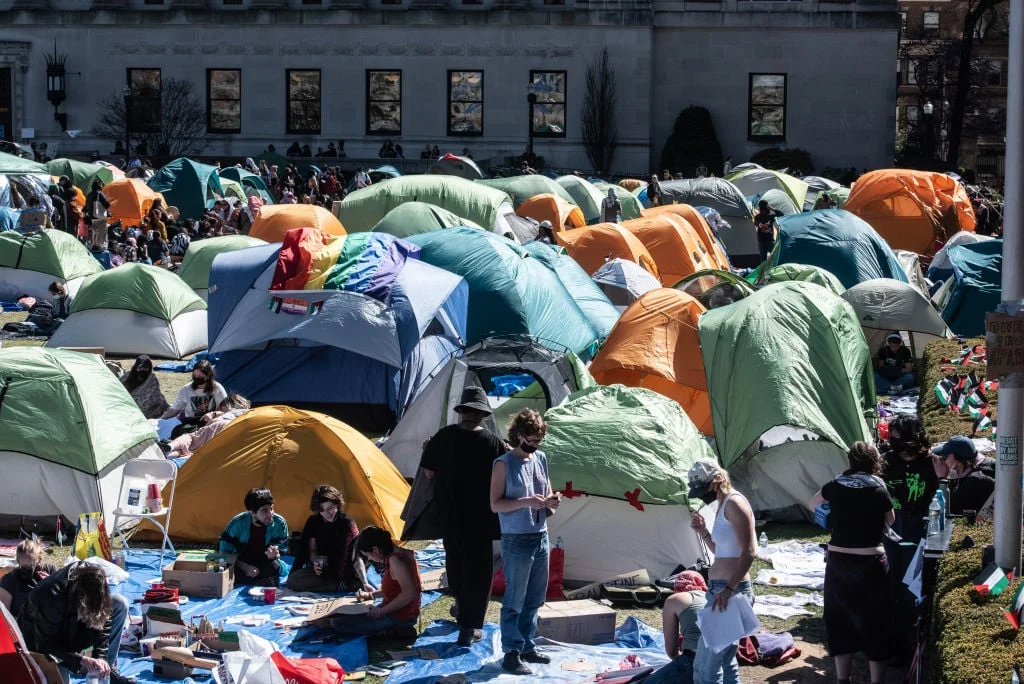
The origins of this controversy trace back to the spring of 2025, a period marked by intense campus protests and heightened national scrutiny regarding campus climate.
- March 2025: Career attorneys, including Haley Van Erem, were abruptly reassigned from their standard duties—often involving critical civil rights enforcement—to the HHS Office for Civil Rights. Their new mandate: support the Trump administration’s "Task Force to Combat Anti-Semitism" in its Title VI investigations.
- April 1, 2025: A pivotal meeting allegedly took place wherein HHS acting general counsel Sean Keveney purportedly unveiled the true goal of the investigations: to leverage Title VI findings to force universities into court-ordered settlements that would require them to disgorge massive sums of money from their endowments.
- The Funding Freeze: Over the following months, the Trump administration leveraged these investigations to freeze hundreds of millions of dollars in federal research grants, creating a financial stranglehold that forced institutions to the negotiating table.
- The Settlements and Litigation: By the summer of 2025 and into 2026, the outcomes varied. Columbia University, feeling the pressure, entered a $221 million settlement, effectively ceding significant institutional autonomy. Brown University committed $50 million to state-level workforce development. Harvard University, however, chose to fight in court—a gamble that paid off when a judge dismissed the administration’s lawsuit in August 2026.
Anatomy of an Alleged "Scheme"
The whistleblower disclosure, spanning dozens of pages, provides a granular account of how these investigations were allegedly weaponized. According to the attorneys involved, the legal foundation for these sweeping actions was remarkably thin, reportedly originating from a single New York Post article that alleged antisemitic incidents during medical school graduation ceremonies.
Working Backward from "Desired Terms"
Perhaps the most damaging allegation in the disclosure is the claim that staff were explicitly instructed to bypass the standard sequence of due process. Rather than conducting an objective compliance review, attorneys say they were pressured to "invert" the process. The objective was not to determine if a violation occurred, but to manufacture legal findings that would justify specific, pre-agreed-upon financial penalties.
"Staff were encouraged to… work backward from desired settlement terms, including provisions not directly tied to substantiated Title VI anti-harassment or antisemitism violations, to generate proposed findings that would support those terms," the complaint states.
The Abandonment of Legal Counsel
The disclosure claims that when career attorneys attempted to provide standard legal guidance, they were rebuffed. The complaint cites Sean Keveney as having asserted that the job of the Justice Department attorneys was not to provide legal advice or make objective legal determinations, but rather to facilitate the administration’s political objectives.
Further evidence suggests high-level coordination between the White House and federal agencies. Van Erem alleges that Daniel Shieh, an associate deputy director at the HHS Office for Civil Rights, admitted to expanding the scope of investigations—moving them beyond medical schools and into the broader university systems—solely to substantiate a Title VI violation finding where one might not otherwise exist.
The Human Cost: Internal Disruptions
For the attorneys involved, the reassignment was not merely a change of pace; it was a disruption of essential civil rights work. Haley Van Erem, for instance, highlights that she was pulled from five active cases involving the Americans With Disabilities Act (ADA). Her removal from these cases, including one where she served as lead counsel for enforcement regarding mental health services for children, left those matters in legal limbo with little time for transition.
The whistleblower complaint argues that this "abuse of authority" not only undermined the integrity of the university investigations but also actively harmed the vulnerable populations the Justice Department is legally mandated to protect.

Official Responses and Standoffs
The federal response to these allegations has been characteristically polarized. HHS, the agency at the heart of the most serious allegations, did not respond to multiple requests for comment.
The Department of Justice, however, issued a brief statement disputing the validity of the whistleblower claims. A spokesperson for the DOJ stated, "While at the DOJ, Ms. Haley Van Erem did not work on university investigations. And for all matters, the Department stands behind the integrity of these investigations."
This denial has done little to quell the firestorm in Congress. Rep. Jamie Raskin (D-MD), the ranking member of the House Judiciary Committee, has launched a formal investigation into the matter. Raskin has issued a blistering demand for Harmeet Dhillon, the assistant attorney general for civil rights, to testify before the committee.
"The full extent of your misconduct remains unclear," Raskin wrote to Dhillon. "At the very least, you have shown gross negligence in supervising the activities of your office. It is also a distinct possibility that you deliberately orchestrated a scheme to attack universities, their faculties, and their administrators for political purposes while defrauding the American people and the courts."
Implications: The Future of Federal Oversight
The fallout from this disclosure poses fundamental questions about the role of the federal government in higher education.
Erosion of Academic Autonomy
The settlements forced upon universities like Columbia and Brown represent a massive shift in the balance of power between the state and the academy. By conditioning federal research funding—the lifeblood of modern scientific advancement—on compliance with politically charged settlements, the Trump administration set a precedent that critics fear could be used to curb intellectual freedom across the ideological spectrum.
The Legal Precedent
The dismissal of the administration’s lawsuit against Harvard in August 2026 suggests that the judicial system may act as a check on such executive overreach. However, the legal costs and the administrative toll on the institutions are immense. For many, the "chilling effect" of the investigations may persist long after the legal battles have concluded.
A Test for the Civil Service
Finally, the disclosure serves as a high-stakes test for the American civil service. The core of the complaint is that career, non-partisan attorneys were forced to abandon their ethical oaths to serve a political agenda. If the allegations are substantiated by the Inspector General’s office, it will likely lead to calls for major reforms in how the Department of Justice handles civil rights enforcement, potentially limiting the power of political appointees to override the findings of career legal staff.
Conclusion: A Long Road to Accountability
As the investigation into the conduct of the Task Force to Combat Anti-Semitism begins in earnest, the academic and legal communities are watching closely. The case represents more than just a dispute over campus policy; it is a fundamental debate about the limits of executive power and the necessity of maintaining a firewall between political goals and the impartial application of the law. Whether this disclosure leads to meaningful reform or is buried in the partisan rhetoric of a divided Washington remains to be seen, but the damage to the perceived neutrality of these federal investigations may prove to be the most lasting legacy of the affair.