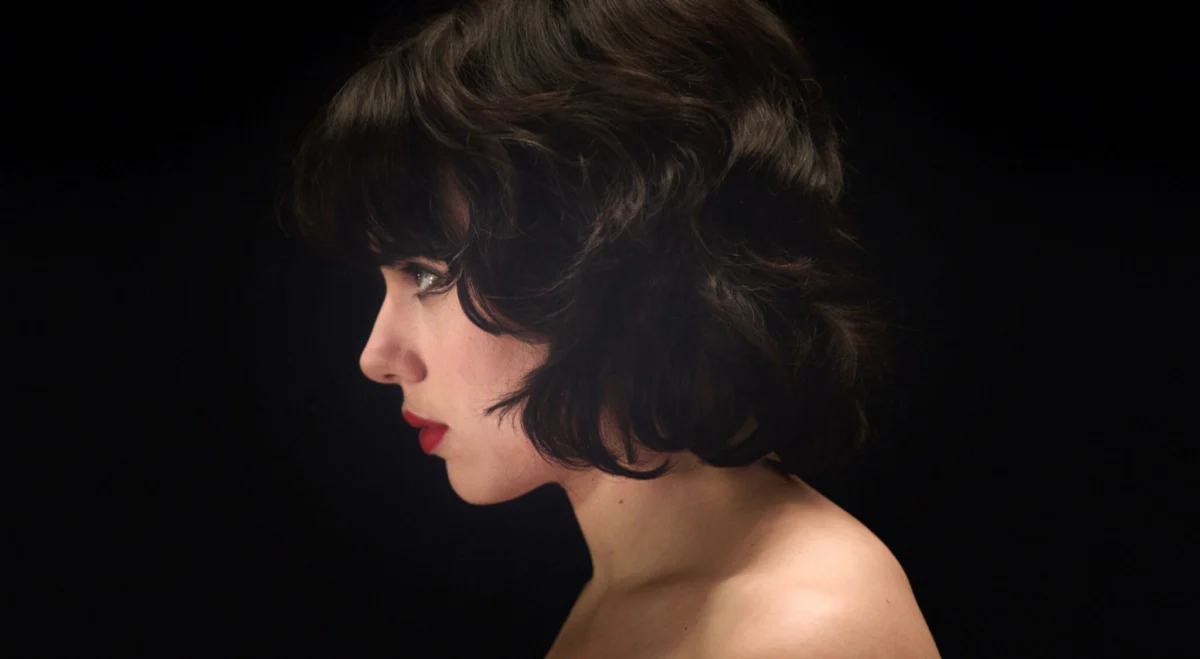
In the digital age, cinema is often distilled into bite-sized fragments. We live in an era of "clip culture," where a singular, out-of-context moment—a wink, a chase, or a provocative visual—can achieve viral immortality while the film from which it originated fades into obscurity. The internet is a graveyard of context, where the depth of a feature-length narrative is frequently sacrificed for the fleeting engagement of a five-second GIF.
This phenomenon has perhaps nowhere been more evident than in the public’s perception of Jonathan Glazer’s 2014 masterpiece, Under the Skin. For over a decade, the film has been reduced in the collective digital consciousness to its most provocative imagery: Scarlett Johansson, in various states of vulnerability, traversing the gray, rain-slicked streets of Scotland. However, to view Under the Skin solely through this voyeuristic lens is to perform a profound disservice to one of the most haunting, intellectually rigorous, and visually arresting science fiction films of the 21st century.
Fortunately, the film has recently become widely accessible, streaming for free across multiple platforms, offering a long-overdue opportunity for audiences to look past the viral snippets and engage with the full, chilling reality of Glazer’s vision.
The Genesis of an Arthouse Enigma
To understand the weight of Under the Skin, one must first acknowledge its origins. Based on the 2000 novel by Michel Faber, the film underwent a grueling, decade-long development process. While the book provides a relatively straightforward—albeit horrific—narrative regarding an alien entity harvesting human flesh as a delicacy for a distant interstellar market, the film takes a starkly different path.

Director Jonathan Glazer, known for his meticulous and often unconventional approach to visual storytelling, stripped away the exposition. In the transition from page to screen, the project shed its sci-fi procedural trappings and evolved into something more akin to a tone poem or a fever dream. The result is a film that demands total immersion. There are no government agents, no scientists explaining the mechanics of the extraterrestrial threat, and no clear-cut moralizing. The narrative is as cold and indifferent as the protagonist herself.
A Chronology of Obsession: The Alien’s Descent
The film follows an unnamed entity, portrayed with unnerving stillness by Scarlett Johansson, as she drives a nondescript van through the city of Glasgow. Her mission is simple: to lure lonely, marginalized men into a trap.
The Early Stages: Clinical Detachment
In the film’s opening act, we see the protagonist through a lens of extreme detachment. She is a hunter, observing humanity with the clinical curiosity of a biologist studying ants. The cinematography—frequently utilizing hidden cameras to capture the genuine reactions of unsuspecting pedestrians—adds a layer of documentary-style realism that makes the impending violence feel deeply unsettling.
The Turning Point: The Awakening of Empathy
As the narrative progresses, the "alien" begins to experience the friction of the human condition. A pivotal encounter with a man suffering from severe physical disfigurement serves as the catalyst for her transformation. This moment marks a departure from her original programming; she begins to exhibit signs of hesitation, curiosity, and, eventually, a terrifying approximation of empathy.

The Final Descent: The Cost of Humanity
The film’s conclusion is not a victory, but a tragedy. As the protagonist attempts to integrate into human society, she discovers that to be human is to be vulnerable. Her final act of rebellion—or perhaps, her final error—is a harrowing exploration of what happens when a being designed for total detachment is suddenly burdened with the weight of consciousness.
Supporting Data: A Critical Darling That Bombed
Despite its current status as a modern classic, Under the Skin was not an immediate success. It arrived in theaters with high expectations, yet it struggled to find a mainstream audience.
- Box Office Performance: Upon its initial release, the film grossed roughly $5.8 million globally against a production budget estimated at $13 million. It was, by conventional industry standards, a financial disappointment.
- Critical Reception: While the box office failed, the critical response was nothing short of rapturous. The film currently holds a high approval rating on aggregate sites like Rotten Tomatoes, with critics consistently praising Glazer’s direction, Mica Levi’s discordant and nerve-shredding score, and Johansson’s daring, minimalist performance.
- Cultural Legacy: In the years since its release, the film has appeared on numerous "Best of the Century" lists, including those published by The New York Times and the BBC. Its influence can be seen in the resurgence of "elevated horror" and experimental sci-fi, paving the way for films like Annihilation and Arrival.
The "Product Trilogy": A Commentary on Celebrity
A fascinating lens through which to view Under the Skin is to place it alongside two other films released around the same period: Spike Jonze’s Her (2013) and Luc Besson’s Lucy (2014). Together, they form what some film scholars have informally dubbed the "Johansson Product Trilogy."
In Her, Johansson provides the voice for Samantha, an AI operating system. Here, she is literally a product—a consumer service designed to fulfill the emotional needs of her user. In Lucy, she plays a woman transformed into an all-powerful, god-like entity, transcending the limits of the human body. Under the Skin acts as the dark, inverted mirror to these roles.
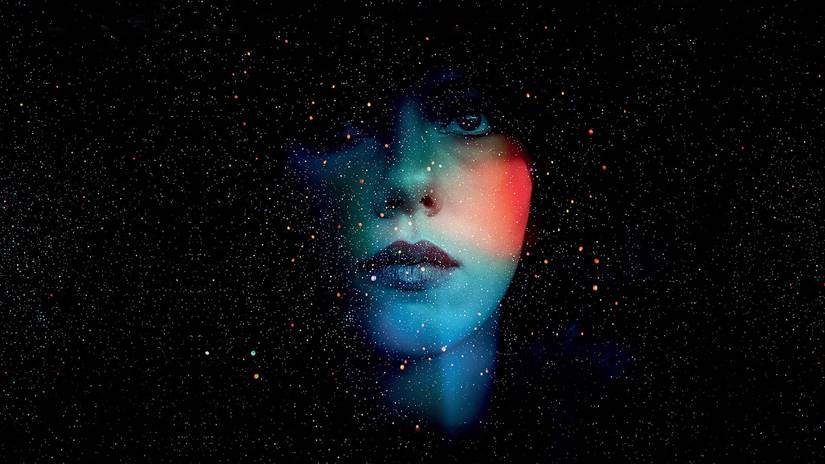
By 2014, Johansson was firmly established as one of the world’s most recognizable faces, largely due to her role as Black Widow in the Marvel Cinematic Universe. By choosing these three disparate projects, she was engaging in a meta-commentary on her own image. She was experimenting with what it means to be a "star"—a face that is sold, marketed, and consumed. In Under the Skin, she plays with this directly; she is a predator wearing the skin of a celebrity, using the very image that society has fetishized to lead men to their doom.
Implications: The Death of the Passive Viewer
The core implication of Under the Skin is that the medium of film is losing its capacity to challenge us. Because we are accustomed to films that hold our hand through every plot beat, Under the Skin feels "wrong" to the uninitiated. It lacks the safety rails of traditional narrative structure.
The film forces the viewer to become an active participant. Because the protagonist offers no dialogue for the first fourteen minutes, the viewer must read her eyes, her posture, and the environment. We are forced to decide whether she is a villain, a victim, or a blank slate.
This is the ultimate danger of "clip culture." When we reduce a film to a few seconds of visual provocation, we strip away the ambiguity that makes cinema an art form. We trade reflection for consumption. Under the Skin is a rejection of that consumption. It is a film that refuses to be "liked" in the traditional sense; it demands to be experienced, endured, and analyzed.

Conclusion: Watch the Whole Movie
We live in a time where access to high-art cinema has never been easier. Platforms like Tubi, Pluto TV, The Roku Channel, Plex, and Xumo Play have democratized the ability to see films that were once relegated to the dusty corners of arthouse theaters. There is no longer an excuse to rely on the curated fragments provided by social media algorithms.
Under the Skin is not a film for everyone. It is slow, it is dissonant, and it is frequently horrifying. But for those willing to step outside the comfort zone of conventional blockbuster filmmaking, it offers an experience that is rare in modern cinema: a film that is fundamentally, hauntingly unforgettable.
Scarlett Johansson’s performance is a masterclass in economy, and Jonathan Glazer’s direction is a triumph of visual storytelling. It is time to stop watching the clips and start watching the film. You owe it to the medium, and perhaps more importantly, you owe it to yourself to see the story behind the skin.
Under the Skin is currently available for free streaming on Tubi, Pluto TV, The Roku Channel, Plex, Fandango, and Xumo Play. It is also available for subscribers on Netflix.