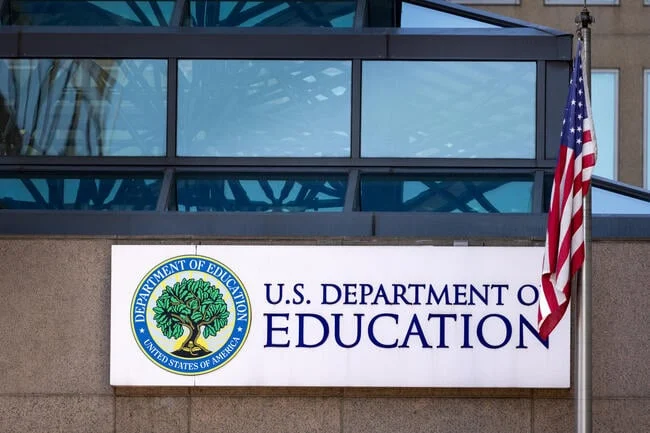
The U.S. Department of Education (ED) has formally expanded its investigation into Swarthmore College, signaling an escalation in federal oversight regarding allegations of antisemitism on the Pennsylvania campus. The probe, which has intensified under the current administration, centers on claims that the institution has failed to adequately address discriminatory conduct, specifically regarding a controversial social media post by an unaffiliated student group.
The expansion of the inquiry underscores a broader, nationwide effort by the federal government to hold institutions of higher education accountable for maintaining environments free from harassment and intimidation. At the heart of the current controversy is a digital video reposted by the "Swarthmore Students for Justice in Palestine" (SJP) group, which allegedly featured the burning of an effigy representing an Israeli soldier, timed to coincide with the third anniversary of the October 7, 2023, Hamas attacks on Israel.
A Chronology of Escalation: From Encampment to Federal Oversight
The roots of the current investigation stretch back to the turbulent academic year of 2023-2024, a period characterized by heightened tensions on college campuses across the United States. Following the October 7 attacks, Swarthmore, like many peer institutions, became a focal point for student activism, protests, and counter-protests.
The 2024 Catalyst
The initial federal involvement in Swarthmore’s campus climate began in 2024. During that period, the Department of Education opened two distinct investigations into the college under Title VI of the Civil Rights Act of 1964. These investigations were initiated to determine whether the college had failed to protect students from discrimination based on their shared ancestry or ethnic characteristics, with at least one case specifically documenting concerns raised by Jewish students regarding their safety and inclusion on campus.
The September 2025 Crackdown
Tensions reached a breaking point in September 2025, when a multiday encampment organized by the Swarthmore chapter of Students for Justice in Palestine disrupted campus operations. The protest, which sought to draw attention to the humanitarian crisis in Gaza and demand institutional divestment, resulted in law enforcement intervention and the subsequent arrest of nine individuals. In the wake of these events, Swarthmore College administration moved to permanently revoke the group’s official affiliation with the institution.
The October 2026 Incident
The most recent flashpoint occurred in October 2026. Despite being stripped of its official status—which bars the group from accessing college funds, reserving campus facilities, or acting as an official representative of the student body—the group continued to operate independently. The republication of the video depicting the burning of an Israeli soldier’s effigy served as the direct trigger for the Department of Education’s decision to expand its existing investigation. Federal regulators characterized the content as a potential incitement to violence and a form of targeted harassment that violates the civil rights of Jewish students.
The Institutional Defense: Swarthmore’s Stance
Swarthmore College President Valerie Smith has consistently navigated a precarious path between protecting the institution’s long-standing commitment to free speech and addressing the escalating concerns regarding campus safety. In a formal statement following the expansion of the federal inquiry, President Smith maintained that the allegations against the college are without merit.
Clarifying the Limits of Authority
A core component of the administration’s defense is the legal and practical distinction between an officially recognized student organization and an independent group operating without college sanction. Smith emphasized that because the SJP group had its affiliation revoked in 2025, the college possesses no oversight or control over its digital communications or private organizational decisions.
"We believe the complaints against the College that led to the Office for Civil Rights’ expanded investigation have no merit," Smith stated. She further noted that the administration remains uncertain whether the individuals currently operating the group are even currently enrolled students at the college, further complicating the administration’s ability to impose disciplinary measures.
A Balancing Act of Values
Despite her defense of the institution’s compliance, President Smith unequivocally condemned the content of the video. "I condemn the hateful depiction of violence, just as I do all forms of antisemitism, Islamophobia, and other discrimination within our community," she said.

Smith reiterated that while Swarthmore upholds the right to express controversial or even objectionable views, that right is not absolute. She argued that the college’s commitment to academic freedom cannot exist at the expense of a community’s right to learn, work, and live without being subjected to intimidation or harassment.
Federal Perspectives: The Department of Education’s Mandate
The current administration’s approach to campus antisemitism has been marked by a shift toward more assertive federal intervention. Assistant Secretary for Civil Rights Kimberly Richey, in her announcement regarding the expanded probe, utilized sharp language to criticize the administration of the college.
The "Asleep at the Wheel" Doctrine
Richey’s comments reflected a broader mandate from the White House to ensure that universities do not use the guise of "free speech" to tolerate hate speech or the promotion of violence. "If Swarthmore has in fact turned a blind eye to such provocation—using the most horrific acts of violence against Jews since the Holocaust as a propaganda tool—someone is asleep at the wheel," Richey wrote.
This rhetoric suggests that the federal government is moving beyond a passive investigatory role and is prepared to apply significant political and potentially financial pressure on institutions deemed to be failing in their legal obligations to protect students. The Assistant Secretary concluded by asserting that the current administration will not permit the emergence of "unsafe learning environments" on American campuses.
Broader Implications for Higher Education
The expansion of the Swarthmore investigation is a microcosm of a much larger crisis facing American higher education. As colleges grapple with the fallout of global geopolitical conflicts, they find themselves caught in a crossfire of legal, ethical, and political demands.
The Title VI Conundrum
Title VI of the Civil Rights Act prohibits discrimination on the basis of race, color, or national origin in programs receiving federal financial assistance. The recent surge in investigations—covering over 60 institutions—indicates that the Department of Education is interpreting this statute with increased rigor. For universities, this means that their policies regarding student protests, social media conduct, and campus safety are now under a permanent federal microscope.
The Limits of Disaffiliation
The Swarthmore case raises a significant question for college administrators: To what extent is a university responsible for the actions of "rogue" or disaffiliated student groups?
If the Department of Education determines that Swarthmore is responsible for the conduct of the SJP, even after the group was stripped of its status, it would set a significant precedent. It would effectively mandate that universities take active, proactive steps to censor or dismantle independent groups if their speech is deemed to contribute to a hostile environment. Conversely, if the administration successfully argues that its disciplinary actions—the revocation of status—sufficiently insulate the college from liability, it could provide a roadmap for other universities struggling with similar student organizations.
The Future of Campus Discourse
The tension between protecting minority groups from discrimination and upholding the First Amendment will remain a defining feature of the academic landscape for the foreseeable future. As the federal government continues to investigate, institutions like Swarthmore are forced to define the boundaries of "harassment" and "intimidation" in an increasingly digital and polarized world.
For the students, faculty, and administration at Swarthmore, the coming months will be critical. The outcome of this investigation will not only determine the college’s standing with federal regulators but will also likely shape the future of student activism, the enforcement of civil rights on campus, and the very definition of what constitutes a safe, inclusive, and free academic community in the 21st century.