By Corey Plante
Published October 13, 2026
Two decades ago, the landscape of science fiction television was irrevocably altered by a single, heart-stopping hour of television. In Battlestar Galactica season 3’s “Exodus, Part 2,” the series delivered what remains perhaps the most audacious, visually stunning, and emotionally resonant space battle ever broadcast. While the "Adama Maneuver"—in which the Galactica drops into a planet’s atmosphere, launches Vipers, and jumps away just before impact—is the sequence that etched itself into pop-culture history, it was merely the opening act. The true climax of the episode, and the series’ most defining sacrifice, was the final, fiery descent of the Battlestar Pegasus.
The Context: A Nation Under Siege
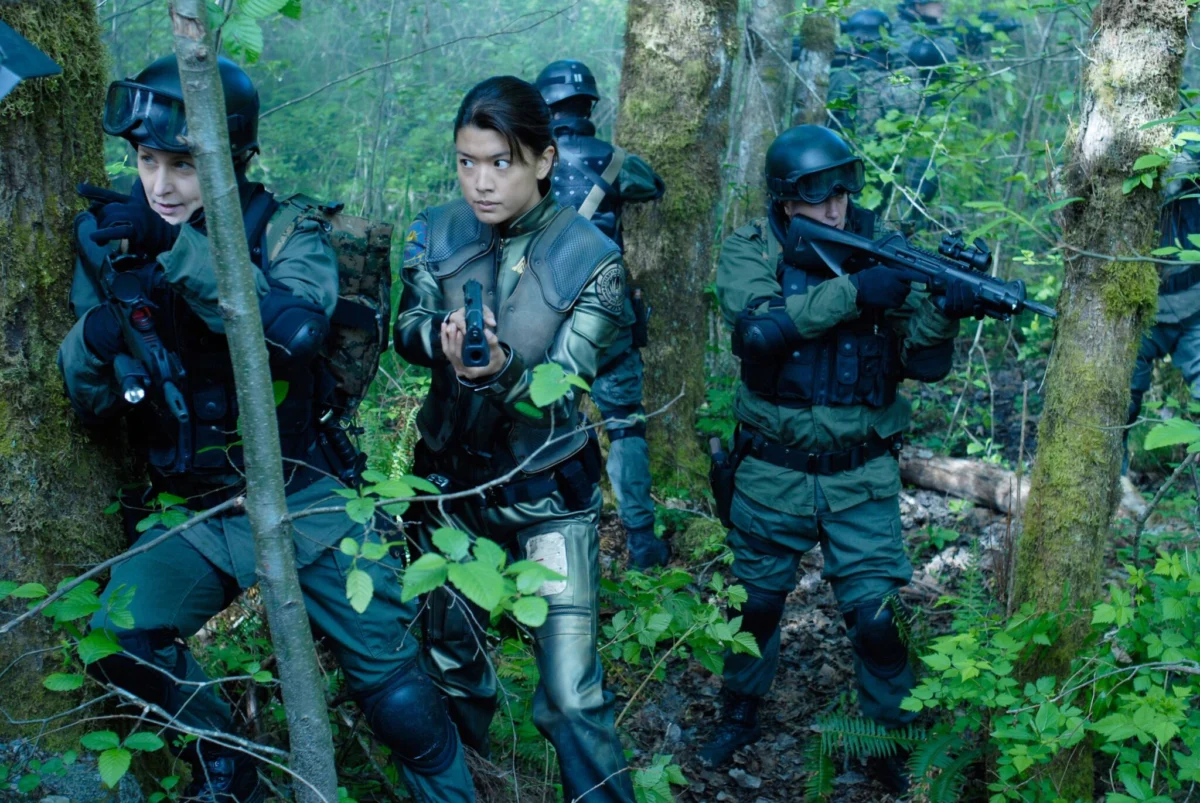
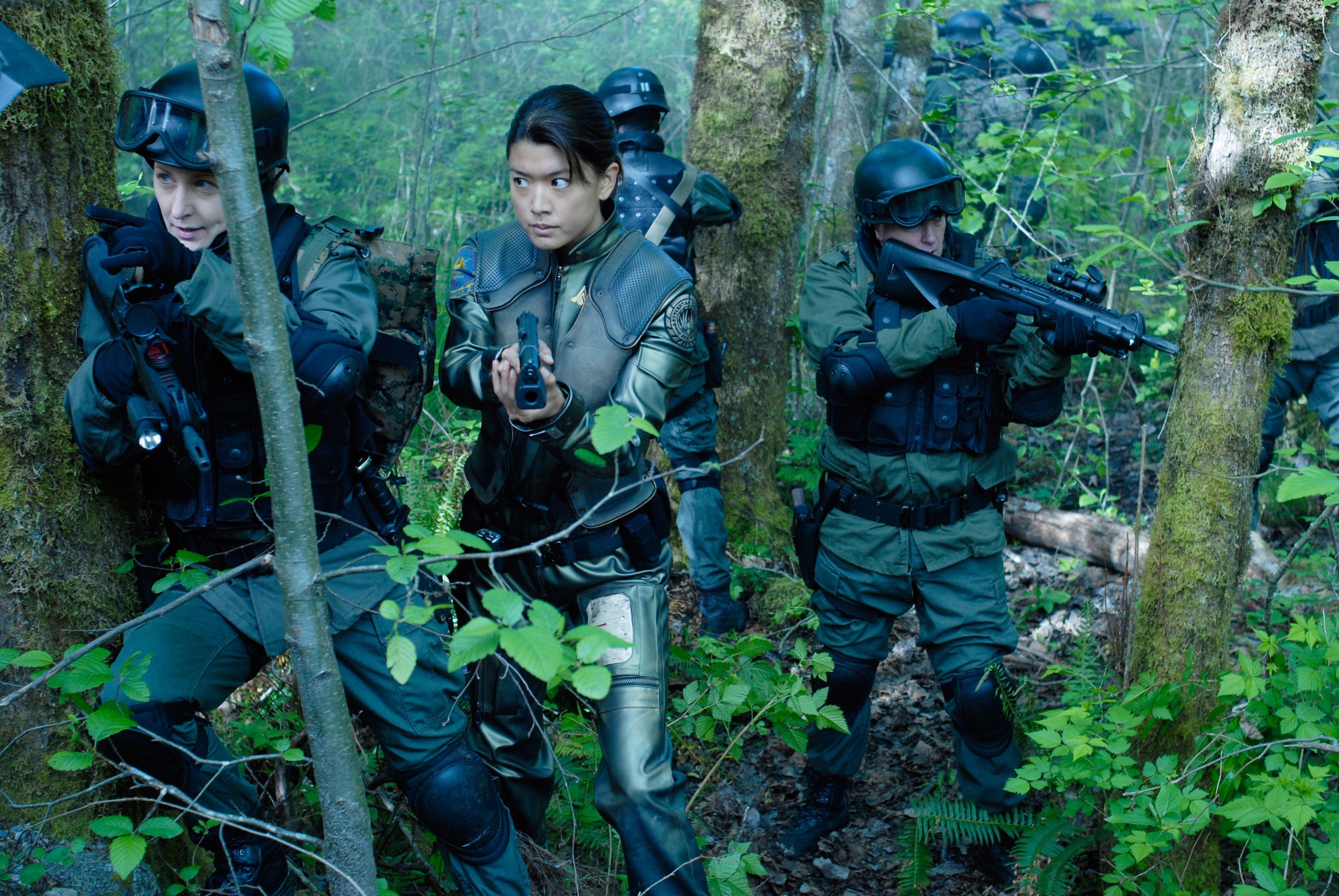
To understand the gravity of the "Exodus" arc, one must look at the dire circumstances facing the survivors of the Twelve Colonies. The New Caprica storyline, which spanned the end of season 2 and the beginning of season 3, served as a harrowing exploration of occupation, collaboration, and the cost of freedom.
Humans were trapped on the surface of a desolate planet, living under the iron-fisted rule of the Cylons. The narrative tension had been tightened to the breaking point: Sharon Agathon was deep undercover, the resistance movement was fractured, and the political leadership was effectively neutralized. The production team, led by executive producer Ronald D. Moore, understood that the resolution to this arc required a cinematic scale that standard television episodes rarely afforded. By splitting "Exodus" into two parts, the producers were able to pool resources, creating a massive, multi-front battle that felt less like a standard episode and more like a feature-length war film.
Chronology of a Cataclysm
The sequence of events in “Exodus, Part 2” is a masterclass in pacing. As the civilian fleet prepares to launch, the resistance on the ground executes a desperate uprising. Admiral William Adama (Edward James Olmos) commits the Galactica to a suicide run, falling through the atmosphere of New Caprica in a maneuver that defied the laws of physics and the expectations of the audience.
However, the "Adama Maneuver" was never meant to be a standalone victory. Once the Galactica—battered and burning—emerged from the atmosphere, it found itself swarmed by four Cylon basestars. The survival of the fleet rested on a knife’s edge. It was at this moment that Lee "Apollo" Adama (Jamie Bamber), commanding the Pegasus, chose to disregard his father’s orders to retreat.

The ensuing tactical decision was not merely an act of bravery; it was a total commitment to the end of the Pegasus as a fighting vessel. Lee ordered the evacuation of his crew, set the ship’s weapons to a fully automated firing cycle, and steered the most advanced warship in the Colonial fleet into a collision course with the enemy.
Tactical Brilliance and Technical Mastery
The destruction of the Pegasus was more than a plot device; it was a technical triumph for the visual effects team at Atmosphere Visual Effects. The sheer complexity of the sequence—involving hundreds of independently animated Cylon Raiders, massive explosions, and the debris of a dying capital ship—set a new bar for television production.
Lead compositor Brenda Campbell noted in later reflections on the production that the sequence consisted of roughly 250 to 300 elements per compositing flow, spread across ten distinct shots. Because the ships, weapons fire, and massive explosions interacted in a continuous, high-speed environment, the team could not rely on traditional pre-compositing tricks. Every frame had to be carefully balanced to match the show’s signature handheld, documentary-style aesthetic. The result was a sequence that felt visceral and tangible, winning the 2007 Emmy for Outstanding Special Visual Effects for a Series.
The Human Element: Why the "Peggy" Had to Die
The decision to destroy the Pegasus was not made lightly by the creative team. Throughout the writing process, various drafts were considered. Some iterations explored the possibility of the Galactica being destroyed, with the crew migrating to the newer, more powerful Pegasus. However, the creative team quickly realized that the show’s core identity was tied to the aging, "scrappy" Galactica.
"We destroyed the Pegasus anyway," Ronald D. Moore famously remarked during the production podcasts. The writers recognized that having two capital ships divided the cast and the resources of the show too thinly. The Pegasus represented a luxury the humanity of the fleet could no longer afford; it was a symbol of the old military-industrial complex that was forced to give its life to save the remnants of the civilian population.
The staff’s attachment to the ship was palpable. When the visual effects artists caught wind of the ship’s scripted demise, they hung a "SAVE THE PEGASUS" banner outside their workspace. It was a gesture that was both humorous and deeply poignant—a testament to how much the production team had grown to love the model, even as they prepared to turn it into cosmic scrap metal.
The Emotional Toll of Liberation
The aftermath of the battle is where the true brilliance of the "Exodus" arc lies. In many television dramas, a massive, successful rescue mission would lead to a period of celebration. Battlestar Galactica rejected this. While the liberation of New Caprica was a strategic win, the psychological scars remained.
The characters were reunited, but they were not the same people who had arrived on the planet. The occupation had forced them to make impossible moral choices—betrayals, executions, and agonizing compromises. The loss of the Pegasus served as a physical manifestation of the cost of that survival. The fleet was "free" once more, but they were smaller, more vulnerable, and fundamentally changed by their experiences.
Implications for the Series
By returning to the show’s original format—a single, battered ship on the run searching for a mythical Earth—"Exodus" reset the stakes. The show proved that it could move between scales, from the intimate, ground-level trauma of an occupation to the grand, sweeping theater of deep-space combat, without losing its focus on the human experience.
The destruction of the Pegasus also signaled to the audience that no character, ship, or sanctuary was safe. In the universe of Battlestar Galactica, victory is rarely a matter of grand triumph; it is a matter of endurance. The Pegasus did not just die; it gave its life to ensure the survival of the Galactica, and by extension, the survival of the species.
A Legacy of Spectacle
Twenty years later, the scene remains a benchmark for the genre. In an era where CGI-heavy space battles are common, the final moments of the Pegasus stand out because of their narrative weight. We remember the ship tearing through the basestar and the flight pod spinning away not just because it looked spectacular, but because it felt like a genuine loss.
The artists at Atmosphere Visual Effects may have been forced to destroy their favorite ship, but in doing so, they created a legacy that has endured for two decades. The "Adama Maneuver" might be the hook that draws viewers into the episode, but the death of the Pegasus is the anchor that holds it in the memory. For those watching the series today—perhaps catching it on streaming services like Pluto TV—the impact remains as potent as it was in 2006. It serves as a reminder that the greatest stories in science fiction are not just about the ships we fly, but the sacrifices we are willing to make to keep moving forward into the dark.