The international landscape turned its gaze toward the African continent this week as a series of disparate but significant events—ranging from the pinnacle of humanitarian recognition to urgent public health crises and the global elevation of contemporary art—reshaped the narrative of the region.
At the heart of the week’s developments is the crowning of South African jurist Navi Pillay with the Nobel Peace Prize, a recognition that cements her status as a titan of human rights. Simultaneously, Nairobi is grappling with a precarious health containment effort, while the Parisian art scene celebrates the bold, kaleidoscopic vision of Moroccan-British photographer Hassan Hajjaj.
Navi Pillay: A Lifetime Dedicated to Justice
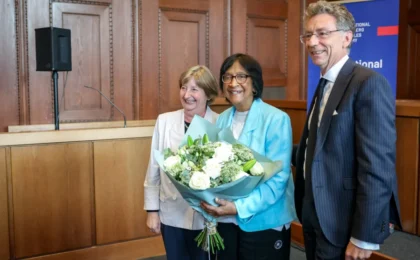
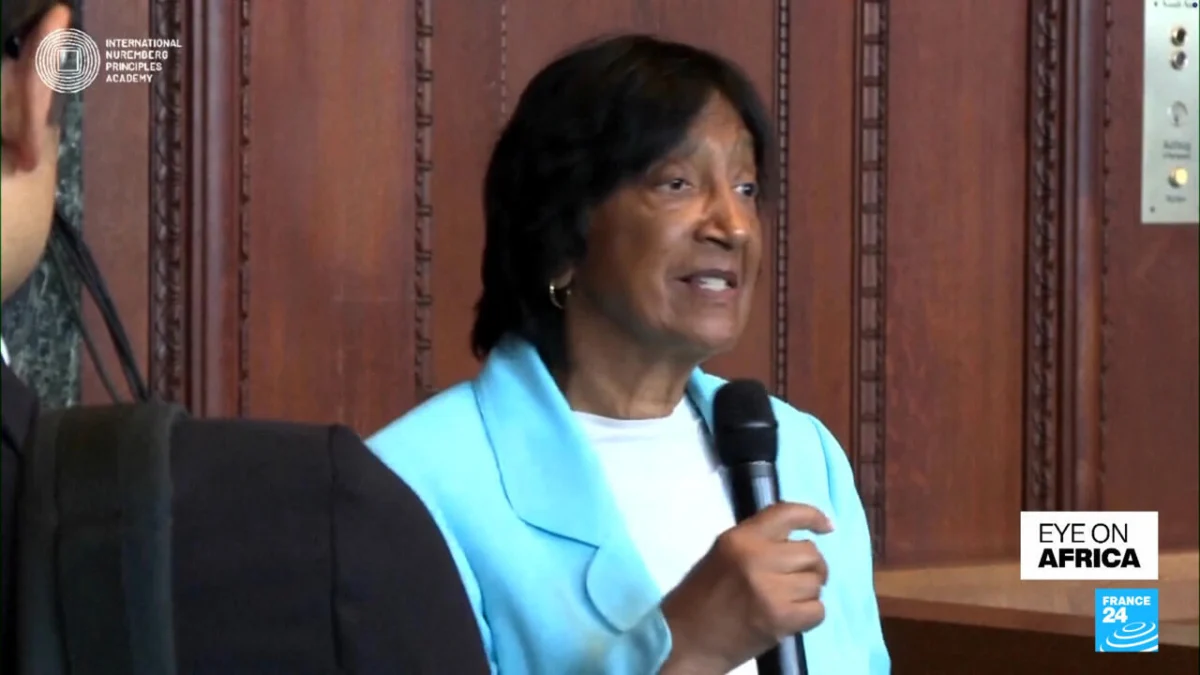
The Nobel Peace Prize Recognition
The announcement that Navi Pillay has been awarded the Nobel Peace Prize serves as a watershed moment for international jurisprudence. A former United Nations High Commissioner for Human Rights and a judge at both the International Criminal Court (ICC) and the International Criminal Tribunal for Rwanda (ICTR), Pillay has spent decades dismantling the structures of systemic inequality and impunity.
Pillay’s career has been defined by her unwavering commitment to the marginalized. Born in Durban during the height of apartheid, she became the first non-white woman to open a law practice in Natal province. Her early work focused on defending anti-apartheid activists, often under extreme duress from the state security apparatus.
Her transition to the international stage saw her spearheading landmark rulings, most notably in the ICTR, where she presided over the case of Jean-Paul Akayesu. The ruling established that rape and sexual violence could be prosecuted as acts of genocide, a decision that fundamentally altered international criminal law and provided a voice to countless victims of conflict-related sexual violence.
Supporting Data: The Impact of Her Jurisprudence
Pillay’s influence extends beyond individual verdicts. During her tenure as UN High Commissioner (2008–2014), she navigated some of the most volatile geopolitical crises of the 21st century. Her office’s reports were instrumental in pushing for accountability in the Syrian Civil War, the Sri Lankan conflict, and the post-election violence in Kenya. Analysts suggest that her Nobel win is not merely a celebration of her past but a strategic endorsement of the rule of law in an era of increasing global authoritarianism.
Nairobi’s Public Health Emergency: The Race Against Transmission
A City on Edge
While Oslo celebrated the cause of peace, Nairobi found itself in the grip of a different kind of urgency. Kenyan health officials are currently engaged in a high-stakes effort to trace and isolate individuals who may have come into contact with a man who succumbed to a viral infection earlier this week.
The sudden nature of the death and the subsequent confirmation of a dangerous pathogen have triggered a city-wide health alert. The Ministry of Health, in coordination with the World Health Organization (WHO) Africa regional office, has initiated a contact-tracing operation that includes screening travelers at Jomo Kenyatta International Airport and monitoring movement in informal settlements where density makes transmission risks particularly acute.
Chronology of the Crisis
- Monday: The index patient presented with severe respiratory symptoms at a local clinic in Nairobi.
- Tuesday: The patient passed away shortly after admission. Post-mortem diagnostics confirmed the presence of a viral strain that requires strict quarantine protocols.
- Wednesday: Public health authorities mobilized contact tracing teams to identify the patient’s associates, family members, and medical personnel who handled the case.
- Thursday/Friday: The Ministry of Health issued a public appeal for anyone who had been in contact with the patient to report to designated testing centers.
Official Responses
Health Minister Dr. [Name] emphasized in a press briefing that "the situation is contained, but the window for tracing is narrow." The government has deployed mobile testing units across the capital. International health observers have noted that Kenya’s response speed is significantly more robust than in previous years, reflecting a "lessons learned" approach following the regional outbreaks of the past decade.
Cultural Diplomacy: Hassan Hajjaj’s "Rock Stars" in Paris
Bridging Worlds Through the Lens
Away from the intensity of the courtroom and the health clinic, the cultural sphere is witnessing a vibrant intersection of North African identity and contemporary global aesthetics. Moroccan-British photographer Hassan Hajjaj, often dubbed the "Andy Warhol of Marrakech," has seen his "Rock Stars" series take center stage at a prestigious exhibition in Paris.

The series features 40 iconic portraits of Gnawa musicians—traditional spiritual performers from Morocco—reimagined through a contemporary, high-fashion lens. Hajjaj’s work is characterized by his signature use of repurposed consumer goods; frames are often constructed from discarded commercial packaging, soda cans, and vibrant patterned fabrics, creating a visual dialogue between consumerism, heritage, and identity.
Implications for the Diaspora
Hajjaj’s success in Paris is a testament to the shifting dynamics of the global art market. By elevating North African cultural figures to the status of "Rock Stars," he challenges Western-centric narratives of art. The exhibition is being hailed by critics as a masterclass in visual storytelling, effectively bridging the gap between the rural traditions of the Maghreb and the cosmopolitan energy of European metropolises.
Implications: A Continent in Flux
The events of this week highlight the duality of the African experience in the modern age.
1. The Primacy of Human Rights: The Nobel Prize for Navi Pillay underscores that African leadership remains at the forefront of the global struggle for human dignity. Her win is expected to embolden civil society organizations across the continent that are currently fighting against shrinking democratic spaces.
2. The Resilience of Public Health Systems: The ongoing situation in Nairobi serves as a stark reminder of the infrastructure challenges facing African urban centers. However, the coordinated response demonstrates a maturing ability to handle health emergencies. The long-term implication will likely be increased investment in decentralized diagnostic facilities across East Africa.
3. Cultural Soft Power: The international acclaim for Hassan Hajjaj underscores the growing economic and cultural footprint of African creatives. This "soft power" is increasingly becoming a critical component of diplomatic and economic relations between Africa and Europe, moving beyond traditional commodity-based interactions toward a more nuanced, intellectual, and creative exchange.
Looking Ahead
As the world monitors the health situation in Nairobi, celebrates the moral authority of Navi Pillay, and appreciates the aesthetic innovation of Hassan Hajjaj, it is clear that the continent is at a crossroads. The integration of judicial rigor, public health vigilance, and cultural expression will define the region’s trajectory for the remainder of the decade.
The coming weeks will be crucial. For Nairobi, the goal remains zero transmission; for the human rights community, the goal is to leverage the momentum of the Nobel win to push for further reforms; and for the art world, it is a moment to recognize that the center of gravity in global creativity has decisively shifted toward the vibrant, complex, and resilient landscapes of the African continent.
This report is based on current updates from the "Eye on Africa" program. Further developments regarding the health situation in Kenya and the fallout of the Nobel Prize announcement will be provided as they emerge.