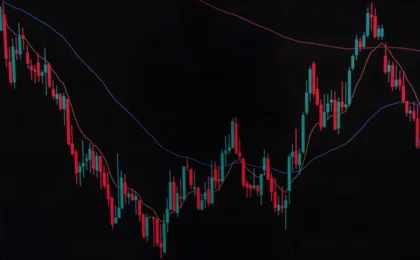
In a display of remarkable market fortitude, U.S. equities concluded the week on a high note, effectively climbing a "wall of worry" constructed from stubborn inflationary pressures, rising bond yields, and cooling consumer sentiment. Despite the macroeconomic headwinds, investors remain buoyed by the prospect of a robust third-quarter corporate earnings season, viewing the recent volatility as a temporary hurdle rather than a structural threat to the bull market.
At the closing bell on Friday, the Dow Jones Industrial Average ascended 0.8% to reach 51,654. The S&P 500, a broader barometer of market health, added 0.6% to finish at 7,811, while the tech-heavy Nasdaq Composite similarly gained 0.6%, settling at 27,366. This collective surge ensured that all three major benchmarks wrapped up the week with positive gains, signaling a resilient underlying sentiment among institutional and retail participants alike.
The Macroeconomic Backdrop: Yields and Energy Costs
The market’s Friday ascent occurred in the face of renewed pressure from the bond market. Treasury yields, which have been a primary focal point for investors throughout the year, resumed their upward trajectory. The 2-year Treasury note yield rose 3.3 basis points to 4.793%, while the 10-year Treasury yield climbed 1.1 basis points to 5.244%. Typically, rising yields act as a "gravity" force on equity valuations, particularly for high-growth tech stocks; however, the market shrugged off these pressures, suggesting that investors are currently more focused on corporate profitability than on the cost of debt.
Simultaneously, the energy sector exerted its own influence. West Texas Intermediate (WTI) crude futures rose 0.4%, settling at $91.85 per barrel. The persistence of elevated energy costs has stoked fears regarding "sticky" inflation, which remains a key variable for the Federal Reserve’s monetary policy path. Market participants are now bracing for the upcoming week, which is anchored by the release of the September Consumer Price Index (CPI) on Wednesday morning. This data point will be crucial in determining whether the inflationary environment is moderating or if the "higher for longer" interest rate regime will require further adjustments.
Chronology of the Week’s Sentiment
The week was characterized by a push-and-pull dynamic. Early in the week, investors navigated geopolitical uncertainties and shifting bond market narratives. As the week progressed, the focus pivoted sharply toward the upcoming earnings season.
By Friday, the narrative had shifted toward a "buy the dip" mentality. While the University of Michigan’s preliminary Consumer Sentiment Index provided a sobering update—falling 3.7% month-over-month to a reading of 46.3, its second-lowest level on record—the market largely ignored the gloom. This disconnect between consumer reality and market optimism is a hallmark of the current cycle, where investors appear to be discounting weak consumer data in favor of anticipated corporate growth.
Expert Analysis: Is the "Wall of Worry" Taller?
Bob Edwards, chief investment officer at Edwards Asset Management, captures the prevailing sentiment among seasoned market watchers. "The wall of worry is getting taller," Edwards notes, acknowledging the barrage of negative headlines regarding inflation and geopolitical instability. However, he offers a pragmatic counter-argument: "Investors may be focusing too heavily on rising bond yields and geopolitical uncertainty while overlooking the extraordinary strength of corporate earnings."
Edwards points to the horizon, where earnings reports are set to provide the necessary fundamental validation for current valuations. "Third-quarter S&P 500 earnings growth year-over-year is expected to approach 30%," he highlights. "The start of earnings season in the coming days will act as a much-needed reminder for just how good the earnings picture is."
This perspective is echoed by analysts at various firms who argue that while headline GDP data might be uninspiring, the underlying profitability of S&P 500 constituents remains resilient, driven by operational efficiencies and pricing power that many corporations have managed to maintain despite the economic cooling.
The Consumer Sentiment Paradox and Midterm Implications
The decline in consumer sentiment is not merely a macroeconomic indicator; it has profound political and social implications. Joanne Hsu, Director of the Surveys of Consumers at the University of Michigan, notes, "Frustration over cost-of-living continues to mount, as consumers across the political spectrum believe that the trajectory of the economy has weakened since the beginning of the year."
This sentiment is increasingly being viewed through the lens of upcoming electoral cycles. Jim Baird, CIO with Plante Moran Financial Advisors, suggests that the disconnect between the stock market’s performance and the average citizen’s experience is reaching a critical inflection point. "Consumers across the political spectrum are frustrated with rising prices and a sense of treading water financially," Baird observes. "It may not be readily apparent in headline GDP data, but it is likely to be very apparent as voters cast their ballots in the coming weeks."
This divergence creates a unique environment where the "wealth effect" of a rising stock market is not necessarily translating into improved household sentiment, potentially creating volatility in political discourse as the midterm elections approach.
Telecom Sector Disruption: The SpaceX Factor
The most significant individual stock movements on Friday were concentrated in the telecommunications sector, triggered by a disruptive announcement from SpaceX. On Thursday, the space exploration and AI giant revealed it is acquiring a nationwide low-band spectrum license portfolio.
The market response was swift and brutal for traditional players:
- AT&T shares fell 9.8%.
- T-Mobile US dropped 13.3%.
- Verizon Communications retreated 8.8%.
Investors viewed the move as a major step toward Elon Musk’s goal of positioning his "Starlink Mobile" segment as a legitimate competitor in the U.S. mobile carrier market. UBS Global Research analyst John Hodulik described the development as "the most tangible step SpaceX has taken to date to build out the stack required to offer a proper mobile network."
However, Hodulik cautioned that the sharp sell-off in telecom stocks might be an overreaction. "It is a knee-jerk reaction," he stated, noting that the infrastructure required for SpaceX to become a primary carrier will involve a lengthy, capital-intensive buildout, during which time the incumbents will have ample opportunity to adjust their strategies.
Conversely, wireless tower providers experienced a windfall. American Tower jumped 9.3%, and Crown Castle surged 15.6%, as investors bet that any new network expansion—regardless of the provider—will require the extensive tower infrastructure that these companies control.
Airline Performance: Delta’s Rare Earnings Miss
In the broader earnings landscape, Delta Air Lines provided a case study in the challenges of the current inflationary environment. The company reported a rare earnings miss, with profits of $1.72 per share, falling short of the $1.76 analyst estimate. The culprit was unambiguous: fuel costs, which came in $500 million higher than anticipated.
Delta’s subsequent decision to trim its full-year guidance underscored the vulnerability of even high-performing blue-chip stocks to commodity price spikes. Despite this, the underlying demand for travel remains robust. Delta reported a 21% year-over-year revenue increase to $20.2 billion, exceeding expectations.
Wall Street’s reaction to the news has been largely constructive, reflecting a "forgiving" market that remains committed to long-term growth stories. S&P Global Market Intelligence data indicates that of the 25 analysts tracking Delta, 24 maintain a "Buy" or "Strong Buy" rating. With an average price target of $101.48, the street sees an implied 24% upside, suggesting that analysts view the fuel-cost miss as a transient issue rather than a structural decline in the airline’s business model.
Implications for the Future
As the market moves into the heart of the third-quarter earnings season, several themes are likely to dominate the discourse.
- Earnings vs. Macro: The tug-of-war between strong corporate earnings and macroeconomic headwinds (inflation, rates) will determine whether the current rally can be sustained through the end of the year.
- Infrastructure Resilience: The telecom sector’s reaction to SpaceX highlights how quickly technological disruption can reshape sector valuations, even when the transition is years away.
- The Political Variable: As consumer sentiment hits historic lows, the impact on voter behavior and subsequent government policy will become a primary concern for market strategists.
In conclusion, while the "wall of worry" is indeed growing, the market’s behavior on Friday suggests that investors are increasingly comfortable operating in an environment of high yields and high uncertainty, provided that the foundational strength of corporate America remains intact. The coming week, with its critical CPI report and the acceleration of earnings season, will serve as the ultimate stress test for this optimism.