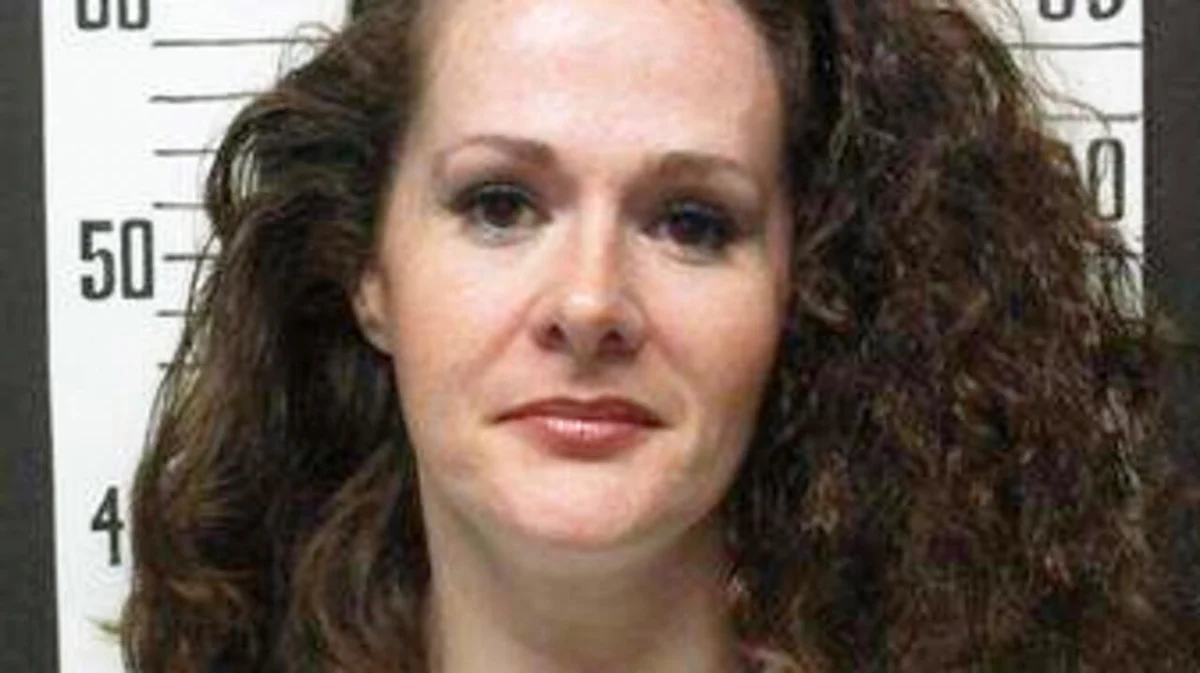
In an unprecedented turn of events that has sent shockwaves through the American legal system, 50-year-old Christa Pike has regained consciousness following a failed execution attempt that has been described by witnesses and legal experts as a harrowing display of bureaucratic and medical incompetence. Pike, who was set to become the first woman executed by the state of Tennessee in two centuries, survived the botched administration of lethal injection drugs at the Riverbend Maximum Security Institution in Nashville on September 30, 2026.
As of Tuesday, her defense team confirmed that Pike is awake and speaking, though she remains in a critical medical state. Despite her physical trauma—which includes severe chemical burns and blistering on her arms—she remains shackled and handcuffed to her hospital bed under constant guard. Her survival has transformed a standard capital punishment procedure into a constitutional crisis, reigniting the national debate over the ethics, efficacy, and legality of the death penalty in the United States.
A Chronology of a Failed Procedure
The ordeal began on the evening of September 30, a night that was intended to mark the culmination of a three-decade-long judicial process. However, the execution protocol quickly devolved into what observers described as two-and-a-half hours of "disarray and prolonged distress."
The Execution Attempt
According to contemporaneous accounts from journalists present as witnesses, the execution process was marked by confusion from the outset. Department of Correction personnel reportedly struggled for an extended period to establish intravenous access. Pike, who suffered from documented medical conditions—including small veins and a blood disorder known as thrombocytosis—was subjected to repeated attempts to insert IV lines.
Witnesses, including WPLN reporter Catherine Sweeney, noted that the scene was entirely devoid of the clinical precision typically claimed by state execution protocols. Throughout the ordeal, Pike was audibly distressed, crying, whimpering, and gasping for air. At one point, she was heard to exclaim, "My arm feels like it’s about to burst open." The agony was the result of pentobarbital—a highly alkaline and caustic substance—leaking into the surrounding tissues of her arms rather than entering her veins. The resulting chemical burns have left her with extensive blistering and swelling.
The Emergency Intervention
As the procedure stalled and Pike’s suffering intensified, her legal team filed an emergency motion in an attempt to halt the state’s actions. By the time the legal maneuver was underway, the prison officials had already ceased their efforts and summoned emergency medical services. Pike was subsequently transported to a hospital, where she remained in a coma for several days, hooked to a ventilator as medical staff worked to flush the toxic pentobarbital from her system.
The Underlying Crime: A Thirty-Year Shadow
The legal gravity of Pike’s case is rooted in a brutal crime that occurred three decades ago. In January 1995, an 18-year-old Christa Pike, alongside her 17-year-old boyfriend Tadaryl Shipp and a third companion, Shadolla Peterson, lured 19-year-old Colleen Slemmer into a wooded area on the campus of the University of Tennessee in Knoxville.
The murder was noted for its extreme cruelty. Trial testimony revealed that Pike, driven by jealousy over a romantic rivalry, participated in the torture and killing of Slemmer. The details—which included the carving of a pentagram into the victim’s chest and the use of asphalt to inflict fatal head trauma—shocked the public. Pike later took a fragment of Slemmer’s skull as a souvenir. While Pike received a death sentence, her co-defendant, Shipp, was sentenced to life imprisonment, and Peterson, who acted as a lookout, received probation after testifying for the prosecution.
Official Responses and Accountability
The fallout from the botched execution was immediate. While the Department of Correction initially insisted that they had "followed every step of the state’s lawful, established execution protocol," the public and political pressure proved insurmountable.

The Resignation of Frank Strada
By October 3, the Tennessee Department of Correction announced that Commissioner Frank Strada would resign from his post. His departure, effective later this month, serves as a tacit acknowledgment of the system’s failure. Governor Bill Lee, who had personally denied Pike’s clemency petition just two days before the scheduled execution, has ordered a full suspension of all scheduled executions for the remainder of 2026.
The Call for Transparency
Governor Lee has mandated a third-party review of the events that occurred at Riverbend. This inquiry is expected to investigate whether the state ignored pre-existing medical warnings regarding Pike’s vulnerability to complications. Pike’s attorneys have been vocal in their criticism, asserting that the state was explicitly warned that her specific medical profile made the standard execution protocol highly dangerous and likely to fail.
Implications for the Death Penalty
The survival of Christa Pike represents a watershed moment for the American legal system. She is now the only known individual in the United States to have survived the active administration of lethal execution drugs.
Constitutional Concerns: Cruel and Unusual Punishment
The Eighth Amendment to the U.S. Constitution prohibits "cruel and unusual punishment." Legal scholars suggest that the torture experienced by Pike during the two-hour failed procedure provides a potent argument that the state’s reliance on lethal injection is inherently unconstitutional. The "disarray" observed by witnesses lends credence to the argument that state governments, lacking the professional medical participation of anesthesiologists (who often refuse to participate on ethical grounds), are incapable of performing these executions without causing excessive, unintended suffering.
The Mental Health and Clemency Debate
Pike’s failed execution has also refocused attention on the arguments presented in her denied clemency petition. Her lawyers had argued that the judicial system failed to account for a history of severe childhood trauma, including sexual abuse, systemic neglect, and untreated mental illness. The argument posits that the state’s pursuit of her execution ignored the developmental and psychological context of her actions as a teenager.
The Path Forward: Recovery and Litigation
As of mid-October, the immediate future for Christa Pike remains precarious. Her lawyers describe her recovery as a "long road," noting that her prognosis is far from certain. The legal battle, however, is far from over. A court hearing is scheduled in the Davidson County Chancery Court to determine the next steps in her legal standing.
The state of Tennessee finds itself in a precarious position. Having failed to carry out the sentence imposed by the court, and having done so in a manner that has sparked national outrage, the Department of Correction faces intense scrutiny. The third-party review will be tasked with determining if the execution protocol—and the training of the staff responsible for implementing it—is fundamentally flawed.
Ultimately, the case of Christa Pike serves as a grim indictment of the death penalty process. It highlights the stark reality that the machinery of death, when operated by fallible human systems, is prone to catastrophic failures that leave both the state and the condemned in a state of moral and legal limbo. Whether this failure will lead to a broader moratorium on executions in Tennessee or nationwide remains the central question as the legal community watches the Davidson County courts with bated breath.
The silence that followed the botched execution has been replaced by a chorus of voices—from death penalty abolitionists to cautious civil libertarians—all asking the same fundamental question: If the state cannot kill without cruelty, does it have the right to kill at all? For now, Christa Pike remains in her hospital bed, shackled to a past that refuses to stay buried and a future that the state is currently unable to dictate.