Hawaii is facing a dual crisis: a burgeoning mountain of waste in its overflowing landfills and a staggering influx of marine debris washing up on its pristine shores. As an isolated island chain, the logistical and financial hurdles of shipping recyclables to the mainland have long rendered traditional recycling programs ineffective. However, a groundbreaking initiative led by the Center for Marine Debris Research (CMDR) at Hawaiʻi Pacific University and the Hawaii Department of Transportation (HDOT) is offering a compelling solution. By transforming discarded fishing nets and household plastic waste into durable road asphalt, researchers are proving that the path to a cleaner ocean may literally be paved with the very materials that once polluted it.
The Magnitude of the Challenge: Plastic in Paradise
For years, the Hawaiian archipelago has served as a tragic collection point for marine debris. Carried by the North Pacific Subtropical Gyre, millions of pounds of plastic—ranging from consumer packaging to massive, abandoned industrial fishing gear—clog the state’s beaches and coral reefs.
Beyond the shoreline, the state’s internal waste management systems are under immense strain. With limited land available for landfills and the high costs associated with exporting waste, Hawaii has reached a critical juncture. The search for a circular economy—a system where materials are kept in use for as long as possible—has shifted from an environmental ideal to a logistical necessity.
The Genesis of the "Roads to Recovery" Project
The project’s roots can be traced to the need for more resilient infrastructure. Since 2020, Hawaii has utilized polymer-modified asphalt (PMA) to combat the harsh realities of its tropical climate. Conventional asphalt, while standard, often succumbs to rutting, cracking, and water damage. PMA, by contrast, incorporates styrene-butadiene-styrene (SBS)—a high-performance copolymer—into the petroleum-based asphalt binder to enhance flexibility and longevity.
In an effort to promote sustainability, researchers asked a fundamental question: Could a portion of this virgin petroleum-based polymer be replaced with recycled plastics? If successful, this could turn the state’s waste problem into a resource for its infrastructure. The Hawaii Department of Transportation (HDOT) commissioned Jennifer Lynch, director of CMDR, to spearhead the investigation. The goal was twofold: to determine if recycled plastics—specifically discarded fishing gear—could maintain the structural integrity of the road, and to ensure that these roads would not become a source of microplastic pollution.
A Chronology of Innovation: From Ocean to Asphalt
The project moved from theory to reality through a series of rigorous phases:
- 2020–2023: The Bounty Project and Sourcing: CMDR initiated the "Bounty Project," a program that provides financial incentives to commercial fishers for the recovery of derelict fishing gear. To date, this initiative has successfully removed 84 tons of heavy-duty nylon and polyethylene nets from the Pacific.
- Early 2024: Material Processing: The recovered fishing nets and household polyethylene collected from Honolulu’s residential recycling streams were transported to a specialized U.S. facility. There, they were processed into pellets suitable for industrial asphalt production.
- Mid-2024: The Oahu Field Trial: HDOT authorized a pilot program on a residential street in Oahu. A local paving company laid three distinct test sections: one using the industry-standard SBS, one utilizing recycled polyethylene from household waste, and a third incorporating the harvested marine fishing nets.
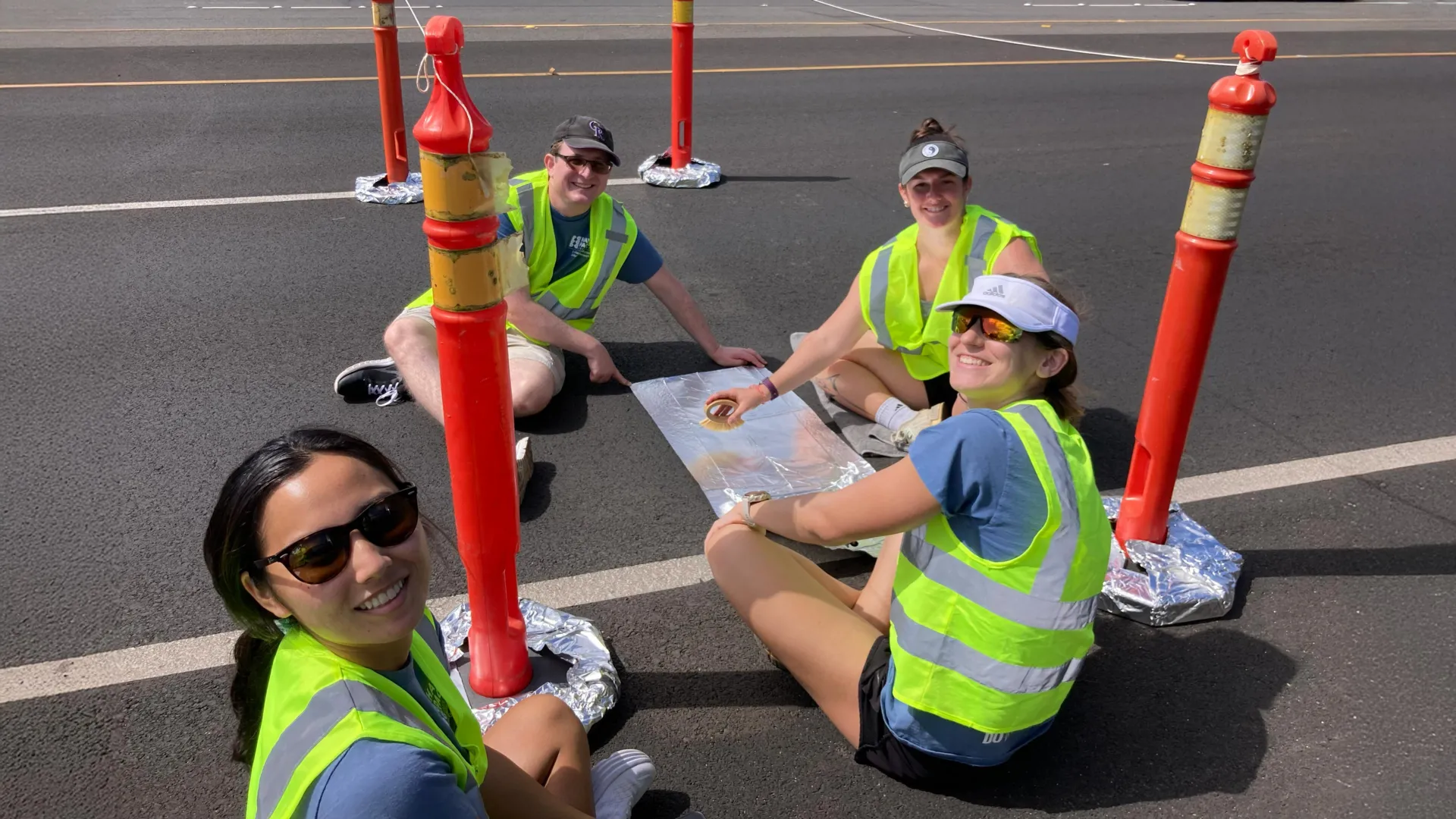
- 2025: Long-term Monitoring: After 11 months of exposure to Hawaii’s weather and traffic, researchers returned to the site to collect road dust and runoff samples.
- Spring 2026: Dissemination of Findings: The results were presented at the American Chemical Society (ACS) meeting, signaling a potential shift in how municipal governments view plastic waste.
Supporting Data: Examining the Microplastic Footprint
One of the most significant concerns regarding recycled plastic roads is the potential for "shedding"—the release of microplastics into the surrounding environment as the road surface wears down. To investigate this, Lynch’s team employed state-of-the-art chemical instrumentation, specifically pyrolysis gas chromatography-mass spectrometry (Py-GC-MS).
The findings were both surprising and encouraging. The analysis revealed that pavement containing recycled polyethylene did not release significantly more polymers than the conventional SBS-modified asphalt. While the researchers did detect microplastic-sized particles, the vast majority were not the polyethylene used in the mix.
"The plastic becomes intimately blended into the asphalt binder," explains Jeremy Axworthy, a researcher at CMDR. "When the road wears down over time, the particles that break away are a composite of rock, asphalt, and polymer, rather than free-floating plastic fragments."
Furthermore, when comparing the levels of plastic detected to the presence of tire wear particles, the results were stark. "In our initial data," notes Lynch, "tire wear swamps the signal of polyethylene by orders of magnitude. We had to search the ‘weeds’ of the chromatogram to find any trace of the polyethylene from the road." This suggests that, at least in the short term, the contribution of recycled plastic roads to microplastic pollution is negligible compared to the ubiquitous wear of vehicle tires on any standard road surface.
Official Responses: Shifting Policy Toward Sustainability
The partnership between the CMDR and the Hawaii Department of Transportation represents a rare bridge between academic environmental research and civil engineering policy.
"This work investigates whether it’s responsible to use recycled plastics in Hawaii’s roads," says Axworthy. "By reusing plastic waste that is already in Hawaii, we can reduce the environmental and economic impacts of transporting waste plastics from the islands, incinerating it, or dumping it in Hawaii’s overflowing landfills."
The project has garnered interest not only from state officials but from the broader scientific community. By providing empirical data on the performance and safety of recycled asphalt, the research team is moving the needle on circular economy policy. HDOT’s willingness to experiment with these materials on active public roads demonstrates a shift toward proactive waste management.
The Broader Implications: A Model for Island Nations
The implications of this study extend far beyond the borders of Hawaii. Small island developing states (SIDS) globally face similar challenges: high import costs, limited space for landfills, and an influx of marine debris.
If this model proves successful in the long term, it could offer a blueprint for other isolated communities. By treating marine debris as a "mined" resource rather than a nuisance, coastal regions could theoretically create a sustainable cycle of infrastructure maintenance.
However, the researchers remain cautious. "More testing is still needed to evaluate how well these recycled plastic roads hold up over the long term under varying traffic volumes and extreme weather events," the team noted in their abstract. The upcoming phases of the research will focus on the mechanical durability of the roads under sustained heavy use and the potential for leaching of chemical additives over multiple years.
Conclusion: Turning the Tide
The narrative surrounding plastic recycling has often been one of skepticism, with many critics labeling the process a "hoax" or an economically unviable endeavor. Yet, the Hawaii project provides a compelling counter-narrative. It highlights that when sustainability is prioritized through rigorous science and cross-sector collaboration, recycling can evolve into a practical, locally necessary infrastructure solution.
As the data from the Oahu field trials continues to be analyzed, the prospect of "ocean-positive" infrastructure becomes increasingly tangible. By integrating discarded fishing nets into the very ground we walk—and drive—on, Hawaii is not just cleaning its beaches; it is building a foundation for a more resilient future. The research presented at the ACS Spring 2026 meeting serves as a beacon of hope, proving that with enough innovation, the waste of yesterday can indeed become the building blocks of tomorrow.