In an unprecedented escalation of hostilities between the United States and the world’s primary permanent war crimes tribunal, the Trump administration has launched a comprehensive campaign to dismantle the International Criminal Court (ICC). This offensive culminated on Friday with the imposition of sweeping financial and logistical sanctions, aimed at crippling the Hague-based institution in response to its investigations into the conduct of U.S. personnel and allies, most notably Israel.
The move marks a definitive break from the "rules-based international order" that the United States helped construct following World War II, signaling a shift toward a foreign policy defined by absolute national sovereignty and the aggressive rejection of multilateral legal oversight.
Main Facts: A Financial and Diplomatic Siege
The sanctions, announced by Secretary of State Marco Rubio, represent the most severe measures ever taken by a Western democracy against an international judicial body. The executive action targets the ICC not merely as a political opponent, but as a "rogue" entity, effectively placing it in the same category as sanctioned terrorist organizations or adversarial states.
The Scope of the Sanctions
The sanctions are designed to be "existential," according to legal experts. By cutting the court off from U.S.-based financial services, the Trump administration is effectively freezing the ICC’s ability to conduct transactions in U.S. dollars—the primary currency of international finance. Furthermore, the measures prohibit U.S. technology companies from providing software, hardware, or cloud services to the court.
A six-month "wind-down" period has been established, giving U.S. companies and individuals currently doing business with the court until mid-year to sever all ties or face federal prosecution and asset freezes. This timeline places immediate pressure on the court’s administrative infrastructure, affecting everything from payroll for international staff to the digital archives used to store evidence of war crimes.
The Stated Justification
Secretary of State Rubio framed the move as a defense of American sovereignty. "We will ban transactions with this rogue court, cutting off their resources and crippling its ability to operate against us," Rubio stated in a video address. He dismissed the institution as a "fake ICC," asserting that neither the United States nor its people are subject to a jurisdiction they have not formally accepted through the ratification of the Rome Statute.
The administration’s ire is specifically focused on the ICC’s pursuit of investigations into alleged war crimes committed by U.S. forces in Afghanistan and by Israeli forces and leadership in the Palestinian territories. By targeting the ICC, the administration seeks to create a protective "legal shield" around its allies, arguing that the court is being used as a political weapon by anti-Western interests.
Chronology: From Athens to the Nobel Prize
The timing of the announcement has been noted by diplomats as particularly pointed, occurring amidst a whirlwind of international legal and symbolic developments.
The Athens Contradiction
Only forty-eight hours before the sanctions were announced, Secretary Rubio stood before the Acropolis in Athens, Greece, delivering a high-minded speech on the preservation of Western values, the importance of the rule of law, and the shared heritage of democratic institutions. To many international observers, the subsequent announcement of sanctions against a court built on those very principles represented a jarring pivot.
The Nobel Factor
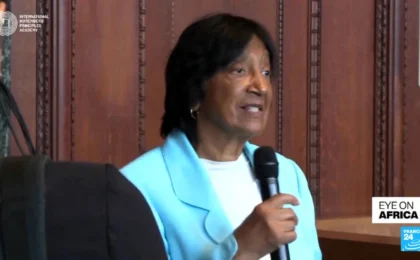
The sanctions were unveiled shortly after the Nobel Peace Prize was awarded to Navi Pillay, a South African jurist and former judge at the ICC. Pillay has been a vocal advocate for international accountability, and her recognition by the Nobel Committee was widely seen as a symbolic endorsement of the ICC’s mission.
The award reportedly rankled the White House, as President Trump has frequently expressed his belief that he is a more deserving candidate for the Nobel Peace Prize. By sanctioning the institution Pillay represents on the same day as her win, the administration sent a clear message of defiance to the international community.
The Escalation Path
The administration’s campaign did not begin on Friday. It has been building for months, characterized by a series of diplomatic warnings and the quiet encouragement of other nations to withdraw from the Rome Statute. The Friday announcement was the "kinetic" phase of a strategy intended to render the court functionally obsolete.
Supporting Data: The ICC’s Vulnerability and Global Standing
To understand the impact of these sanctions, one must look at the ICC’s operational reliance on the global financial system and the current state of its membership.
Financial and Technical Dependency
While the U.S. is not a member of the ICC, the court relies heavily on the global infrastructure that the U.S. dominates.
- Banking: Most major European banks utilize U.S. clearinghouses for dollar transactions. Under these sanctions, any bank facilitating a payment to an ICC staff member could be barred from the U.S. financial system.
- Technology: The ICC uses proprietary American software for its legal databases and communications. Replacing these systems within six months is viewed by IT experts as a near-impossible task.
- Personnel: The court employs hundreds of staff from around the world. The sanctions threaten the personal finances of any staff member with U.S. bank accounts or assets.
The Growing Exodus
The U.S. campaign appears to be gaining some traction among nations wary of international oversight. This year has seen a notable "exit trend":
- Venezuela and Chad: Both nations have officially withdrawn from the court, citing bias.
- Naoero: The South Pacific island nation recently became the latest to announce its departure.
- The "Rubio Ultimatum": The Secretary of State has explicitly warned that allies who do not join the U.S. in dismantling the ICC will face diplomatic repercussions, suggesting the U.S. will continue to dismantle the court "piece by piece."
Official Responses: A World Divided
The reaction to the sanctions has been swift and sharply divided, highlighting a growing rift between the U.S. and its traditional democratic allies.
The Court’s Defiance
ICC President Tomoko Akane, a Japanese jurist, issued a staunch defense of the institution. She characterized the sanctions as an "assault on the rule of law" and a direct attempt to obstruct justice. "The court will continue to fully discharge its mandate, with independence and impartiality," Akane stated, appealing to the remaining member states to safeguard the "international order grounded upon the rule of law."
The "Nuclear Option" in the Netherlands
As the host country of the ICC, the Netherlands finds itself at the center of the storm. Dutch Foreign Minister Tom Berendsen revealed that the government has been preparing for this move for weeks. The Netherlands is currently lobbying the European Commission to trigger the EU Blocking Statute.
Originally designed to protect European companies from U.S. sanctions on Iran, the blocking statute would legally forbid European companies from complying with the U.S. measures against the ICC. Berendsen referred to this as the "nuclear option," acknowledging that it could lead to a direct legal and economic confrontation between the EU and the U.S.
The Coalition of the Opposed
In a rare joint statement, a coalition of major world powers—including Canada, Denmark, Germany, France, Italy, Japan, and the United Kingdom—expressed "strong disagreement" with the U.S. position. The statement emphasized that the sanctions would have a "significant impact on the court’s work, its dedicated staff, and their families," and reaffirmed their collective commitment to the rules-based international system.
Implications: The End of Universal Accountability?
The long-term consequences of this confrontation extend far beyond the walls of the courtroom in The Hague.
The Erosion of International Law
For decades, the ICC has represented the hope that "no one stands above the law." By successfully crippling the court, the U.S. may effectively end the era of universal jurisdiction for war crimes. Critics argue this creates a "two-tier" justice system: one for powerful nations and their protected allies, and another for the rest of the world.
Geopolitical Realignment
The U.S. demand that its allies choose between Washington and the ICC is straining the NATO alliance and other bilateral relationships. If the U.S. follows through on Rubio’s threat to dismantle the court "piece by piece," it could lead to a permanent fracturing of the Western legal consensus. Countries like Japan and Germany, which are among the ICC’s strongest supporters and most vital U.S. allies, are now caught in an impossible diplomatic position.
Humanitarian Impact
Rights groups, including Amnesty International, warn that the primary victims of these sanctions will be the victims of atrocities. "This existential attack must fail," said Erika Guevara Rosas of Amnesty International. Without a functional ICC, victims in conflict zones from Sudan to Myanmar may lose their only remaining avenue for legal redress, as domestic courts in those regions are often unable or unwilling to prosecute powerful actors.
A New Era of Sovereignty
For the Trump administration, these implications are not "side effects" but the intended goals. The administration is betting that the world will choose U.S. partnership over the abstract ideals of international law. Whether the ICC can survive this financial and political siege remains to be seen, but the "rules-based order" as it has been known since 1945 is clearly entering a period of profound and perhaps terminal transformation.