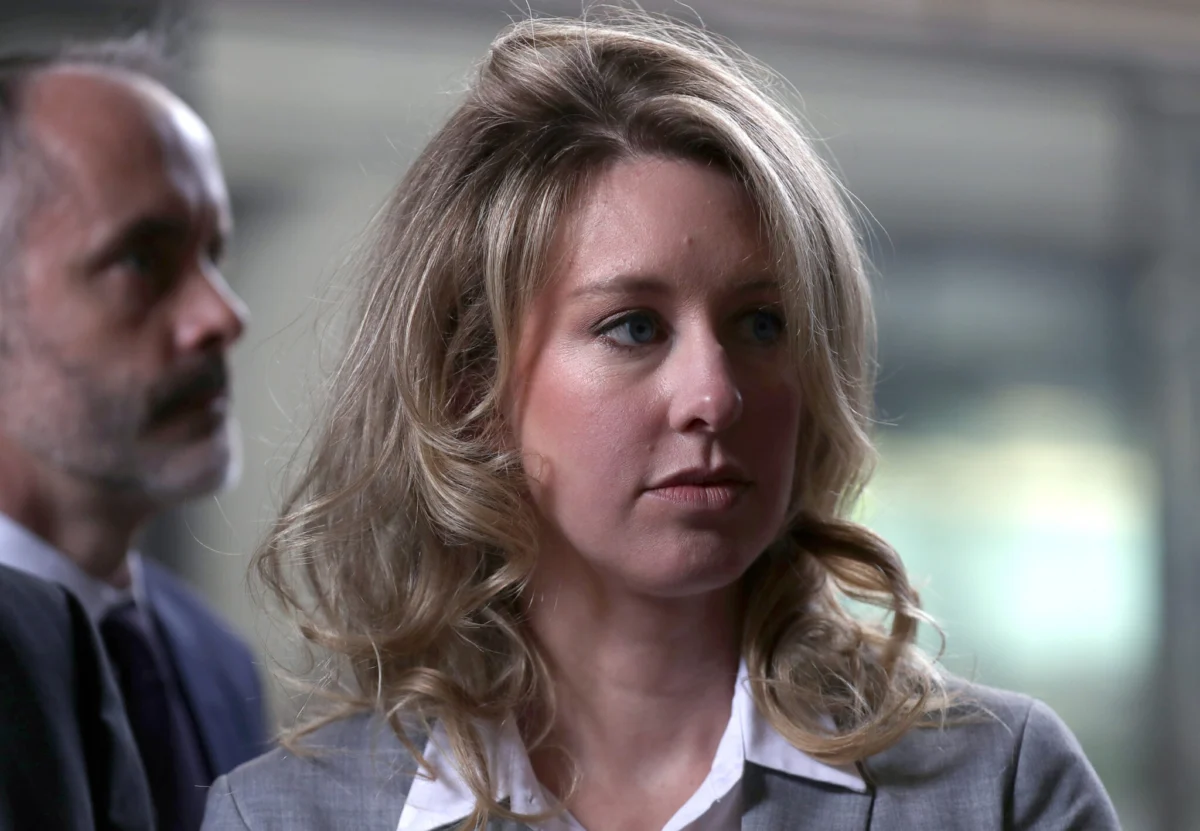
In the annals of Silicon Valley history, few names resonate with the same cautionary weight as Elizabeth Holmes. The rise and spectacular collapse of Theranos—a company that promised to revolutionize blood diagnostics with a single drop—remains the definitive case study in corporate hubris. Now, thanks to an innovative digital project by Extend engineer Bo Lau, the public has a new, immersive window into the chaos that defined the company’s final days.
Lau has unveiled a browser-based interactive environment that recreates Elizabeth Holmes’ executive office circa 2016. By synthesizing thousands of emails, text messages, slide decks, and internal documents—all of which were made public during the landmark United States v. Elizabeth Holmes trial—the simulation offers a voyeuristic, tactile experience of the Theranos era.
The Anatomy of the Simulation
The project is an exercise in meticulous digital curation. Upon "entering" the office, users are transported back to a specific, high-tension moment in 2016. The attention to detail is jarringly authentic: the MacBook Air is running OS X El Capitan, the iPhones featured are equipped with physical home buttons, and the user interface mimics the "slide-to-unlock" era of mobile technology.
Beyond the aesthetic nostalgia, the simulation functions as an interactive repository. Users can navigate the desktop to peruse private communications and internal company records that once served as the backbone of the federal prosecution’s case. Perhaps most hauntingly, the site allows users to "operate" a virtual version of the Edison machine, the ill-fated device that stood at the center of the fraud allegations. This intersection of historical artifact and interactive technology transforms cold, legalistic PDF exhibits into a living narrative of corporate deception.
A Chronology of Collapse: From Disruption to Deposition
To understand the weight of the documents found within Lau’s simulator, one must revisit the timeline that led to the downfall of Theranos.
The Ascent (2003–2014)
Founded in 2003 by a nineteen-year-old Holmes, Theranos spent over a decade in "stealth mode." During this period, the company secured hundreds of millions of dollars in venture capital, buoyed by the promise that its proprietary Edison technology could perform comprehensive blood tests using only a finger-prick sample. By 2014, the company was valued at $9 billion, and Holmes was heralded as the "next Steve Jobs."
The Unraveling (2015–2018)
The cracks in the facade became visible in October 2015, when The Wall Street Journal published a bombshell investigation by John Carreyrou. The report alleged that the Edison machines were not performing as claimed and that the company had been secretly using commercial lab equipment to run tests. The regulatory house of cards collapsed quickly: the Centers for Medicare & Medicaid Services (CMS) found the company’s lab in California posed "immediate jeopardy to patient health and safety," and the company eventually shuttered its laboratory operations.
The Legal Reckoning (2018–2022)
In 2018, the SEC charged Holmes and former Theranos president Ramesh "Sunny" Balwani with massive fraud. The subsequent criminal trial, United States v. Elizabeth Holmes, concluded in early 2022, resulting in a guilty verdict on four counts of wire fraud. The sheer volume of evidence presented—thousands of internal communications—became the primary data set for the archive now accessible through the Lau simulation.
The Power of Transparency: Data as a Historical Tool
The utility of the simulator extends beyond mere entertainment. For researchers, journalists, and students of business ethics, the traditional process of sourcing exhibits from government databases is notoriously cumbersome. Court websites often host thousands of fragmented, non-indexed PDFs that are difficult to search and contextualize.
Lau’s project serves as a "frontend" for the discovery process. By organizing this data into a navigable, user-friendly interface, the project democratizes access to primary source materials. It highlights the importance of the American legal system’s commitment to public disclosure. Without the transparency mandated by the court, the internal machinations of Theranos would remain locked away, inaccessible to the public imagination.
Behind the Code: Extend and the Future of B2B SaaS
While the project has been widely praised for its historical value, it is also a strategic marketing tool for Extend, the company where Lau serves as an engineer. The platform is designed to "parse, extract, and split" complex documentation with high-level accuracy—a capability demonstrated by the very existence of the Holmes simulator.
This approach—using a high-profile, viral project to demonstrate the utility of a B2B (business-to-business) software product—marks a shift in how tech startups are building brand awareness. If a company can successfully ingest, categorize, and render the chaotic, messy data of a federal fraud trial, the implication is that it can handle the similarly complex data needs of enterprise clients. It is a bold, if unconventional, "proof of concept."
The Cultural Implications of "You Can See Everything"
The release of the simulator is timed to coincide with a broader cultural conversation surrounding the Theranos narrative, specifically the upcoming documentary, You Can See Everything. The project serves as an interactive companion piece, allowing the audience to engage with the primary evidence before viewing the film.
This phenomenon—the "True Crime"ification of white-collar corporate fraud—suggests that the public’s appetite for the Theranos story remains insatiable. By putting the user in the "desk" of the CEO, the simulator forces a psychological confrontation with the environment of the fraud. It moves the discussion from the abstract concept of "financial crime" to the visceral reality of a desk, a laptop, and the cold, unfeeling output of an untested medical machine.
Conclusion: A Digital Monument to Hubris
The simulation created by Bo Lau is more than just a clever coding exercise; it is a digital monument to the dangers of unchecked ambition. In the high-stakes world of Silicon Valley, where "fake it until you make it" is often treated as a mantra rather than a risk, the Theranos saga remains the ultimate warning.
By making these documents accessible and interactive, the project ensures that the lessons of the Theranos failure are not forgotten. It reminds us that behind every billion-dollar valuation, there are human decisions, internal emails, and technical limitations that, when viewed in the harsh light of history, paint a very different picture than the one presented in a boardroom slide deck.
As we continue to navigate an era where technology promises to solve the world’s most intractable problems, the ability to look back at the "desk" of a failed visionary is a vital exercise in skepticism and accountability. Whether viewed as a marketing triumph, a technological feat, or a historical archive, the simulator proves that the most powerful tool for truth in the digital age is the raw, unvarnished data itself.
Disclaimer: This article may contain affiliate links. Purchases made through these links may result in a small commission, which helps support our editorial independence.