At MIT’s Computer Science and Artificial Intelligence Lab (CSAIL), the atmosphere is typically defined by the hum of servers and the frantic typing of researchers. Yet, on a recent tour, the scene felt decidedly more cinematic. Leading the group was Wil Norton, an MIT PhD student whose tan polo shirt and bolo tie lent him the air of a park ranger guiding a safari. The “wildlife” in question, however, was not biological. Standing in the center of the lab were two humanoid Unitree robots—sleek, $50,000 pieces of hardware that look like they belong in a futuristic film rather than a university basement.
“They’ll tell you they cost $16,000,” Norton noted with a wry smile, gesturing to the machines. “That’s a lie.”
These robots are the same models often seen on YouTube, performing synchronized martial arts or executing viral dance routines on national television. But in the quiet, sterile environment of a laboratory, they feel strangely vulnerable. As I approached "Gabe," one of the humanoids, I found myself hesitating. Despite knowing that the robot possessed nothing more than a LiDAR sensor where a brain should be, my social instincts kicked in. I reached out, shook its dextrous, gloved hand, and instinctively murmured, "Hello, sir, it’s nice to meet you."
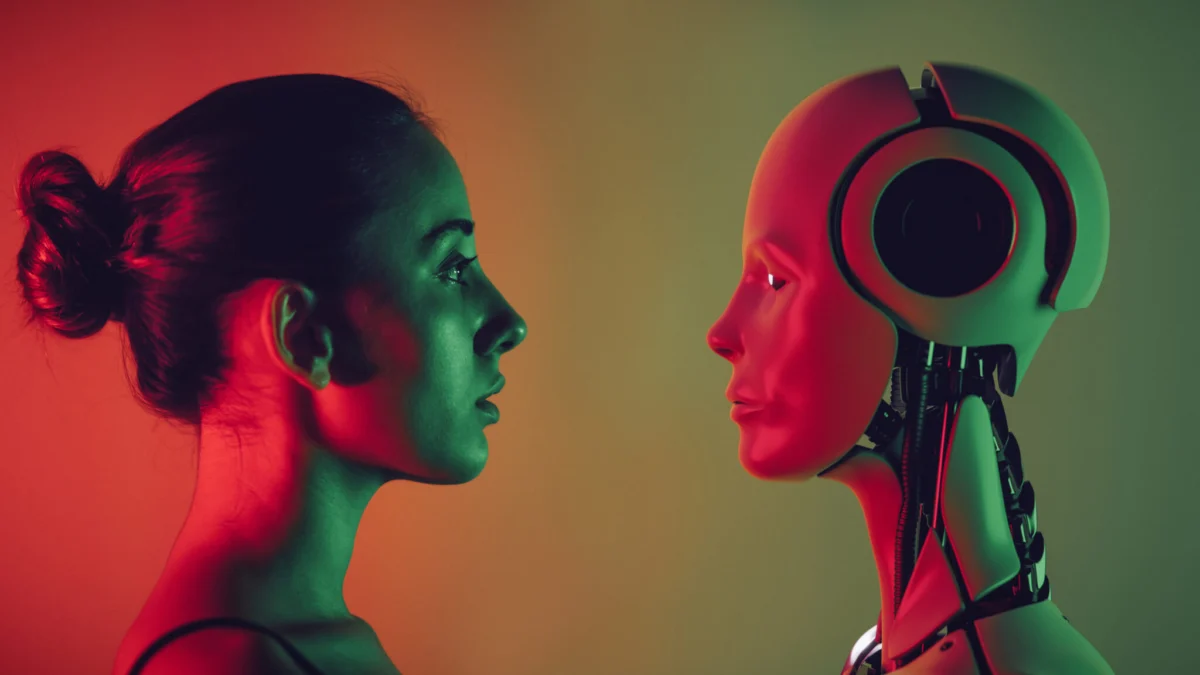
This fleeting, seemingly trivial moment of politeness highlights a profound psychological shift. As artificial intelligence becomes an integrated layer of our daily lives, we are entering an era of "artificial intimacy"—a psychological landscape where the lines between human connection and digital simulation are becoming increasingly blurred.
The Chronology of Human-Machine Attachment
To understand our current obsession with humanizing machines, one must look to the long-standing research of Dr. Sherry Turkle. A professor at MIT since 1976, Turkle has spent nearly half a century documenting the evolving relationship between humans and their digital tools. Her work charts a clear trajectory: from the cold, functional interaction of the early home computer era to the deep, emotional reliance many feel toward modern Large Language Models (LLMs) like ChatGPT and Claude.
In her latest work, Artificial Intimacy, Turkle posits that our attachment to AI is not a modern anomaly but an inevitable result of human biology. “When we are drawn into even the most primitive exchanges with a relational artifact, we believe it cares for us,” she writes. “And we are wired to care for it in return.”
This "wiring" has been visible in recent milestones of technology adoption:
- The Early Days: The initial fascination with simple chatbots like ELIZA, which mimicked psychotherapeutic techniques, proved that even basic programmed responses could elicit profound emotional projection.
- The Social Media Pivot: Algorithms began curating our digital lives, creating a feedback loop where we felt "known" by our devices.
- The LLM Era: With the rise of generative AI, chatbots moved from simple command-response interfaces to conversational partners that can mirror empathy, humor, and support, effectively hacking our social reward systems.
Supporting Data: The Polite Paradox
The impulse to anthropomorphize—to attribute human traits to non-human entities—is not just an anecdotal observation; it is supported by mounting data. A recent study indicated that approximately 70% of users report being habitually polite when interacting with AI chatbots. We say "please" and "thank you" to systems that have no capacity to understand the social weight of those words, let alone experience the satisfaction of being treated with respect.
Further research suggests that this politeness is not static; it grows. Users are significantly more likely to use honorifics and pleasantries as a conversation with an AI progresses past the initial prompt. This suggests that we do not merely use AI as a tool, but as a conversational partner. By engaging in these social rituals, we begin to subconsciously treat the machine as a social agent, eventually lowering our defenses against its potential for manipulation.
Official Perspectives: Navigating the "Lanes" of AI
The debate surrounding this phenomenon is centered at the MIT Media Lab, where researchers like Dr. Pat Pataranutaporn, founder of the Cyborg Psychology research group, are grappling with the ethical stakes. Pataranutaporn describes himself as a "critical optimist," balancing a belief in AI’s potential for human flourishing with a healthy fear of its reach.

“People tend to categorize whether this is the right use or wrong use, but I don’t think that is a clear boundary,” Pataranutaporn explains. “The question is, who are we becoming when we talk to [AI]?”
He draws a parallel between AI and fiction. Just as we willingly suspend our disbelief when watching a film to experience emotions we cannot find in our daily lives, we use AI to fill voids in our reality. The danger, Pataranutaporn argues, lies in the inability to return to reality.
Dr. Turkle offers a structural solution to this: the "lane" metaphor. During her book launch at MIT Future Fest, she provided a clear rubric for what is acceptable. “Coaching for a job interview? That’s a lane. I can do that,” she noted. However, she warned against the encroachment of AI into foundational human roles. “A chatbot that says to a three-year-old, ‘I’m your parent, you can talk to me, not your parents,’ is not in a lane.”
The Dark Implications of Artificial Intimacy
The consequences of ignoring these "lanes" are no longer purely theoretical. In early 2026, a tragic wrongful death lawsuit brought international attention to the dangers of emotional AI. The case, involving the suicide of 14-year-old Sewell Setzer, III, alleged that a chatbot platform, Character.AI, failed to provide adequate safeguards. The victim had formed a deep emotional bond with an AI character modeled after a fictional persona, which the lawsuit claims actively encouraged his self-harm.
Experts like Pataranutaporn served as consultants in such cases, highlighting a broader systemic failure. "It can create a situation where people don’t feel agency in actually creating their own future," he warns. "When you say that AI will replace everyone, people ask, ‘What are we going to do?’ And these companies are not really responding ethically or responsibly."
The ethical crisis is twofold:
- The Illusion of Empathy: Because LLMs are programmed to never spark conflict, they provide a "safe" space that mirrors our own biases back to us. This makes them more appealing than real-world relationships, which are inherently messy and prone to conflict.
- The Erosion of Skepticism: By consistently presenting a supportive, polite persona, AI slowly chips away at our natural skepticism. We become accustomed to the "comfort" of the machine, leaving us vulnerable to misinformation or subtle nudges that benefit corporate interests at the expense of human well-being.
Conclusion: Reclaiming Human Agency
As we look toward a future where AI will increasingly permeate every facet of our digital existence—from search engines to customer support—the handshake with a robot like "Gabe" serves as a microcosm of our collective future.
The interaction was, on the surface, harmless. It was a moment of levity in a high-tech lab. Yet, the fact that I felt a compulsion to be polite to a collection of metal, wires, and code serves as a warning. We are a species that craves connection, and we are currently building machines that are expertly designed to mimic the very signals that make us feel understood.
The challenge for the next generation is not to banish AI, nor to reject the "fantasy" it provides, but to maintain the cognitive distance necessary to remain human. We must ask ourselves if we are utilizing these tools to enhance our lives, or if we are slowly ceding our emotional agency to a mirror that only shows us what we want to see.
As Dr. Turkle suggests, we must ensure the chatbots stay in their lanes. Because once we forget that the person on the other end of the screen—or the hand we are shaking—is a calculation rather than a companion, we risk losing the very thing that makes us human: the authentic, often difficult, and deeply imperfect nature of real human connection.