In the high-stakes race to dominate the artificial intelligence landscape, the most significant barrier to entry is no longer just the scarcity of high-end graphics processing units (GPUs) like Nvidia’s Blackwell series. Instead, the industry has hit a wall of its own making: the physical electricity grid. As global data center electricity consumption is projected to double by 2030, the demand for reliable, on-site power has reached a fever pitch.
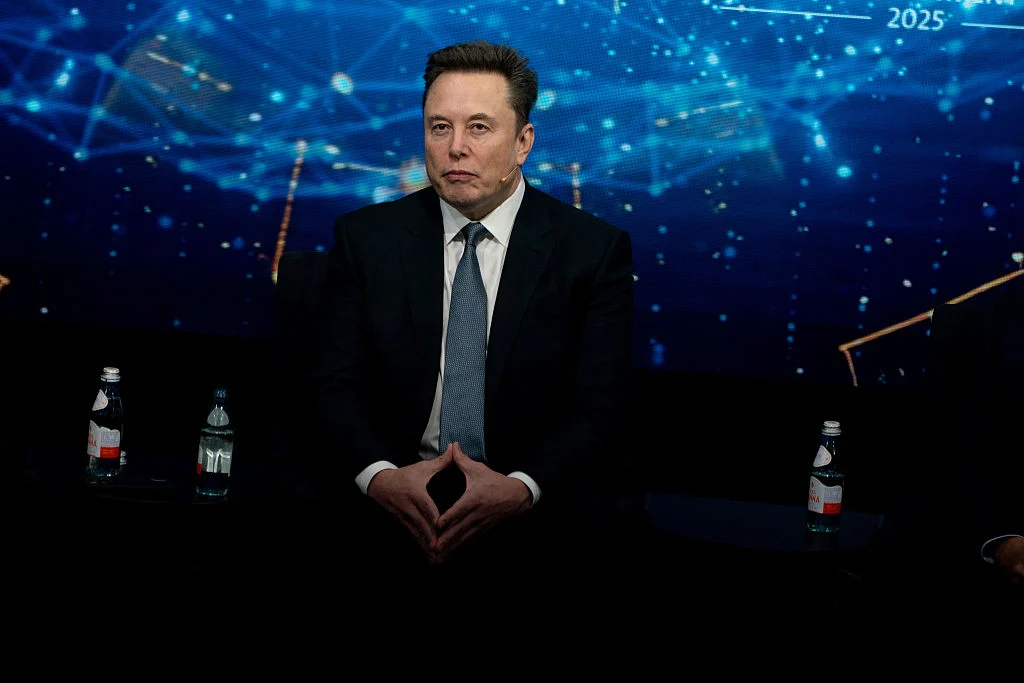
To bypass this bottleneck, Elon Musk’s SpaceX is embarking on a bold industrial pivot: establishing a specialized foundry in Bastrop, Texas, designed to manufacture the elusive, high-performance turbine blades and vanes required for natural gas power plants. By taking control of this critical supply chain component, Musk aims to slash the lead times for power generation, potentially giving his AI ventures an 18-month advantage over competitors struggling with the same infrastructure constraints.
The Bottleneck: Why Turbine Blades Matter
The primary challenge in modern power generation lies in the extreme physics of industrial gas turbines. The blades housed in the hottest sections of these turbines must endure temperatures ranging from 3,000 to 3,600 degrees Fahrenheit—roughly 800 degrees higher than the melting point of the nickel-based superalloys from which they are forged.
To survive these conditions, the blades require complex internal cooling channels, advanced thermal-barrier coatings, and a specialized manufacturing process known as "single-crystal casting." In this process, the entire blade is grown as a single, unbroken crystal inside a vacuum furnace. This prevents the microscopic seams or grain boundaries that lead to structural failure under intense thermal stress.
Currently, only a handful of companies worldwide possess the metallurgical mastery to produce these components at an industrial scale. With demand for AI infrastructure surging, these manufacturers are effectively sold out through 2030. Industry giants like GE Vernova have signaled that they cannot meet the current demand, leaving hyperscalers like Microsoft, Amazon, Google, and Meta scrambling for power solutions.
Chronology: From Starlink to Foundry
The emergence of this project began with quiet land acquisitions. Between March and June of this year, SpaceX purchased approximately 830 acres of land near its existing Starlink production facility in Bastrop, Texas. While initially viewed as a potential expansion for Starlink operations, the project’s true nature was revealed through job listings for a "blades and vanes foundry."
- March–June 2024: SpaceX quietly acquires 830 acres in Bastrop, Texas, sparking initial investigations by infrastructure analysts.
- August 2024: Industry reports from The Information confirm the foundry’s purpose, linking the site to the production of critical gas turbine components.
- August 2024: Elon Musk confirms the report on X (formerly Twitter), articulating the company’s intent to solve the turbine casting bottleneck.
- Ongoing: SpaceX continues to recruit specialized metallurgical and casting talent, signaling an aggressive push toward operational capacity.
Musk’s strategy is clear: he is applying the "first-principles" engineering approach that defined SpaceX and Tesla to the energy sector. By verticalizing the production of the most constrained component in the turbine supply chain, SpaceX aims to bootstrap its AI data centers—specifically those powering the "Colossus" project—with private, gas-fired electricity.
Supporting Data: The Power Crisis
The reliance on natural gas is a pivot for the tech industry, which had spent years pledging commitment to wind and solar energy. However, the sheer load requirements of modern AI models have rendered renewables insufficient as a primary, base-load power source.
According to the International Energy Agency (IEA), the global surge in AI and data center activity is fundamentally reshaping energy markets. The data supports the necessity of this shift:
- Supply-Demand Mismatch: Turbine manufacturers are currently backlogged for years, forcing tech giants to bid for limited supply.
- Health and Environmental Impact: Research from the Piedmont Environmental Council, utilizing the EPA’s COBRA model, suggests that on-site gas turbines carry significant health costs. In the context of "Data Center Alley" in Virginia, a single facility’s eight turbines were estimated to impact 2.5 million people, potentially contributing to 3.4 to 6.5 premature deaths annually and incurring up to $99 million in health-related damages.
- Local Resistance: The deployment of these turbines is not occurring without controversy. In Memphis, the NAACP has led opposition against SpaceX’s operation of gas turbines for its Colossus data center, citing the lack of necessary pollution controls and the potential emission of hazardous chemicals like formaldehyde.
Implications for the AI Ecosystem
If SpaceX succeeds in mass-producing single-crystal turbine blades, the implications for the AI industry are profound.
1. Competitive Asymmetry
By holding the keys to the most difficult manufacturing step in power generation, SpaceX gains a "moat" that is nearly impossible for non-manufacturing competitors to replicate. While Microsoft and Amazon are forced to rely on external suppliers and long wait times, SpaceX could theoretically build out its power infrastructure at a pace limited only by its own casting throughput.
2. The Regulatory and Environmental Backlash
The decision to prioritize natural gas comes at a time of increasing environmental scrutiny. The legal battles in Memphis serve as a harbinger of future conflicts. As tech companies move to install their own power plants, they will increasingly face lawsuits, regulatory investigations, and community activism regarding air quality and climate impact.
The juxtaposition of "green" tech companies building fossil-fuel-burning plants is creating a public relations and legal crisis. Researchers at the University of Memphis have noted that local air quality has already begun to degrade following the activation of data center-adjacent power generation, providing empirical ammunition to those opposing these projects.
3. Energy Independence
Musk’s stated goal is to build 100GW per year of solar capacity between SpaceX and Tesla, but he admits that natural gas is the "bootstrap" required to get there. This creates a transition model where natural gas acts as the bridge. However, the speed of this transition depends on whether the foundry in Bastrop can overcome the extreme technical difficulties of scaling single-crystal casting—a process that has baffled even the most established industrial incumbents.
Conclusion: A High-Stakes Gamble
Elon Musk is betting that the speed of AI development is not just a software challenge, but a hardware and energy logistics challenge. By building a foundry in the middle of Texas, he is attempting to solve a bottleneck that has stymied the largest companies on Earth.
Whether this move succeeds will depend on the metallurgy of the blades themselves and the company’s ability to navigate an increasingly hostile regulatory and social environment. As the AI industry continues to consume power at an unprecedented rate, the Bastrop foundry may well become the most critical site in the global race for computational supremacy. For now, the world is watching to see if Musk can truly manufacture his way out of the gridlock, or if the environmental and technical complexities prove too great to overcome.