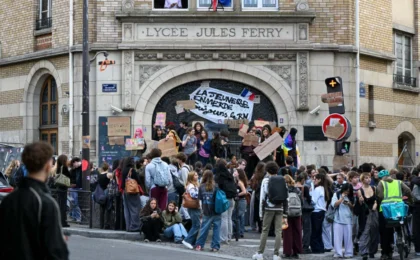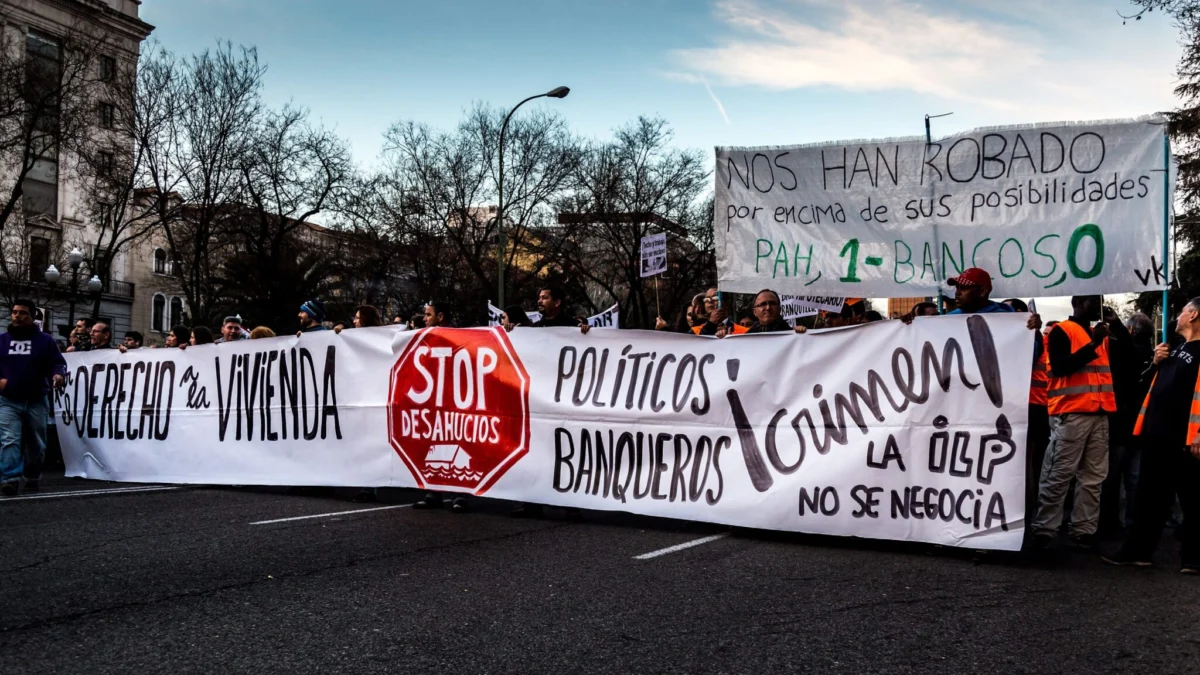
Spain is currently grappling with a social and political firestorm, as hundreds of thousands of citizens have taken to the streets to demand fundamental changes to the country’s housing policy. The catalyst for this massive mobilization was the parliamentary rejection of emergency protective measures, a decision that has left the public feeling abandoned by their elected representatives. As rental costs soar, supply dwindles, and evictions continue to displace the most vulnerable, the housing crisis has transcended economic statistics to become a matter of national human rights and dignity.
The Trigger: The Eviction of Maricarmen Abascal
The tension that has been simmering for years reached a breaking point on September 23, with the eviction of 87-year-old Maricarmen Abascal from her Madrid apartment. Abascal had resided in the same home for 71 years, a testament to her stability and roots within the community. Her displacement began when an investment fund—a symbol of the corporate encroachment into the Spanish housing market—purchased her building.
The new owners demanded a 230% increase in rent, an amount impossible for Abascal to cover with her modest pensioner’s salary. Despite public outcry and the intervention of the Tenants’ Union of Madrid (Sindicato de Inquilinas e Inquilinos de Madrid), the eviction proceeded with a level of force that shocked the nation. Police officers removed the elderly woman on a stretcher after she was given a mere 30 minutes to gather her life’s belongings. The image of an octogenarian being forcibly removed from her home of seven decades became the visceral symbol of a system that prioritizes capital over human lives.
Chronology of the Crisis and Political Fallout
The events leading up to the current protests represent a failure of both policy and empathy. Following the widespread condemnation of the Abascal eviction, the Socialist-led coalition government under Prime Minister Pedro Sánchez attempted to pivot toward reform. In an effort to address the public outcry, the government introduced two emergency decrees intended to provide an immediate safety net for renters and to curb the frequency of evictions.
- September 23, 2026: Maricarmen Abascal is evicted from her Madrid home, sparking immediate local protests.
- Late September 2026: The government introduces emergency decrees to halt the "bleeding" of evictions and provide tenant protections.
- Early October 2026: Political tension mounts as opposition parties signal their intent to block the measures in parliament.
- Friday, October 2026: The parliamentary plenary session rejects the proposed decrees, effectively stalling the government’s attempt at legislative intervention.
- Saturday, October 2026: In direct response to the vote, hundreds of thousands of protesters flood the streets across Spain, with an estimated 500,000 attendees in Madrid alone.
Minister of Housing and Urban Agenda, Isabel Rodríguez, openly admitted that the situation was a "collective failure." She acknowledged that the government’s response was reactive, noting that it took a tragedy of this scale for there to be a meaningful social and political reaction. However, the rejection of these decrees by opposition lawmakers has now turned that remorse into widespread fury.
The Scale of the Crisis: Supporting Data
The anger felt by the protesters is rooted in a systemic, long-term crisis that has seen housing affordability collapse. The numbers provide a stark context to the human suffering witnessed on the streets:
The Eviction Epidemic
According to the housing rights organization Ni Un Desahucio Más, the last 15 years have been marked by a staggering 763,127 court-ordered evictions. This has resulted in the displacement of approximately 1.9 million people—a figure that represents a significant percentage of the Spanish population. These statistics highlight a failure of the state to provide adequate social housing, leaving families vulnerable to market fluctuations and predatory investment tactics.
Market Distortions
The Spanish housing market is suffering from a "perfect storm" of negative factors:
- Wage Stagnation: While rent and property prices have skyrocketed, wage growth has remained largely stagnant, making it impossible for the average worker to keep pace with the cost of living.
- Tourism and Short-term Lets: The proliferation of holiday rentals—driven by mass tourism—has removed a significant portion of the housing stock from the long-term rental market, further inflating prices.
- Construction Lag: The rate of new housing construction is currently failing to meet the demands of an evolving demographic, leading to a supply-demand imbalance that keeps prices prohibitively high.
Official Responses and Political Maneuvering
The parliamentary rejection of the government’s emergency decrees has created a fractured political landscape. While the governing coalition characterizes the decrees as essential "emergency mechanisms," the opposition’s decision to strike them down suggests a fundamental disagreement over the role of the state in the private housing market.
Critics of the government’s approach, including various opposition figures, have argued that the decrees were poorly drafted or insufficient to address the root causes of the crisis. Conversely, supporters of the tenants’ rights movement argue that the opposition is merely protecting the interests of the investment funds and landlords who have profited from the housing shortage.
Minister Rodríguez’s admission that the state has failed to protect its citizens has resonated deeply with the public. By framing the crisis as a "collective failure," the government has acknowledged its own shortcomings, yet this has done little to appease those who demand immediate legislative action rather than bureaucratic maneuvering. The Tenants’ Union has made it clear that they intend to maintain pressure on the government, regardless of which party is in power, until housing security is treated as a non-negotiable right.
Implications for Human Rights and Future Stability
The discourse surrounding the protests has inevitably turned to international human rights standards. Article 25 of the Universal Declaration of Human Rights (UDHR) explicitly includes housing as a component of the right to an adequate standard of living. Furthermore, the European Social Charter, specifically Part I, Sections 30 and 31, underscores the right to protection against poverty and the right to housing.
The current situation in Spain is a direct challenge to these frameworks. When a state fails to protect its most vulnerable residents from the instability of the market, it risks losing its social contract. The call for a permanent, structural moratorium on evictions for vulnerable families is not merely a policy suggestion; it is a demand for the government to fulfill its obligations under international law.
Looking Ahead: The Threat of a General Strike
The Tenant’s Union of Madrid has signaled that if the government and parliament continue to prioritize market interests over the basic needs of citizens, they will escalate their tactics. While no date has been set, the prospect of a general strike looms over the nation.
The persistence of the movement is evident in the makeshift tent cities that have sprung up in public squares across Madrid and other major cities. These spaces serve as both protest camps and community hubs, where citizens discuss strategies and share the stories of those displaced by the market. Valeria Racu, the spokesperson for the Tenants’ Union, has been unequivocal in her messaging: the movement is not a passing fad. It is a sustained push to ensure that the housing crisis remains at the very center of the political agenda, until the "bleeding" is finally stopped.
As the government considers its next steps, it faces a stark choice: continue to facilitate the market-driven displacement of its citizens or fundamentally restructure the housing sector to ensure that a home is a right, not a luxury for the few. The hundreds of thousands in the streets have made their stance clear: the status quo is no longer acceptable.