In a landmark judicial development that could fundamentally reshape the landscape of American election law, a U.S. District Court judge in the Southern District of Florida has ruled that the federal statute prohibiting noncitizens from voting is unconstitutional. The decision, handed down by Judge David Leibowitz, challenges decades of legal precedent by asserting that the authority to regulate voter eligibility lies exclusively with the states, rather than the U.S. Congress.
The ruling came as part of a high-stakes dismissal of a criminal case against Chelsea Cox, a Jamaican national who had been charged with multiple counts of illegal voting. By declaring 18 U.S.C. § 611 unconstitutional, the court has sparked an immediate national debate regarding the limits of federal oversight in an increasingly polarized political environment.
The Core Facts: Challenging 18 U.S.C. § 611
At the heart of the litigation is 18 U.S.C. § 611, commonly referred to as the "Voting by Aliens" law, which was enacted by Congress in 1996. The statute explicitly prohibits noncitizens from voting in any federal election, including contests for the presidency, the U.S. Senate, and the House of Representatives.
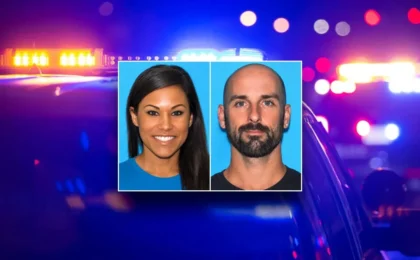
Chelsea Cox, who allegedly overstayed her tourist visa for two decades, was indicted after prosecutors claimed she used a fraudulent U.S. Virgin Islands birth certificate to secure a Florida driver’s license, which she subsequently used to register to vote. Cox participated in multiple elections between 2012 and 2020. Her legal defense team, led by attorney Bruce Udolf, filed a motion to dismiss the charges, arguing that the federal government lacked the constitutional authority to criminalize her actions because the Constitution grants states the primary power to determine voter qualifications.
Judge Leibowitz’s written opinion noted the rarity of the constitutional challenge, stating, "This is an unusual criminal case. It rests upon a forty-year-old federal statute… that prohibits the act of voting in a federal election by a non-US citizen. Until very recently, no federal court has been presented with the following question about that statute: Did Congress have Constitutional authority to enact it?"
A Chronology of the Legal Battle
The path to this ruling involved a meticulous examination of legislative history and constitutional mandates.
- 1996: Congress passes 18 U.S.C. § 611, establishing a federal ban on noncitizen voting to ensure that only U.S. citizens participate in federal elections.
- 2012–2020: Chelsea Cox participates in multiple election cycles in Florida, ultimately leading to federal scrutiny of her registration status.
- 2026 (July): A Reuters investigative report is published, revealing that out of 129 people charged with violating the statute, none were accused of organized voter fraud or conspiring to sway election outcomes.
- 2026 (Late Summer/Fall): As the national election cycle intensifies, legal challenges regarding voter citizenship checks and election procedures reach a fever pitch.
- October 2026: Judge Leibowitz appoints former U.S. Solicitor General Paul D. Clement as amicus curiae to provide an expert analysis on the constitutionality of the federal statute.
- October 2026: Judge Leibowitz issues his ruling, dismissing the charges against Cox and declaring the federal ban on noncitizen voting an unconstitutional overreach of Congressional power.
Expert Analysis: The "Unless" Clause
To navigate the complexities of the case, the court leaned heavily on the expertise of Paul D. Clement and Chadwick J. Harper. The defense and the court-appointed advisors focused on the specific language of the statute, particularly the "unless" clause. This provision creates a narrow exception allowing noncitizens to vote in local or state elections if explicitly permitted by state law.
Clement argued that this clause serves as "the most damning textual evidence of Congress’s overambitious intent." The logic posits that if Congress felt empowered to regulate federal voting, but felt compelled to defer to the states for non-federal voting, it acknowledged an inherent limitation in its own jurisdiction. The court concluded that if the Constitution delegates the power to set voter qualifications to the states—as outlined in Article I, Section 2—Congress cannot unilaterally carve out exceptions or impose blanket federal prohibitions that override state-level sovereignty.
Official Responses and Political Repercussions
The ruling has been met with swift and divergent reactions from the legal and political communities.
The Defense Perspective
Bruce Udolf, representing Chelsea Cox, hailed the decision as a victory for judicial restraint and constitutional integrity. "This is a situation that cries out for discretion by government officials," Udolf stated. "They’d be well-advised to walk away from this without further reprisal against her." The defense maintains that the prosecution of individuals like Cox—who did not participate in any broader conspiracy—is a misallocation of federal resources and a violation of the balance of power between the states and the federal government.
The Political Climate
The decision arrives at a volatile time for American politics. President Donald Trump, who has frequently alleged that noncitizen voting is a widespread component of a "Democratic Party conspiracy," is expected to push for an immediate appeal. On his Truth Social platform, the President has continued to frame the issue as a national security crisis, despite data suggesting that such incidents are statistically rare and usually involve individual registration errors rather than coordinated efforts to manipulate electoral outcomes.
The ruling adds another layer of complexity to the 2026 election cycle. It follows a series of Supreme Court battles involving voter ID laws, executive orders on mail-in ballots, and intense debates over the verification of citizenship.
Broader Implications: The Future of Federalism
The implications of the Leibowitz ruling are profound and potentially far-reaching. By asserting that states have the ultimate authority to define the electorate, the court has set the stage for a potential Supreme Court showdown that could define the limits of the Elections Clause.
1. The Erosion of Federal Uniformity
If this ruling stands, the U.S. could see a patchwork of voter eligibility requirements. Some states might move to grant noncitizens the right to vote in local and municipal elections, while others might move to impose even stricter citizenship verification requirements. The loss of a uniform federal standard for federal elections could lead to significant procedural confusion.
2. The Limits of Legislative Power
The ruling challenges the long-held assumption that Congress possesses an implied authority to safeguard the integrity of federal elections through any means necessary. By narrowing the scope of federal oversight, the court is inviting a new wave of litigation aimed at other federal election laws that may be viewed as infringing upon state-controlled election administration.
3. The 2026 Election Impact
With the general election only weeks away, the ruling injects fresh uncertainty into the legal challenges surrounding voter rolls. Election officials across the country are now left to navigate a shifting landscape where the constitutionality of their procedures is being questioned in real-time.
4. Statistical Reality vs. Political Rhetoric
The Reuters study cited in the court proceedings highlights a crucial disconnect between the political narrative and the empirical data. With no evidence of "rampant" fraud or organized efforts by noncitizens to sway federal elections, the legal battle over 18 U.S.C. § 611 becomes as much about the ideological vision of American democracy as it is about the letter of the law.
As the Department of Justice considers its next steps, including a likely appeal to the Eleventh Circuit, the legal community remains fixated on whether this ruling will be viewed as a bold defense of the Tenth Amendment or a dangerous dismantling of federal electoral protections. For now, the decision stands as a testament to the ongoing tension between federal authority and state autonomy—a tension that has defined the American constitutional experiment since its inception.