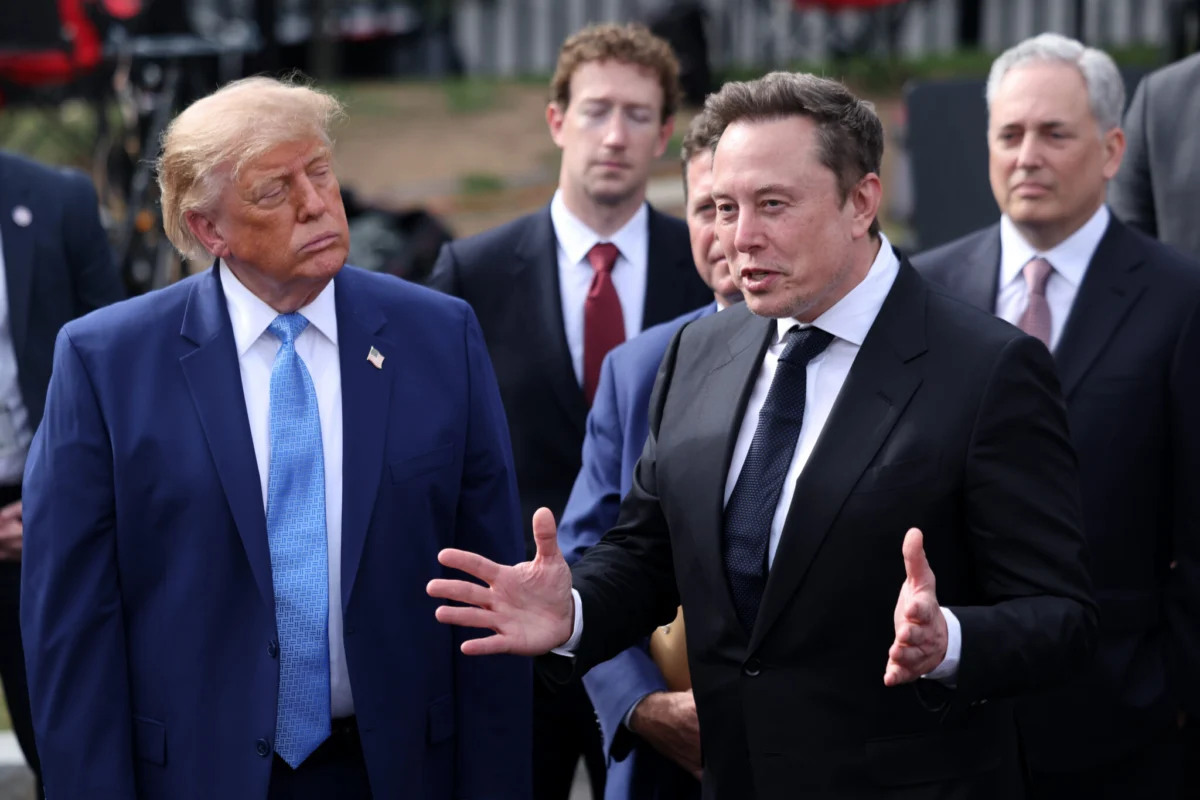
In a move that has sent ripples of confusion and skepticism through the halls of Silicon Valley and Washington, D.C., the Trump administration has officially declared an end to the era of "artificial intelligence." Following a high-stakes summit this week featuring the most influential figures in the technology sector, the White House announced that the terminology used to describe advanced machine learning systems will be sunset in favor of a new, government-sanctioned designation: "Super Intelligence."
The pivot, formalized through an executive order, is being viewed by analysts as both a linguistic power play and a strategic rebranding effort designed to distance the current administration from the negative connotations—such as job displacement and existential risk—that have long been associated with the term "AI."
The Summit: A Who’s Who of Tech Power
The summit, which brought together industry titans including Mark Zuckerberg, Jeff Bezos, Elon Musk, and Anthropic CEO Dario Amodei, served as the stage for the signing of the "Joint Commitment on Frontier Responsibilities." While the optics suggested a unified front between the White House and Big Tech, the reality of the gathering was far more complex.
The meeting followed a whirlwind of political maneuvering. Only weeks prior, President Trump had publicly castigated the concept of AI regulation, dismissing concerns about safety as the rhetoric of political opponents. The sudden transition from an anti-regulation stance to a formal pact with industry leaders suggests a rushed attempt to gain control over the narrative surrounding emerging technologies.
Chronology of a Policy Pivot
The path to the "Super Intelligence" decree was anything but linear.
- Late September 2026: Tensions peak between the Trump administration and Anthropic, which had faced harsh criticism from the Department of Defense regarding its safety protocols and perceived "woke" alignment.
- September 27, 2026: In an effort to thaw relations, Anthropic CEO Dario Amodei is invited to a late-night private dinner with President Trump. This meeting is widely credited with recalibrating the administration’s openness to the company’s involvement in government-level discussions.
- September 30, 2026: The White House hosts the summit for AI leaders. Despite the gravity of the occasion, the event is marred by a viral administrative error: the official document signed by the President and tech executives contains a misspelling of "United States."
- Early October 2026: The administration follows up the summit with the announcement of a new "Super Intelligence Force," signaling that the terminology shift is intended to be a foundational element of future military and domestic policy.
The Semantic Shift: Why "Super Intelligence"?
The core of the administration’s strategy appears to be a sophisticated, albeit transparent, rebranding exercise. During the most recent episode of TechCrunch’s Equity podcast, industry observers Kirsten Korosec, Sean O’Kane, and Anthony Ha dissected the motivations behind the change.
"The message is clear," noted Korosec. "The administration wants to separate the public’s fear of AI—the fear that it will kill us or take our jobs—from their new vision of ‘Super Intelligence.’ By changing the name, they are attempting to strip away the baggage of the past several years of intense public debate."
This linguistic shift is not merely performative; it is mandated. Under the new executive order, all official U.S. representatives are now required to use the term "Super Intelligence" in all policy discussions and public communications. The goal, it seems, is to reframe the technology as a tool of national dominance rather than a societal threat.
The "Morally Binding" Paradox
Perhaps the most peculiar aspect of the summit was the nature of the "Joint Commitment on Frontier Responsibilities." Critics have been quick to point out that the agreement lacks any teeth. As Sean O’Kane noted during the Equity discussion, the document is "deeply non-binding" from a legal perspective.
President Trump’s characterization of the agreement as "morally binding" has drawn significant attention from legal experts and ethicists. In the context of international and domestic policy, "morally binding" is a term devoid of enforcement mechanisms. For the tech companies involved, the commitment allows them to maintain their current operational trajectories while appearing to concede to the administration’s demands for safety and oversight.
Internal Fissures: The Anthropic Case Study
The relationship between the Trump administration and Anthropic serves as a microcosm of the broader confusion regarding the government’s approach to tech. While the Treasury Department has been vocal in its support of collaborating with Anthropic to leverage its advanced models, the Department of Defense remains deeply hostile.
Defense officials continue to label Anthropic a "national security risk," creating a disjointed policy environment. This internal discord highlights the reality that while the White House may be interested in the optics of a unified, "Super Intelligent" future, the federal bureaucracy remains deeply divided on whether these companies are allies or liabilities.
Implications for the Tech Industry
The immediate effect of this rebranding on the tech industry remains to be seen, but the implications are significant:
- Regulatory Uncertainty: By replacing the regulatory framework of "AI" with the vague, aspirational label of "Super Intelligence," the administration may be creating a regulatory void. If the old rules no longer apply to "AI," companies may find themselves in a period of unprecedented, albeit risky, freedom.
- Public Perception: The rebranding effort is likely a response to polling data suggesting that the public is increasingly wary of automated systems. Whether the American public will accept "Super Intelligence" as a safer alternative to "AI" is highly questionable.
- Lobbying Power: The fact that tech CEOs were brought to the table—despite the President’s previous hostile rhetoric—proves that the administration views these companies as essential to the U.S. geopolitical strategy. The "Super Intelligence Force" suggests that the government is looking to integrate private sector models directly into the defense and infrastructure sectors.
Expert Analysis: Is This Just Theater?
When looking at the event through a journalistic lens, the consensus among observers is that the summit was more about political theater than substantive policy reform. The misspelling of "United States" on the official pledge is seen by many as a symbol of the haste with which this policy was assembled.
"The fact that this gesture was deemed necessary is the most significant part of the story," said Anthony Ha. "It doesn’t necessarily mean that any major changes are coming to how these models are built or deployed. It means that the administration felt it needed a victory, a way to show that it is in control of the ‘Super Intelligence’ era, regardless of how thin the substance of that control actually is."
Conclusion: The Road Ahead
As the "Super Intelligence" branding takes hold in Washington, the tech industry faces a strange new reality. They are being courted by an administration that is simultaneously demanding their compliance and ignoring their internal safety warnings.
The shift from "artificial" to "super" suggests a desire to transcend the current limitations of human-computer interaction, aiming for a future where technology is viewed not as a replacement for human labor, but as an elevated, state-sanctioned force. However, until the administration moves beyond rebranding and addresses the substantive concerns regarding safety, ethics, and economic impact, the label "Super Intelligence" may prove to be nothing more than a cosmetic update to a deeply complicated, and increasingly urgent, technological landscape.
The coming months will reveal whether this "Super Intelligence" designation becomes a standard in global discourse or fades into the annals of political branding experiments that failed to resonate with the public. For now, the tech giants remain in a precarious dance with the White House, balancing their own innovation cycles with the whims of a volatile political environment.