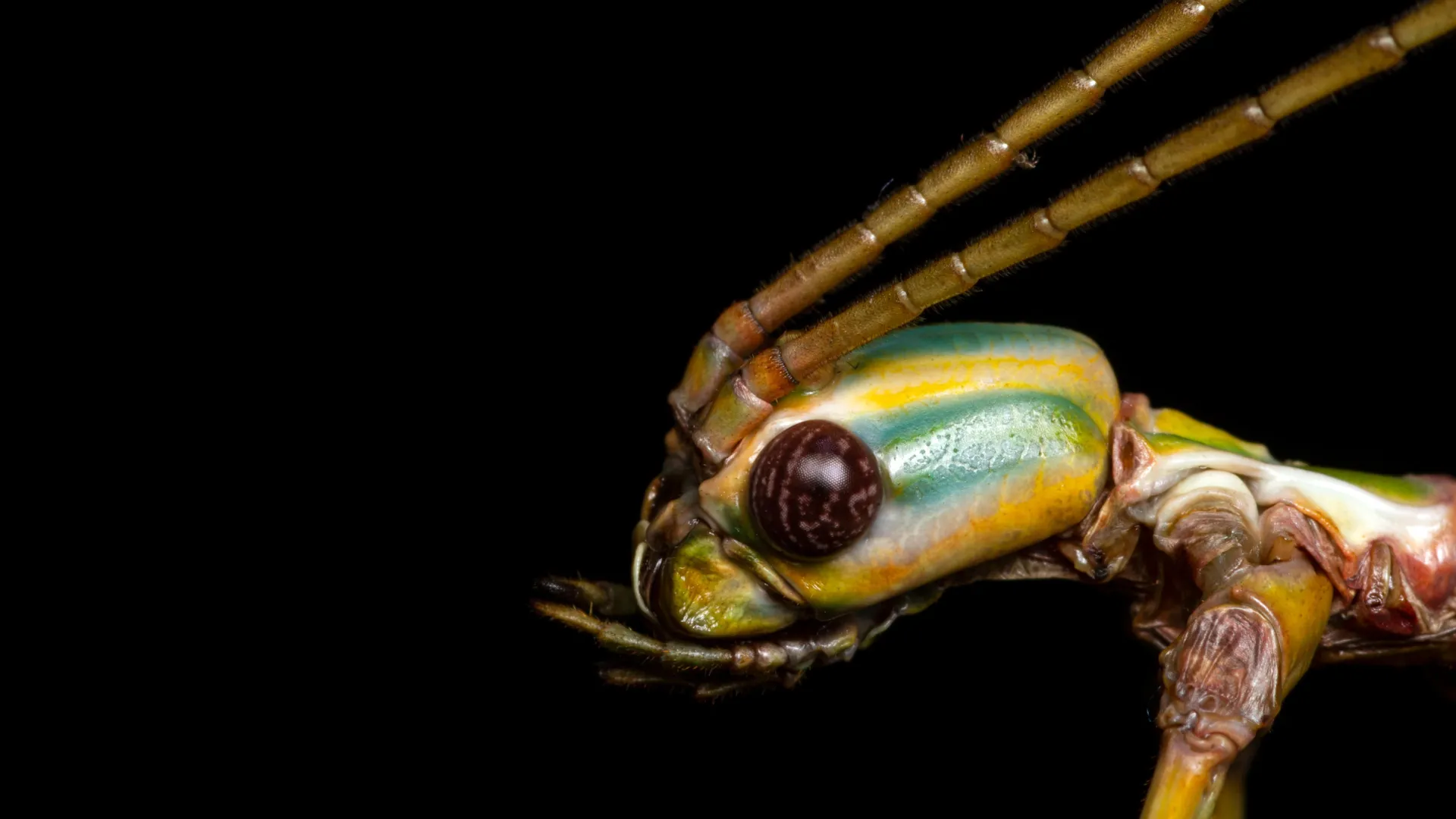
In the dense, sun-dappled canopy of Australia’s coastal forests, a silent revolution has been hiding in plain sight. For decades, entomologists and citizen scientists alike have observed, photographed, and documented what they believed to be two distinct species of large, lumbering stick insects within the genus Anchiale. Yet, as a groundbreaking study from the University of Sydney reveals, nature has been harboring a secret: these iconic insects, far from being a well-mapped duo, are actually a diverse group of five distinct species.
This revelation serves as a humbling reminder that even in a nation where biodiversity is heavily scrutinized, the natural world retains its capacity to surprise. By integrating cutting-edge genomic analysis with old-school museum curation and the power of modern citizen science, researchers have redrawn the map of Australian phasmid taxonomy.
Main Facts: The Reshuffling of a Genus
The research, recently published in the journal Austral Entomology, centers on the genus Anchiale. Historically, specimens found ranging from northern New South Wales, through the coastal regions of Queensland, and into the tropical reaches of northern Australia were grouped into just two recognized species.
The University of Sydney team, led by Dr. Braxton Jones of the Aola Richards Sydney Insect Hub, utilized a multi-disciplinary approach to reclassify these insects. By comparing DNA sequences, morphological characteristics—such as egg structure and body shape—and behavioral data from captive populations, they identified three critical changes:
- Discovery of Anchiale mabiensis: A new species identified in the critically endangered Mabi rainforest on the Atherton Tablelands, notable for a unique, never-before-seen lid structure on its eggs.
- Validation of a Second New Species: A fifth, yet-to-be-fully-characterized species residing in the Cape York region.
- Restoration of Anchiale robusta: The resurrection of a species that had been erroneously lumped into other categories for decades, despite being a familiar sight to enthusiasts.
Chronology of the Discovery: From Fieldwork to Genomic Proof
The journey to this discovery was neither sudden nor straightforward. It began with a systemic re-evaluation of museum specimens that had sat in climate-controlled drawers for years, sometimes mislabeled or overlooked.
- The Early Years (1900s–2010s): Taxonomic records for Anchiale remained stagnant, with the genus largely accepted as a two-species group. During this time, thousands of observations were logged by the public via platforms like iNaturalist and the Atlas of Living Australia.
- The Data Accumulation Phase: With the rise of digital reporting, scientists suddenly had access to over 1,000 observations. These observations provided a spatial distribution map that hinted at subtle variations in color, size, and habitat preference that traditional taxonomy had failed to reconcile.
- The Genomic Turning Point (2020–2023): Dr. Jones and his team began the rigorous work of molecular phylogeny. By extracting DNA from both museum specimens and freshly collected samples, they were able to identify distinct genetic lineages that did not correspond to the existing species descriptions.
- The Synthesis (2024): By cross-referencing genetic data with physical traits, the team confirmed that the "familiar" insects were, in fact, a complex mosaic of species. The discovery of the unique egg structure in the Mabi rainforest specimen served as the final "smoking gun," providing a clear morphological distinction that confirmed the genetic findings.
Supporting Data: The Power of Citizen Science
One of the most compelling aspects of this study is its reliance on the "democratization of science." While the genomic work was conducted in high-tech laboratories, the foundational data was supplied by thousands of Australians who captured images of stick insects in their backyards, parks, and hiking trails.
Dr. Jones emphasized that the sheer volume of data provided by iNaturalist allowed researchers to identify patterns of distribution that would have been impossible to map using only institutional field trips. "Taxonomy is often a bit like detective work," Jones explained. "Even among some of Australia’s most photographed and frequently reported insects, we’re still finding species that have escaped scientific recognition."
The statistical weight of these observations—coupled with the examination of specimens raised in captivity—allowed the team to establish clear environmental boundaries for each of the five species. This spatial data proved that what was once thought to be a single, widespread species was actually a collection of localized populations, each uniquely adapted to its specific ecological niche.
Official Responses and Scientific Perspective
The scientific community has lauded the research as a masterclass in modern integrative taxonomy. By bridging the gap between historical museum records and modern molecular tools, the team has provided a blueprint for how other "well-known" insect groups should be studied.
"These findings demonstrate the importance of protecting threatened ecosystems and documenting Australia’s extraordinary biodiversity before we lose species without us having even discovered them," said Dr. Jones.
The project was supported by the Australian Biological Resources Study (ABRS) through the National Taxonomy Research Grant, as well as a CSIRO postgraduate scholarship. This funding underscores the government’s commitment to taxonomic research—a field that is often underfunded but essential for conservation planning. Without such grants, the subtle genetic differences between the newly described A. mabiensis and its relatives might have remained buried in the genome, potentially leaving the species vulnerable to extinction before they were ever formally recognized by the law.
Implications: Forestry, Agriculture, and Conservation
The reclassification of these stick insects is not merely an academic exercise; it has tangible, real-world consequences for land management and biosecurity.
Managing "Plague" Species
Some stick insects in the Anchiale genus are known for periodic population explosions, where they can strip leaves from trees, impacting both forestry yields and agricultural health. By identifying that these "plagues" are actually caused by distinct species with different life cycles and host-plant preferences, land managers can develop more targeted, ecologically friendly interventions. Instead of blanket pesticides that affect entire ecosystems, foresters can now apply species-specific management strategies.
Conservation in the Mabi Rainforest
The identification of Anchiale mabiensis highlights the biological treasure trove hidden within the Atherton Tablelands. The Mabi rainforest is critically endangered, with only small fragments remaining. By confirming that a unique species of stick insect exists exclusively in this micro-habitat, conservationists have gained a powerful new tool to advocate for the protection and restoration of the area. This insect is now a "flagship species" for the health of its ecosystem.
The Path Forward
The research also points to an unfinished puzzle: a sixth, potentially undescribed species lurking in the Cape York Peninsula. The team noted that while they have gathered enough preliminary evidence to suspect a new species, they require further specimens to conduct a full description. This serves as a call to action for citizen scientists in the north to keep their cameras ready and their eyes peeled.
Conclusion: A Living Library
The discovery of two new species of stick insects in the Australian landscape is a testament to the fact that we have only scratched the surface of the planet’s biodiversity. As Dr. Jones and his team have shown, the most important discoveries are often hiding in plain sight, masquerading as the mundane.
As Australia faces the dual challenges of climate change and habitat loss, this research provides a vital reminder: we cannot protect what we do not know. By formalizing the identity of these five species, the University of Sydney team has ensured that their unique roles in the Australian ecosystem are recognized, studied, and—most importantly—preserved for future generations. The detective work is far from over, but for now, the map of Australia’s giants has become a little clearer, and a lot more fascinating.