For decades, the story of mammalian evolution has been punctuated by a definitive, albeit fuzzy, milestone: the transition from egg-laying ancestors to the live-bearing creatures we recognize today. Conventional wisdom long suggested that viviparity—the act of giving birth to live young rather than laying eggs—was a relatively late innovation in the mammalian lineage. However, a groundbreaking study published in Frontiers in Mammal Science has shattered this timeline, suggesting that the roots of live birth stretch back nearly 100 million years earlier than previously imagined.
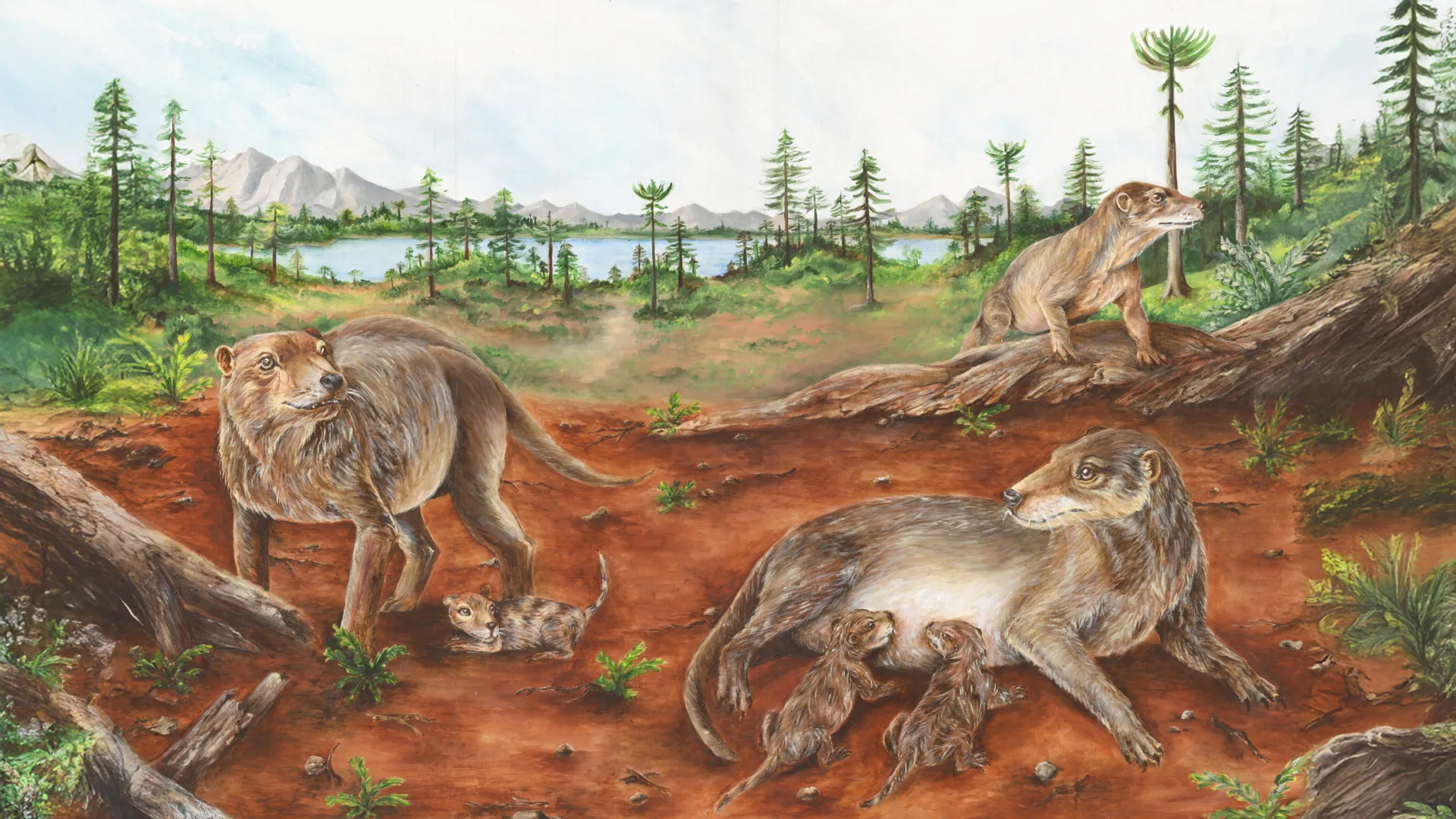
By analyzing the fossilized remains of Chiniquodon theotonicus, a cynodont that roamed the Earth approximately 236 million years ago, researchers have uncovered evidence that suggests these ancient mammalian ancestors were already practicing a reproductive strategy once thought exclusive to their much younger descendants.
A Discovery Hidden in Microscopic Bone Structures
The investigation began not in a field excavation, but in a classroom. During a postgraduate course in Argentina, researchers were examining a fossil of C. theotonicus discovered in the northwestern part of the country. Upon closer inspection of the specimen’s microscopic bone structure, they noticed an anomaly: a distinct growth mark that did not align with typical seasonal or maturity-related bone remodeling.
"We show for the first time that live birth was present in at least one mammalian ancestor, Chiniquodon theotonicus," says Dr. Leandro Gaetano, a paleontologist at the National Scientific and Technical Research Council (CONICET) in Argentina and lead author of the study.
The researchers identified this anomaly as a "neonatal line"—a specific growth ring that serves as a biological fingerprint for birth. In modern animals, these lines form due to the sudden, sharp acceleration in growth that occurs immediately after a newborn leaves the sheltered environment of the mother’s body. Finding such a marker in a 236-million-year-old fossil was unprecedented. It offered the first compelling evidence that C. theotonicus was not emerging from a leathery shell, but was instead entering the world through live birth.
The Triassic Context: A Crucible for Evolutionary Innovation
To understand why such a radical reproductive shift might have occurred, one must look at the world of the Triassic Period. This era was a time of volatile environmental instability. Life was struggling to recover from one of the most devastating mass extinctions in history, an event that reshaped the global ecosystem.
"Cynodonts thrived in the Triassic, a period of recovery and restructuring," explains senior author Adriana Mancuso, a CONICET researcher specializing in the evolution of terrestrial ecosystems. The environment was characterized by intense competition for limited resources and high predatory pressure. Furthermore, the climate was trending toward increased aridity and harsh seasonality.
In such a hostile environment, the traditional "lay and leave" strategy of egg-laying was a risky gamble. Eggs are vulnerable to predators, environmental shifts, and temperature fluctuations. Viviparity, by contrast, offers a significant survival advantage: the embryo is protected within the mother’s body, shielded from external environmental stressors until it is sufficiently developed to survive the harsh realities of the Triassic wilderness. This shift likely served as an evolutionary buffer, allowing C. theotonicus to flourish in a landscape that would have been unforgiving to species relying on external incubation.
Comparative Physiology: The "Large Newborn" Smoking Gun
The most compelling proof for the researchers’ hypothesis came from a rigorous comparison of body mass ratios. To confirm that the neonatal line was indeed a sign of viviparity, the team estimated the animal’s body mass at birth and compared it to its mass at adulthood.
The data was striking. The C. theotonicus individual was estimated to weigh approximately 1.7kg at birth and roughly 12kg at maturity. This implies the newborn represented approximately 14% of its eventual adult body mass.
When the researchers compared this ratio to other amniotes, the results were definitive:
- Reptiles: Turtles, snakes, and crocodilians in the 8kg to 14.5kg weight range produce hatchlings that weigh between 9g and 53g. Their neonate-adult ratio is a meager 0.1% to 0.6%.
- Birds: Large birds like cranes, pelicans, and vultures weighing between 8kg and 21.5kg produce hatchlings between 110g and 357g, reflecting a ratio of only 1.3% to 4.5%.
- Placental Mammals: Modern mammals of comparable size (8kg to 15kg) produce neonates weighing between 35.5g and 1.87kg, with ratios reaching as high as 18.77%.
"We were amazed to find that C. theotonicus grouped with extant placental mammals, being clearly distinct from other amniotes like reptiles or birds," Dr. Gaetano noted. The C. theotonicus newborn was far too heavy to have developed inside an egg of a size that the mother could have plausibly laid. It was, by all physiological metrics, a "mammalian-style" birth.
A Paradigm Shift in Evolutionary Biology
The implications of this discovery are profound. For decades, the evolution of live birth has been treated as a relatively recent development, a hallmark of "true" mammals that appeared long after the divergence of the cynodont lineage. The finding that C. theotonicus was viviparous pushes this date back by at least 95 to 90 million years.
"If mammalian ancestors were egg-laying or viviparous has been considered an inscrutable mystery," Gaetano said. "We came up with a somewhat ingenious set of methods to get at something very difficult to analyze in the fossil record."
By successfully identifying a neonatal line, the team has provided a new methodology for paleontologists. "In cynodonts, embryonic tissues were never observed before, let alone a neonatal line," says co-author María Miceli Baro. "Through its analysis, we found that a trait that is generally linked to evolutionary success was present in animals long before true mammals originated."
Future Directions and Remaining Questions
While the evidence for C. theotonicus is compelling, the researchers are careful to avoid overgeneralization. Is this a singular evolutionary anomaly, or was viviparity a common trait among the diverse group of cynodonts?
"It is very well possible that C. theotonicus does not represent an isolated case of viviparity among cynodonts," Gaetano suggests. "It could be evidence of the general switch from laying eggs to giving birth to live young early on in the mammalian lineage. But we need more evidence to test this hypothesis."
The scientific community is now faced with the possibility that many other traits traditionally associated with "modern" mammals—such as specialized parental care, elevated metabolic rates, or endothermy—may have deeper roots than previously assumed. If a creature living 236 million years ago was capable of producing large, live-born offspring, the transition from the reptilian ancestors of the Permian to the mammals of the Cenozoic may have been a much more fluid and continuous process than the "quantum leap" models of the past have suggested.
As paleontologists return to museum archives and search for further fossil specimens, the study of neonatal lines may become a standard tool in the quest to map the history of life. The story of C. theotonicus serves as a humbling reminder that the evolutionary history of our own lineage is far older, more complex, and more innovative than we once dared to imagine. What was once considered an "inscrutable mystery" is now a frontier of discovery, revealing that the ancestors of modern mammals were far more similar to their descendants than history books have historically claimed.