Housing affordability remains the defining economic challenge for Americans in 2026. As the dust settles from the pandemic-era housing boom, the market has transitioned into a new, complex reality. While the frantic, unsustainable price surges of 2021 and 2022 have cooled, the residual effects have left a significant portion of the population struggling to secure stable, affordable shelter. With the typical homebuyer now allocating nearly 40% of their income toward monthly housing payments—a figure that drastically exceeds the traditional 30% affordability benchmark—the dream of homeownership is undergoing a structural re-evaluation.
The Current Landscape: A Statistical Overview
The current housing crisis is not merely a result of high prices; it is a collision between legacy market dynamics and shifting economic tides. According to data from the Bureau of Labor Statistics, housing and transportation combined accounted for 50% of total household spending in 2024, a trend that has largely persisted into 2026.
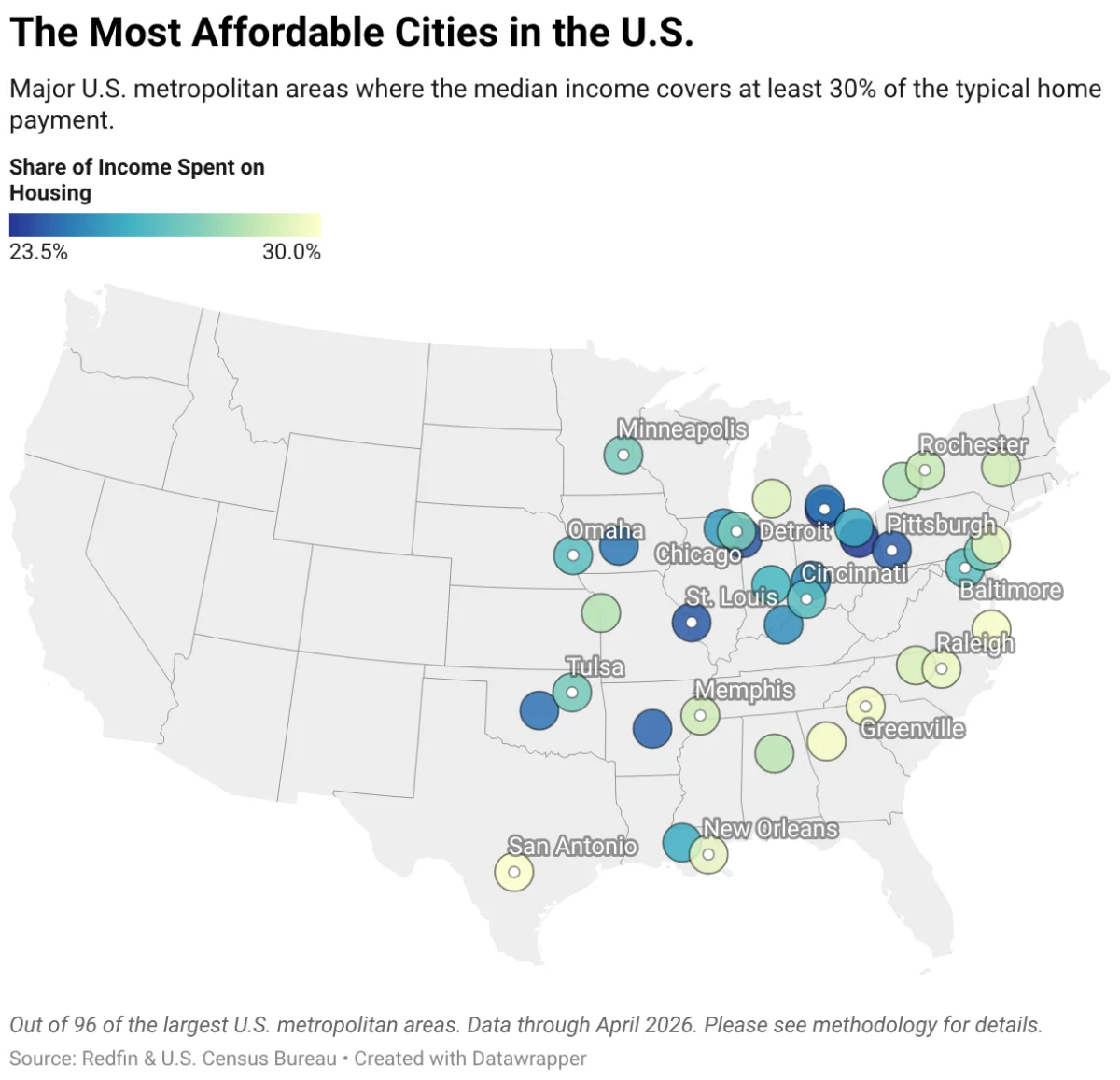
The "affordability gap" is defined by the ratio of median home sale prices to median household incomes. This ratio has reached record highs, creating a barrier to entry that excludes many middle-income families from the property ladder. However, beneath the national headline of high costs, there is a nuanced geography of opportunity. While coastal hubs continue to struggle with supply-constrained price floors, regions across the Midwest and the Rust Belt are seeing a resurgence in relative affordability, providing a lifeline for those priced out of more expensive markets.
Chronology: From Pandemic Boom to 2026 Normalization
To understand where the market stands today, one must look at the timeline of the last five years:
- 2020–2021 (The Surge): Low interest rates and a sudden shift toward remote work triggered an unprecedented demand for housing. Prices skyrocketed as inventory plummeted, fundamentally resetting the baseline for home values nationwide.
- 2022–2024 (The Correction): As the Federal Reserve adjusted monetary policy to combat inflation, mortgage rates climbed, cooling the velocity of home sales. While this halted the exponential growth of prices, it did not lead to a widespread price collapse, leaving the "affordability tax" firmly in place.
- 2025 (The Turning Point): By mid-2025, a new equilibrium began to emerge. Home price growth decelerated in many markets while wage growth, fueled by a tight labor market and productivity gains, began to catch up. This created the first signs of genuine improvement in the cost-to-income ratio in years.
- 2026 (The Current State): The market is now characterized by a bifurcation. High-demand tech hubs are seeing extreme price pressures, while "secondary" cities in the heartland are attracting a new wave of buyers looking for value, leading to a stabilization of the national affordability index.
The 10 Most Affordable U.S. Cities
For those seeking to stretch their housing budget, the Midwest and the South currently offer the most viable options. The following list identifies the major U.S. cities where the median household spends the lowest percentage of their income on housing costs.
| City | Share of Income Required | Median Household Income | Median Sale Price |
|---|---|---|---|
| Detroit, MI | 23.5% | $65,687 | $211,000 |
| Akron, OH | 23.6% | $78,753 | $237,000 |
| Gary, IN | 24.1% | $82,274 | $290,000 |
| St. Louis, MO | 24.2% | $88,593 | $282,600 |
| Pittsburgh, PA | 24.3% | $83,419 | $265,000 |
| Little Rock, AR | 24.4% | $73,170 | $254,000 |
| Oklahoma City, OK | 24.6% | $78,818 | $267,496 |
| Des Moines, IA | 24.7% | $77,296 | $297,000 |
| Warren, MI | 24.7% | $79,594 | $325,000 |
| Dayton, OH | 25.0% | $65,123 | $255,000 |
Where Affordability is Improving the Most
Interestingly, some of the most expensive cities are seeing the fastest improvement in affordability, albeit from a very high baseline. This is largely driven by a combination of plateauing prices and rising local incomes.
"Nationally, housing affordability has actually improved over the past year, which may come as a surprise given that soaring home prices and mortgage rates are fresh in people’s memory," says Daryl Fairweather, Redfin Chief Economist. "Since mid-2025, home-price growth has cooled while incomes have grown, pushing the relative cost of buying down in nearly every major city in the country. We expect affordability to continue to improve in the years ahead."
The cities showing the most significant year-over-year gains in affordability include:
- San Jose, CA: Down 6.7 percentage points.
- Chicago, IL: Down 6.1 percentage points.
- Miami, FL: Down 4.7 percentage points.
- Seattle, WA: Down 4.6 percentage points.
- Oxnard, CA: Down 4.3 percentage points.
These shifts are not uniform. In San Jose, for example, the improvement is marked by a cooling market following a period of unsustainable growth, whereas in cities like Chicago, the improvement reflects a more steady, organic alignment between local wages and housing supply.
Economic Implications: The "Rust Belt" Renaissance
The concentration of affordable cities in the Midwest and Northeast is a direct byproduct of the industrial shifts of the late 20th century. Cities like Pittsburgh and Cleveland, once defined by the decline of manufacturing, are now being viewed through a different lens.
As remote and hybrid work models have matured, the necessity of living in high-cost coastal metros has diminished for many professionals. This has triggered a "geographic arbitrage" where homebuyers move to cities with lower costs of living, effectively "buying back" their financial freedom. However, this trend carries a caveat: as demand in these once-overlooked regions surges, the aging housing inventory is being pushed to its limits. Prices in these metros are now rising faster than the national average as the supply of high-quality, modern housing struggles to keep pace with the influx of new residents.
The Risks of High-Demand Markets
Not all cities are on an upward trajectory regarding affordability. San Francisco, Dayton, Philadelphia, and Providence are currently seeing their affordability decline. In these areas, the problem is not a drop in income but a supply-side crisis. In San Francisco, for instance, the localized AI boom has injected a massive amount of wealth into the local economy, causing luxury home prices to soar and creating a "disconnect" between the broader population and the cost of the entry-level housing market.
Expert Guidance: Planning Your Housing Future
Determining how much home you can afford is a personal equation, but it must be grounded in reality. While financial institutions often approve loans based on higher debt-to-income ratios, the "30% rule"—where housing costs should not exceed 30% of gross monthly income—remains the gold standard for maintaining long-term financial health.
Strategic Steps for Prospective Homebuyers:
- Assess Your Debt-to-Income Ratio: Before entering the market, calculate your total monthly obligations. If housing alone exceeds 30-35%, consider adjusting your search criteria or target area.
- Get Pre-Approved Early: In today’s competitive environment, sellers prioritize buyers who have already cleared the initial financial hurdles. A pre-approval letter is not just a document; it is a signal of your readiness.
- Explore Emerging Markets: If your primary constraint is price, look at cities that are currently undergoing revitalization. These markets often offer better long-term appreciation potential than fully saturated, expensive metros.
- Factor in "Hidden" Costs: Beyond the mortgage, ensure your budget accounts for property taxes, insurance premiums, and the maintenance costs of aging housing stock, which is particularly relevant in the historically affordable Midwest.
Conclusion
The housing market of 2026 is defined by a slow, painful but necessary adjustment toward a new equilibrium. While the affordability crisis is far from over, the trends indicate that the worst of the volatility has passed. For the average American, the path forward involves a blend of pragmatism—looking toward the Midwest for value—and patience, as the broader economy works to align wage growth with housing costs. As Fairweather notes, the expectation is for continued, albeit gradual, improvement. Until then, careful financial planning and a strategic approach to location remain the most effective tools for navigating the American housing landscape.