Main Facts: GOP Explores Filibuster-Proof Reconciliation and Debt Ceiling Strategy
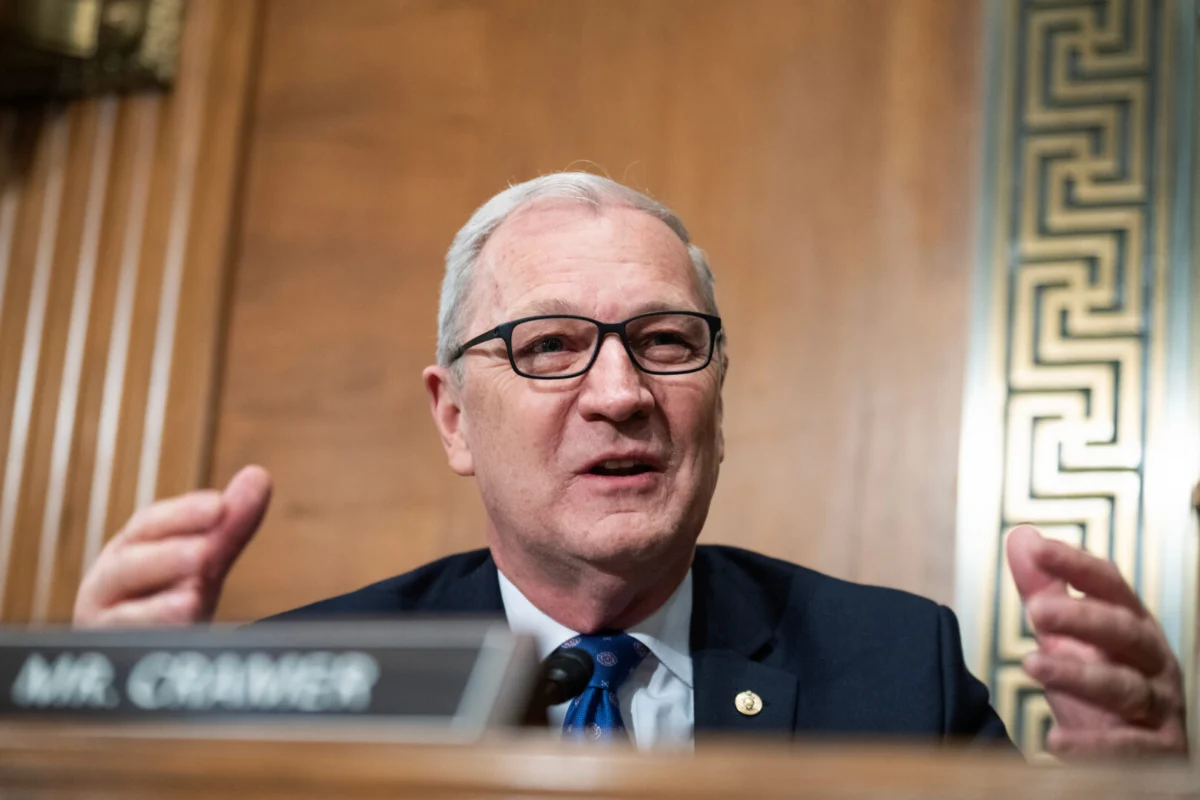
United States Senate Republicans are actively laying the groundwork for a potential budget reconciliation package during the upcoming lame-duck congressional session. Speaking to reporters on Thursday following a pro forma Senate session, Senator Kevin Cramer, R-N.D., outlined a legislative strategy aimed at securing significant increases in national defense spending while simultaneously addressing the federal debt limit.
The proposed initiative comes as lawmakers confront a severely compressed legislative calendar before the end of the year. Republican leaders had previously shelved a drive to pass a third party-line reconciliation package prior to the midterm elections. However, key figures within the party are now reconsidering the tactic as the two-month post-election window approaches—a stretch that could mark the party’s final opportunity to utilize filibuster-proof budgetary mechanisms if the midterms shift the balance of power in either chamber.
The contours of the package under consideration encompass three primary policy pillars:
- National Defense Spending: Approximately $100 billion in targeted funding to bolster military capabilities and readiness.
- Agricultural Assistance: Substantial farm aid provisions designed to support domestic producers.
- Voter Identification Protocols: Specific voter ID measures heavily championed by the Trump administration.
In tandem with the spending package, congressional leaders face an urgent need to resolve the federal debt ceiling. Senator Cramer indicated that lifting the borrowing limit remains an imperative that should be executed during the lame-duck period while Republicans retain their current congressional majority. While expressing a strong preference for a bipartisan agreement to address the debt limit, Cramer emphasized that incorporating a debt ceiling increase directly into a unilateral Republican budget reconciliation package stands as the designated fallback option should negotiations with Democrats stall.
Chronology of Legislative Events and Impending Deadlines
+-----------------------------------------------------------------------------------+
|                               TIMELINE OF EVENTS                                  |
+-----------------------------------------------------------------------------------+
| 2025             | Statutory debt ceiling raised to $41.1 trillion in previous   |
|                  | budget reconciliation law.                                     |
+------------------+----------------------------------------------------------------+
| Recent Month     | Total gross federal debt breaches $40 trillion threshold.      |
+------------------+----------------------------------------------------------------+
| Pre-Midterms     | Republicans abandon push for a third party-line reconciliation |
|                  | package; President Trump urges debt ceiling increase in 2026.  |
+------------------+----------------------------------------------------------------+
| September        | House Minority Leader Hakeem Jeffries notes post-election      |
|                  | debt limit discussion potential.                               |
+------------------+----------------------------------------------------------------+
| Post-Midterms    | Lame-duck session begins; two-month window to pass             |
|                  | reconciliation or bipartisan debt measures.                     |
+------------------+----------------------------------------------------------------+
| Dec. 11          | Stopgap government funding expires; risk of shutdown or full-  |
|                  | year Continuing Resolution (CR).                               |
+------------------+----------------------------------------------------------------+
| Late 2027 /      | Estimated deadline when Treasury exhausts extraordinary cash  |
| Early 2028       | management measures without a debt limit extension.           |
+-----------------------------------------------------------------------------------+
The 2025 Reconciliation Framework and Debt Ceiling Escalation
The legislative baseline for the current debt dispute was set during the enactment of the Republicans’ 2025 budget reconciliation law, which established the statutory debt limit at $41.1 trillion. Last month, official figures confirmed that total federal indebtedness surpassed the $40 trillion threshold for the first time in United States history, accelerating conversations regarding the nation’s fiscal trajectory.
President Donald Trump has repeatedly urged congressional leaders to enact a debt ceiling increase prior to the conclusion of the current calendar year. Pushing the borrowing ceiling higher before the end of the lame-duck session would effectively postpone the next fiscal deadline until after President Trump leaves office, insulating his administration from subsequent debt ceiling standoffs.
Post-Midterm Shift and the Lame-Duck Window
Prior to the midterm elections, Republican leadership decided to pause efforts to pass a third party-line reconciliation measure. However, the conclusion of the midterms opens a critical two-month legislative window before the 120th Congress is sworn in.
If the election outcomes result in Republicans losing control of either the Senate or the House of Representatives, the lame-duck session will represent the party’s final window to pass filibuster-proof legislation under their existing majorities. Conversely, a shift in congressional control could alter Democratic incentives, making minority lawmakers significantly less inclined to cooperate on a bipartisan debt limit extension.
The Fiscal 2027 Appropriations Crunch
Running parallel to reconciliation discussions is an immediate deadline for standard federal operations. Current stopgap government funding is scheduled to expire after Dec. 11. Congressional appropriators are attempting to negotiate full-year fiscal 2027 spending bills before the mid-December expiration. However, heightened partisan friction since the start of the second Trump administration has compromised the traditional appropriations process, raising the prospect of a full-year Continuing Resolution (CR) that would lock funding at existing levels.
Supporting Data and Financial Metrics
The upcoming legislative debate is defined by several specific statutory caps, fiscal metrics, and key operational deadlines:
+-----------------------------------------------------------------------------------+
|                        KEY FINANCIAL AND TIMELINE METRICS                         |
+-----------------------------------------------------------------------------------+
| Metric / Identifier             | Value / Deadline                                |
+---------------------------------+-------------------------------------------------+
| Total Federal Debt Milestone    | Exceeded $40 Trillion                           |
+---------------------------------+-------------------------------------------------+
| Statutory Debt Ceiling          | $41.1 Trillion (Set in 2025 Reconciliation)     |
+---------------------------------+-------------------------------------------------+
| Proposed Reconciliation Package | ~$100 Billion (Defense Spending + Farm Aid)     |
+---------------------------------+-------------------------------------------------+
| Dec. 11 Funding Expiration      | Fiscal 2027 Stopgap Measure Sunset              |
+---------------------------------+-------------------------------------------------+
| Treasury Cash Exhaustion Window | Late 2027 to Early 2028 (Without New Increase)  |
+---------------------------------+-------------------------------------------------+
Federal Debt Projections and Fiscal Timelines
Based on current fiscal estimates, if Congress fails to pass an increase to the $41.1 trillion debt limit during the lame-duck session or early in the next Congress, the Department of the Treasury is projected to exhaust its cash reserves and extraordinary accounting measures by late 2027 or early 2028. Crossing this threshold without legislative action would compromise the federal government’s ability to pay all statutory obligations on time and in full.
Competing Legislative Priorities
The feasibility of executing a complex reconciliation package during the lame-duck period is further complicated by a congested legislative schedule. Beyond passing fiscal 2027 appropriations before Dec. 11, lawmakers must address several major legislative requirements:
- The National Defense Authorization Act (NDAA): The annual statutory framework governing military policy and expenditure authorizations.
- Permitting Overhaul Legislation: Proposed regulatory reform aimed at streamlining federal approval processes for energy and infrastructure projects.
- Emergency Appropriations / Farm Relief: Legislative vehicles needed to deliver economic assistance to domestic agricultural sectors.
Official Responses and Lawmaker Perspectives
+-----------------------------------------------------------------------------------+
|                            LAWMAKER POSITIONS AT A GLANCE                         |
+-----------------------------------------------------------------------------------+
| Representative / Role           | Key Stance / Quotes                             |
+---------------------------------+-------------------------------------------------+
| Sen. Kevin Cramer (R-N.D.)      | Open to partisan reconciliation for debt limit  |
|                                 | if Democrats refuse to negotiate bipartisan deal.|
+---------------------------------+-------------------------------------------------+
| Sen. Bernie Moreno (R-Ohio)     | Bullish on tackling reconciliation and debt     |
|                                 | limit together in the lame-duck session.        |
+---------------------------------+-------------------------------------------------+
| Sen. Shelley Moore Capito       | Expressed caution; "not ready to make that      |
| (R-W.Va.)                       | prediction" regarding reconciliation movement.  |
+---------------------------------+-------------------------------------------------+
| Rep. Lloyd K. Smucker (R-Pa.)   | Hopes for reconciliation targeting waste, fraud,|
|                                 | and abuse; notes election results drive outcome.|
+---------------------------------+-------------------------------------------------+
| Rep. Hakeem Jeffries (D-N.Y.)   | Indicated in September that debt limit could    |
|                                 | be addressed post-midterm elections.            |
+---------------------------------+-------------------------------------------------+
| President Donald Trump          | Urged lawmakers to raise debt limit immediately |
|                                 | to extend deadline past his current term.       |
+---------------------------------+-------------------------------------------------+
Senate Republicans Weigh Partisan vs. Bipartisan Pathways
Following his participation in a pro forma Senate session, Senator Kevin Cramer clearly articulated the strategic necessity of resolving the debt ceiling while Republicans maintain majority control, even if it requires unilateral action.
"We have to do debt limit. I don’t care how we do it, necessarily," Cramer stated. "I prefer debt limit to not have to be reconciliation. But if Democrats are going to be reckless enough to not help, I’m open to that."
Cramer’s willingness to consider a party-line strategy is shared by Senator Bernie Moreno, R-Ohio, who expressed strong optimism earlier this month regarding the prospect of combining budget reconciliation with a debt limit increase during the lame duck.
However, senior leadership and appropriators maintain a more circumspect posture. Senator Shelley Moore Capito, R-W.Va., a senior member of the Senate Appropriations Committee, voiced skepticism regarding the aggressive timeline. Asked whether Republicans would realistically advance a third reconciliation package before the end of the year, Capito stated that she was "not ready to make that prediction," pointing to the density of baseline legislative duties.
House Republican Leadership Considerations
On the House side, Representative Lloyd K. Smucker, R-Pa., who is competing to lead House Republicans on the House Budget Committee in the 120th Congress, spoke to reporters following a pro forma House session on Thursday. Smucker advocated for pursuing a reconciliation bill immediately after the elections, emphasizing structural fiscal reforms.
"Of course, the results of the midterm will influence everything," Smucker acknowledged. "But even so, regardless of the outcome, we could do a reconciliation package, and I hope that we would."
Smucker noted that an optimal Republican reconciliation bill should prioritize eliminating government waste, fraud, and abuse, though he admitted that the dynamic landscape makes final outcomes "hard to predict." Regarding the looming Dec. 11 funding deadline, Smucker expressed confidence that both chambers would "do our job" and pass an appropriations measure to prevent a partial government shutdown.
Democratic and Executive Branch Positions
Democratic leaders have also signaled awareness that the debt limit must be addressed in the post-election environment. In September, House Minority Leader Hakeem Jeffries, D-N.Y., noted that taking action on the debt ceiling was a logical agenda item for the lame-duck period.
However, the political willingness of Democrats to provide votes for a standalone, bipartisan debt limit increase remains contingent on the final midterm results and the specific conditions attached by the Republican majority. Meanwhile, the White House has maintained a firm stance, with President Trump calling on Congress to clear the debt limit hurdle immediately to stabilize fiscal planning through the end of his administration.
Strategic and Policy Implications
Defense Spending and the Threat of a Full-Year CR
The primary policy driver for a third reconciliation package is the current instability surrounding the fiscal 2027 appropriations process. Traditional, bipartisan appropriations bills require 60 votes to clear the Senate, a hurdle that has become increasingly difficult to navigate in the current political climate.
If Congress is unable to reach a bipartisan consensus on full-year spending bills by Dec. 11, lawmakers will likely be forced to pass a full-year Continuing Resolution (CR). A full-year CR freezes federal spending at existing levels, preventing key defense modernization programs and adjusted operational budgets from being implemented.
                   APPROPRIATIONS TRAJECTORY & RISK
                                  |
        +-------------------------+-------------------------+
        |                                                   |
 [Dec. 11 Deadline]                                  [Dec. 11 Deadline]
 Bipartisan Spending Agreement                       Appropriations Stalemate
        |                                                   |
        v                                                   v
 Regular Fiscal 2027 Enactment                      Full-Year Continuing Resolution
                                                            |
                                                            v
                                                  Defense Budget Frozen
                                                            |
                                                            v
                                               [Reconciliation Package]
                                               $100B Defense & Farm "Plus-Up"
In this scenario, budget reconciliation emerges as the only procedural mechanism capable of delivering enhanced resources to national security priorities without requiring Democratic support.
"I think we have to prepare for a worst-case scenario, which is a CR through this fiscal year," Senator Cramer warned. "And in that scenario, we have got to plus-up our national defense in a big way, and reconciliation may be the only way to do it."
Procedural Dynamics of Budget Reconciliation
Budget reconciliation offers major political advantages for the controlling party in the Senate. Under standard legislative procedure, ordinary bills require a 60-vote threshold to invoke cloture and limit debate, allowing the minority party to utilize the filibuster to block legislation.
Reconciliation measures, by contrast, are governed by strict statutory rules under the Congressional Budget Act. They require only a simple majority (51 votes, or 50 votes plus the Vice President breaking a tie) to pass the Senate. By attaching a $100 billion funding enhancement for defense and agriculture, policy riders like voter ID mandates, and a statutory debt limit increase to a single reconciliation bill, Republicans could bypass the necessity of Democratic votes entirely.
Political Calculus of the Lame-Duck Window
The strategic viability of the lame-duck reconciliation strategy hinges heavily on the final certified results of the midterm elections:
- Scenario A: Republicans Maintain Control of Both Chambers.
If the majority remains intact for the 120th Congress, leadership may choose to defer major fiscal reforms until the new Congress convenes, allowing for a broader, more comprehensive budgetary package in early 2027. - Scenario B: Republicans Lose Control of Either Chamber.
If Democrats capture either the House or the Senate, the two-month lame-duck window becomes the sole remaining opportunity for current Republican majorities to enact key policy preferences through filibuster-proof mechanics. In this environment, the urgency to pass a reconciliation bill containing defense funding, voter ID measures, and a multi-trillion-dollar debt limit expansion increases significantly.
Ultimately, congressional leaders face a delicate balancing act. Navigating competing legislative priorities—including the NDAA, permitting reform, and stopgap funding—within a matter of weeks will test the procedural capacity of both chambers. Whether Republicans opt for a broad, party-line reconciliation strategy or a series of narrow, bipartisan compromises will determine the federal government’s operational stance and financial footing heading into the next congress.