In an unprecedented display of professional solidarity, a coalition of thirty-nine French media organizations has issued a searing condemnation of the National Rally (RN) party following a series of aggressive statements made by party leader Marine Le Pen. The conflict, which centers on investigative journalism and the limits of political discourse, has sparked a national debate regarding the state of press freedom in France as the country hurtles toward the 2027 presidential election.
The escalation began on Tuesday when Marine Le Pen, the de facto leader of the far-right movement, warned the investigative outlet Mediapart that they would need to wear a "bulletproof suit" to withstand the party’s forthcoming retaliation. The threat was a direct response to a Mediapart exposé published earlier in the week, which surfaced allegations that Jordan Bardella—the president of the National Rally and a close political protégé of Le Pen—had made anti-Semitic comments in 2013.
A Chronology of Confrontation
The roots of this current friction lie in the aggressive investigative journalism practiced by Mediapart, an outlet known for its refusal to accept party-line communication.
- Late September 2026: Mediapart publishes a detailed report uncovering archival evidence and testimonies suggesting that Jordan Bardella, currently the face of the RN’s electoral strategy, had allegedly engaged in anti-Semitic discourse during his early years in politics.
- September 28, 2026: Bardella vehemently denies the allegations, characterizing the report as a "politically motivated hit piece" designed to derail his party’s momentum.
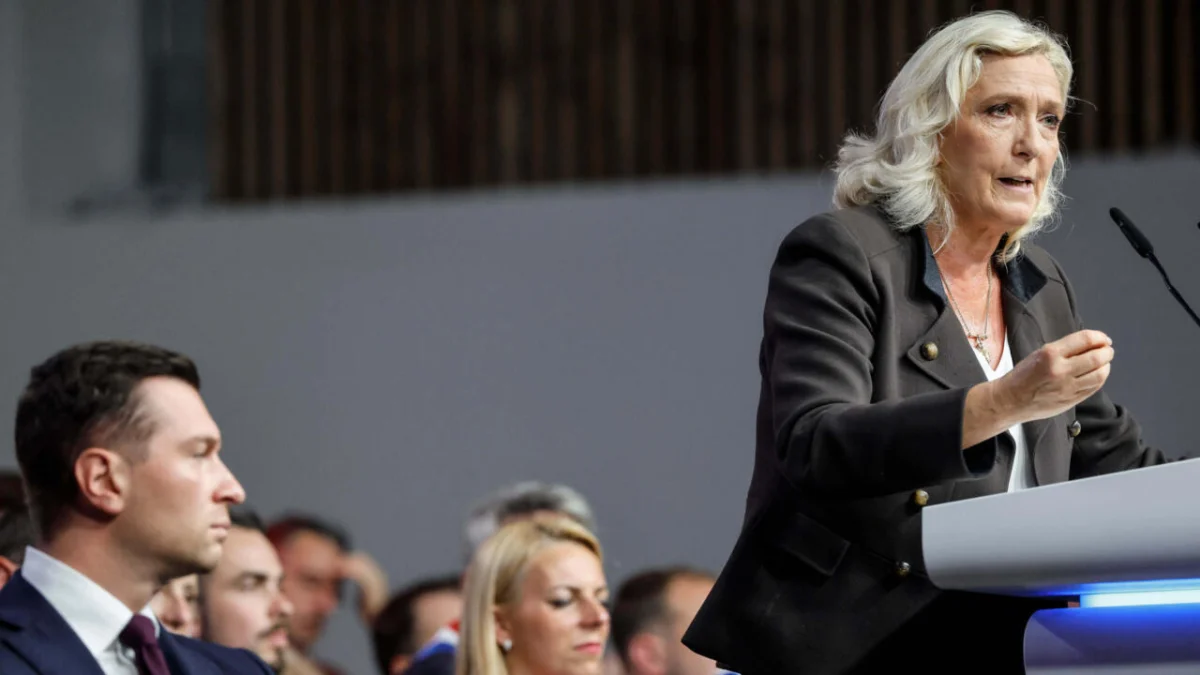
- September 29, 2026: Marine Le Pen steps into the fray. During a press engagement, she explicitly targets the journalists responsible for the report. Her choice of language—specifically the directive that the staff of Mediapart should "put on a bulletproof suit"—is interpreted by legal experts and human rights organizations as a thinly veiled threat of violence.
- October 2, 2026: A collective of thirty-nine major French news organizations, spanning the ideological spectrum from the conservative Le Figaro to the left-leaning Libération, releases an open letter condemning Le Pen’s rhetoric. They characterize the comment as a "target on the backs of journalists" and an assault on the democratic mandate of the free press.
The Political Stakes: A Path to the Élysée
The timing of this confrontation is critical. As of early October 2026, polling data indicates that Marine Le Pen remains the frontrunner in the race for the 2027 presidential election. Surveys consistently show her winning the first round of voting, scheduled for April 18, 2027.
This momentum has emboldened the National Rally, which has spent years attempting to "de-demonize" its image. However, critics argue that the party’s underlying hostility toward the media remains unchanged. The rise of Bardella as a polished, social-media-savvy political operator has been central to the RN’s recent polling gains, and any challenge to his character or history is perceived by the party leadership as an existential threat to their electoral strategy.
The tension highlights a paradox: while the RN seeks to project the image of a party ready for government, its leadership is increasingly resorting to language that critics describe as "authoritarian" and "thuggish." The electoral strategy relies on bypassing traditional gatekeepers, yet the party has shown an intense sensitivity to the investigative scrutiny that those same gatekeepers provide.
The Media’s Unified Response: An Analysis of the Open Letter
The joint statement released by the thirty-nine newsrooms is a rare moment of unity in a fractured media landscape. The signatories did not address the veracity of the claims against Bardella, but rather focused on the principle of the matter: the safety of the press.
"We, journalists working in newsrooms with differing editorial lines, jointly and unreservedly condemn the death threats made by the National Rally against our colleagues at Mediapart," the statement read.
The letter highlights several key pillars of democratic society:
- The Role of the Watchdog: Journalists investigate based on evidence to hold those in power accountable. This role, the coalition argues, is "indispensable" to a functioning republic.
- The Danger of Normalization: By using violent metaphors, political leaders normalize the harassment of those whose job is to provide information to the public.
- The Legal Framework: The letter cites the European Convention on Human Rights, reminding the public that freedom of the press is not merely a privilege but a protected right that enables all other democratic processes.
The coalition’s rhetoric was particularly sharp in its comparison of the National Rally’s tactics to those of "authoritarian regimes around the world." For a party aspiring to lead a G7 nation, such a comparison is potentially damaging to its credibility on the international stage.
Implications for French Democracy
The implications of this standoff extend far beyond the offices of Mediapart. If a leading presidential candidate can threaten the press with impunity, it suggests a weakening of the democratic "check and balance" system.
The Chilling Effect
Media rights advocates warn of a "chilling effect." When journalists feel that investigating a powerful political figure carries a risk of physical or legal retaliation, self-censorship becomes a rational survival strategy. This erosion of investigative rigor is exactly what populist movements often seek to achieve to prevent their records from being scrutinized.
The Weaponization of Communication
The National Rally has built a formidable machine for controlling its own narrative, utilizing platforms like TikTok and Instagram to reach voters directly. The conflict with Mediapart exposes the friction between this controlled, sanitized communication and the unpredictable, evidentiary-based work of traditional journalism. As the 2027 election nears, it is expected that the RN will continue to characterize any investigative journalism that contradicts their narrative as "fake news" or "politically motivated attacks."
International Scrutiny
International observers are watching the situation closely. France has historically been a beacon of democratic values and press freedom. However, recent trends—including the harassment of journalists during the "Yellow Vest" protests and the current rhetorical attacks by the RN leadership—are causing concern in Brussels and beyond. The European Union has strict mandates regarding the protection of journalists, and any further escalation by the RN could lead to diplomatic friction should the party win the presidency.
Conclusion: The Path Forward
The standoff between Marine Le Pen and the French press is more than a momentary political squabble; it is a fundamental test of the health of French democracy. As the country moves toward the April 2027 elections, the question of whether the media can hold candidates accountable without being subjected to threats of violence will be a central theme of the campaign.
The coalition of thirty-nine newsrooms has made its position clear: the right to information is non-negotiable. Whether this united front will be sufficient to curb the hostile rhetoric of the National Rally remains to be seen. However, by banding together, the media has sent a clear message that while they may compete for headlines and readership, they are united in the belief that an intimidated press is the first casualty of an eroding democracy.
As the election cycle intensifies, the eyes of the French public will be on both the investigators and the investigated. If the National Rally hopes to lead the nation, it will eventually have to reconcile its desire for power with the basic requirements of a democratic society: accountability, transparency, and the protection of those who report the truth. For now, the "bulletproof suit" remains a metaphor for a volatile, high-stakes confrontation that defines the current era of French political life.