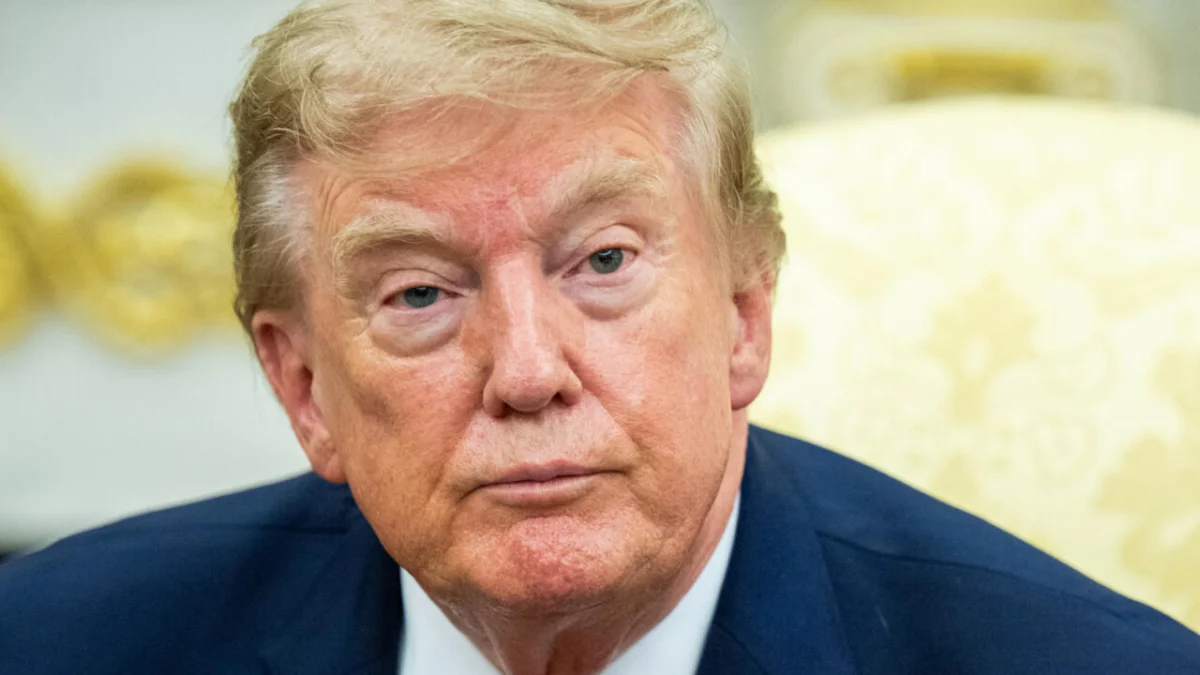
In a move that has sent shockwaves through international markets and diplomatic circles, US President Donald Trump has issued a sweeping warning to the international community: any nation that provides a "lifeline" to the Islamic Republic of Iran will face severe economic consequences. The pronouncement, delivered late Wednesday, follows a provocative visual claim posted by the President asserting that the Strait of Hormuz—the world’s most critical maritime oil chokepoint—is now a "NEW U.S. territory."
As the global community scrambles to interpret the geopolitical implications of these statements, the White House has remained tight-lipped regarding the specific mechanics of these proposed sanctions or which nations might be currently under investigation for their ties to Tehran.
The Core Conflict: A Strategic Chokepoint
The Strait of Hormuz, a narrow waterway separating Iran and Oman, serves as the transit point for approximately 20% of the world’s total oil consumption. For decades, it has remained the primary artery for energy exports from Saudi Arabia, the UAE, Kuwait, and Iraq. By labeling the waterway as "U.S. territory," the Trump administration is effectively challenging the international legal status of the maritime corridor, suggesting a transition from a global common to an American-controlled security zone.
The President’s warning against those supporting Iran appears to be an attempt to close the final gaps in the US "maximum pressure" strategy. By targeting not just Iran, but its economic enablers, the White House is signaling a shift toward secondary sanctions that could alienate traditional allies and complicate global trade relations.
Chronology of the Escalation
The current standoff is the culmination of months of deteriorating relations between Washington and Tehran.
- Mid-2026: Tensions began to simmer as Iranian naval patrols increased their frequency in the Persian Gulf, leading to several "unsafe and unprofessional" encounters with US naval vessels.
- Early August 2026: Reports emerged of increased Iranian domestic efforts to circumvent existing sanctions through decentralized trade routes.
- August 19, 2026: The Trump administration signaled a policy shift, with the President posting a map on social media platforms officially designating the Strait of Hormuz as a "NEW U.S. territory."
- August 20, 2026 (01:26 GMT): President Trump issued his formal warning, explicitly threatening economic retaliation against any state providing financial or logistical support to Iran.
- August 20, 2026 (01:48 GMT): Global analysts began revising economic forecasts as the potential for a total blockade of the Strait became a primary market concern.
Supporting Data: The Global Energy Dependency
To understand the gravity of the President’s statement, one must examine the economic reliance on the Strait of Hormuz.
According to data from the U.S. Energy Information Administration (EIA), the daily volume of oil passing through the Strait reached nearly 21 million barrels per day (bpd) in recent years. Any disruption—whether through military conflict or severe economic sanctions—would likely trigger an immediate, catastrophic spike in global crude oil prices.
Furthermore, the "lifeline" to Iran, which the President mentioned, refers to a complex web of grey-market oil sales, currency swaps, and food/medicine imports that have sustained the Iranian economy despite being largely cut off from the SWIFT international banking system. The US administration’s threat targets the nations that facilitate these transactions, including potential intermediaries in East Asia and the Middle East.
Official Responses and Diplomatic Fallout
The White House Stance
The administration maintains that these measures are essential for national security. Spokespersons have indicated that the "territorial" designation of the Strait is intended to deter Iranian aggression and protect the free flow of commerce. "The President is committed to ensuring that the global economy is not held hostage by a regime that exports terror," one official stated.

The View from Tehran
Iranian state media has characterized the President’s map and rhetoric as an "act of blatant piracy" and a violation of international maritime law. Tehran’s leadership has repeatedly argued that the Strait of Hormuz is under the sovereign jurisdiction of the littoral states and that any attempt to enforce American control would be met with "decisive defensive measures."
International Reaction
The European Union and the United Nations have urged restraint. European diplomats have expressed concern that these secondary sanctions could effectively force them to choose between maintaining the 2015 nuclear framework or facing economic ruin in the US market. Meanwhile, Asian nations—some of the largest importers of Iranian oil—have remained largely silent, signaling a desire to avoid direct confrontation with either Washington or Tehran.
Strategic Implications: A New Era of Maritime Geopolitics
1. The Risk of Kinetic Conflict
By framing the Strait as "U.S. territory," the administration has lowered the threshold for military engagement. If the US Navy treats the waterway as domestic territory, any Iranian naval vessel entering the channel could be classified as an "intruder" or a "hostile force," potentially leading to accidental—or intentional—skirmishes that could escalate into full-scale war.
2. Economic Fragility
The threat of secondary sanctions creates a "chilling effect" on global trade. Corporations and financial institutions, fearing American penalties, are likely to divest from any region or partner associated with Iran, even if such trade is legally permitted under current international agreements. This leads to market volatility and could exacerbate inflation in countries heavily dependent on affordable energy.
3. Re-evaluating Global Alliances
The "with us or against us" ultimatum forces a realignment of global alliances. Countries that have traditionally sought a middle ground, such as India or Turkey, may find their foreign policy flexibility severely constrained. If Washington follows through with sanctions against these nations, it could accelerate the push for alternative, non-dollar-based payment systems, potentially undermining the long-term hegemony of the US dollar in global energy markets.
Conclusion: The Path Forward
As of the latest reports, international monitors are observing increased military activity in the Persian Gulf. The rhetoric emanating from the White House represents a fundamental departure from traditional diplomatic norms regarding territorial waters and economic statecraft.
The world now waits for clarification on the "specific steps" the US intends to take. Will this be a period of intense diplomatic maneuvering, or is the global community on the precipice of a significant disruption to the energy sector? The answer lies in the coming days, as the international community assesses whether the President’s claims are a tactical negotiation ploy or the precursor to a definitive change in the global order.
For now, the Strait of Hormuz remains the most dangerous square mile on Earth, with the global economy holding its breath as the countdown to a potential showdown begins.
This article is based on live reports from FRANCE 24, with additional contributions from AFP, AP, and Reuters. Updates will follow as more information regarding the scope of the sanctions becomes available.