We are raised on the ubiquitous, siren-song phrase: "the game of life." From the brightly colored plastic tiles of Milton Bradley’s 1860 board game—an American cultural institution—to the self-help shelves of Amazon teeming with guides on "how to win," we have been conditioned to view our existence through the lens of competition.
But beneath this pervasive metaphor lies a dangerous philosophy. By treating our finite years on earth as a series of levels to be conquered, objectives to be hit, and rivals to be outpaced, we have inadvertently transformed our lives from a human experience into a zero-sum performance. It is time to challenge this paradigm: Life is not a game, and the attempt to "win" it may be the very thing preventing us from actually living it.
The Origins of the Competitive Metaphor
The conceptualization of life as a game is deeply embedded in the American psyche. The original 1860 version of The Game of Life, created by Milton Bradley, was starkly different from the colorful, cheerful version familiar to today’s families. It was a moralistic tool that rewarded virtues like "industry" and "honor" while punishing "idleness" or "gambling."
Over the decades, the game evolved to mirror the shifting societal definitions of success. The 1960s, 80s, and 90s iterations of the game increasingly focused on material accumulation: the size of your car, the prestige of your career, and the status of your family. This evolution mirrors a broader cultural shift where the objective of life moved from the abstract pursuit of "character" to the quantifiable pursuit of "status."
Today, this internalized competition has become a silent epidemic. When we view our daily existence as a contest, we cease to be participants in our own stories and become players in a rigged system where the rules are vague, the scoreboard is invisible, and the prizes are ultimately hollow.
Defining the "Game": Why Sports Don’t Map onto Existence
To understand why the "game of life" metaphor is destructive, we must first define what a game actually is. A game is an activity governed by external, arbitrary rules where players compete for goals that have no intrinsic value. It does not truly matter who puts a ball through a hoop more frequently or who crosses an arbitrary line in the dirt first. These are trivial pursuits, and that is precisely what makes them fun.
However, a game is a terrible template for human existence. In a game, there is a winner and a loser. By necessity, for one person to triumph, another must fail. This binary structure is entirely incompatible with the nuance of human experience.
The Objective vs. The Subjective
The core of this tragedy lies in the confusion between objective markers of success and subjective fulfillment.
- Objective Metrics: We can easily measure a bank account balance, a job title, or the pedigree of a child’s university. Because these are easily quantified, we focus on them. They become the "points" on our personal scoreboard.
- Subjective Fulfillment: Ethics, meaningful relationships, personal integrity, and creative satisfaction are inherently unquantifiable. You cannot win a competition for "most authentic human being."
When we treat life as a game, we prioritize what is measurable over what is meaningful. We trade the deep, internal quietude of a well-lived life for the shallow, external validation of winning.
Chronology of the Competitive Mindset
- The Formative Years (Childhood): The competitive framework begins in school, where grades and accolades teach children that their worth is tied to how they perform relative to their peers.
- The Accumulation Phase (Early Adulthood): As individuals enter the workforce, the "game" intensifies. Success is measured by career trajectory and material acquisitions. The focus is on "leveling up."
- The Comparison Trap (Mid-Life): In this phase, the scope of competition expands to include status symbols, family success, and social prestige. This is where the "zero-sum" nature of the game becomes most corrosive to mental health.
- The Reckoning (Late Life): Many reach the end of this self-imposed game only to realize that the "victory" they chased was a Pyrrhic one—an empty achievement that came at the cost of the relationships and values they neglected along the way.
The Social Cost: Relationships as Casualties
Perhaps the most devastating implication of viewing life as a game is the erosion of human connection. In a competitive framework, other people are, by definition, rivals.
In a healthy life, we should be the primary cheerleaders for our friends and family. We should feel a genuine, unburdened joy when a colleague gets a promotion or a friend finds success. But when you view life as a contest, another person’s win feels like your own loss. This creates a psychological barrier to intimacy. You become trapped in an uneasy dynamic where you are partially rooting for those you love, while simultaneously calculating how their success diminishes your own standing in the "game."
This mindset prevents the vulnerability required for genuine closeness. If you are constantly performing to win, you cannot be your authentic self. You are always wearing the armor of the competitor, keeping others at arm’s length to protect your position on the leaderboard.
Implications: The High Stakes of the "Pyrrhic Victory"
Sociological data consistently shows that the pursuit of external validation leads to lower levels of long-term happiness. When success is defined by what others think or by how we rank against our peers, we surrender our autonomy.
Surrendering Autonomy
When you enter "the game," you are playing by rules you did not create. You are chasing goals formulated by culture, marketing, and social pressure. You are essentially living someone else’s life to win a trophy you don’t even want. Any victory achieved under these conditions is, by definition, a Pyrrhic victory—a win that costs you more than it is worth.
The Fear of Losing
If you believe you are in a game, you must logically fear losing. This transforms life from a journey of exploration into a terrifying ordeal of potential defeat. Every setback—a lost job, a failed relationship, a missed opportunity—becomes a crushing blow to your identity. If life is a game, then failing at a task means you are a "loser." If life is simply a journey, then failing is merely data—a lesson to be learned and a reason to adjust your path.
Reclaiming the Narrative: How to Step Off the Board
How do we break free from this destructive metaphor? It requires a conscious recalibration of values.
- Stop Comparing: Comparison is the thief of joy. Whether you look at others and feel inferior (leading to insecurity) or superior (leading to arrogance), you have already lost. The only valid comparison is the person you were yesterday.
- Redefine "Success": Shift your focus from objective, external metrics to internal, subjective ones. Success should be defined by the quality of your relationships, the strength of your ethics, and the extent to which your daily life aligns with your values.
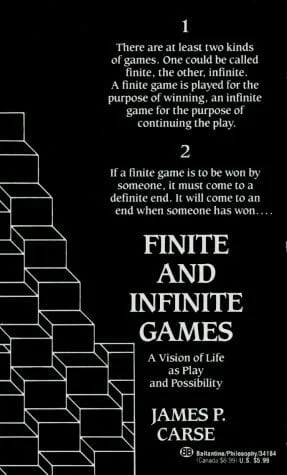
- Embrace the Infinite: In the context of James Carse’s philosophy of "Finite and Infinite Games," life is an infinite game. The goal of an infinite game is not to win, but to keep playing—to continue growing, learning, and contributing.
- Compartmentalize Competition: There is nothing wrong with competition in its proper place. Play fantasy football, join a local rec-league, or push yourself in a 5K race. Use these arenas to satisfy your competitive drive. But once the game is over, leave the scoreboard on the field.
Conclusion
Life is far too precious to be reduced to a series of moves on a board. The people you love, the work you do, and the values you hold are far too important to be treated as trivial points in a competition.
When you stop trying to "win" at life, you finally become free to live it. You stop asking "Am I better than them?" and start asking "Am I becoming who I want to be?" That shift in perspective is the difference between a life spent playing a game and a life truly, deeply lived. It is time to fold the board, put the game back in the closet, and start living for the things that cannot be measured.