The American dream of homeownership is currently undergoing a painful metamorphosis. As of June 2026, the median U.S. home price has crested at a record $409,000, a staggering 20% increase over the last five years. For prospective buyers, the landscape is defined by a "triple threat": record-high purchase prices, persistently elevated mortgage interest rates, and a volatile macroeconomic environment characterized by inflation and shifting labor markets.
This isn’t just a localized economic quirk; it is a fundamental shift in the U.S. housing paradigm. With monthly carrying costs—inclusive of property taxes, insurance, and mortgage interest—spiraling upward, a significant portion of the population has been sidelined. The result is a stagnant market where transaction volumes have slowed, affordability for first-time buyers has reached a nadir, and the rental market has become the only viable path for millions.
To understand why the market remains so stubbornly expensive, we must look at the structural, legislative, and economic pressures colliding in 2026.
The Chronology of a Crisis: From Recession to Pandemic Frenzy
To understand today’s housing market, one must trace the timeline of supply failure. The seeds of the current crisis were sown in the aftermath of the 2008 Great Recession. During that period of systemic financial collapse, home values plummeted and the construction industry faced a decade-long contraction. Builders, burned by the housing crash, drastically scaled back operations, failing to keep pace with population growth and household formation for years.
Then, the COVID-19 pandemic acted as an accelerant. The sudden, massive shift toward remote work triggered a nationwide scramble for space, draining an already depleted inventory of homes. As demand spiked, supply hit record-low levels, and the competitive frenzy pushed prices to historic highs. By the time the market began to cool, the lack of new construction—coupled with the "lock-in effect," where homeowners refused to sell because they were tied to historically low mortgage rates—created a supply vacuum that persists to this day.
The Three Pillars of Modern Housing Scarcity
1. The Severe Housing Shortage
The fundamental driver of today’s price levels is a simple, brutal imbalance of supply and demand. Current estimates suggest the U.S. faces a housing shortage ranging from 1.5 million to 7 million units. This isn’t merely an issue of luxury real estate; the shortage is acute across all price points.
"The U.S. has been stuck in an unusual cycle since the pandemic," explains Chen Zhao, Head of Economics Research at Redfin. "Limited supply has pushed up housing costs, which has kept more buyers and sellers out of the market. The market is slowly correcting itself as inventory creeps up, but until homebuilding increases or the economy shifts, the pattern is unlikely to break."
Furthermore, builders have largely prioritized the construction of larger, more profitable single-family homes, leaving the "starter home" segment of the market nearly extinct. With existing homeowners choosing to stay in their properties longer, the turnover rate has dropped, further constricting inventory.
2. Zoning and Regulatory Constraints
The physical inability to build is often a product of the law. Much of the American landscape is governed by mid-20th-century zoning ordinances that favor low-density, single-family residential development. In California, for example, roughly 96% of available land is zoned exclusively for single-family homes, effectively outlawing the construction of denser, more affordable townhomes or apartments in residential areas.
These "NIMBY" (Not In My Backyard) policies have prevented the development of multi-family units that could alleviate pressure on the for-sale market. While some local municipalities have begun to modernize their zoning codes, progress is slow and fragmented. Additionally, rising costs for construction materials—exacerbated by trade tariffs—and a tightening labor market have created a "cost-to-build" floor that prevents developers from delivering truly affordable housing.
3. The Institutional Investor Factor
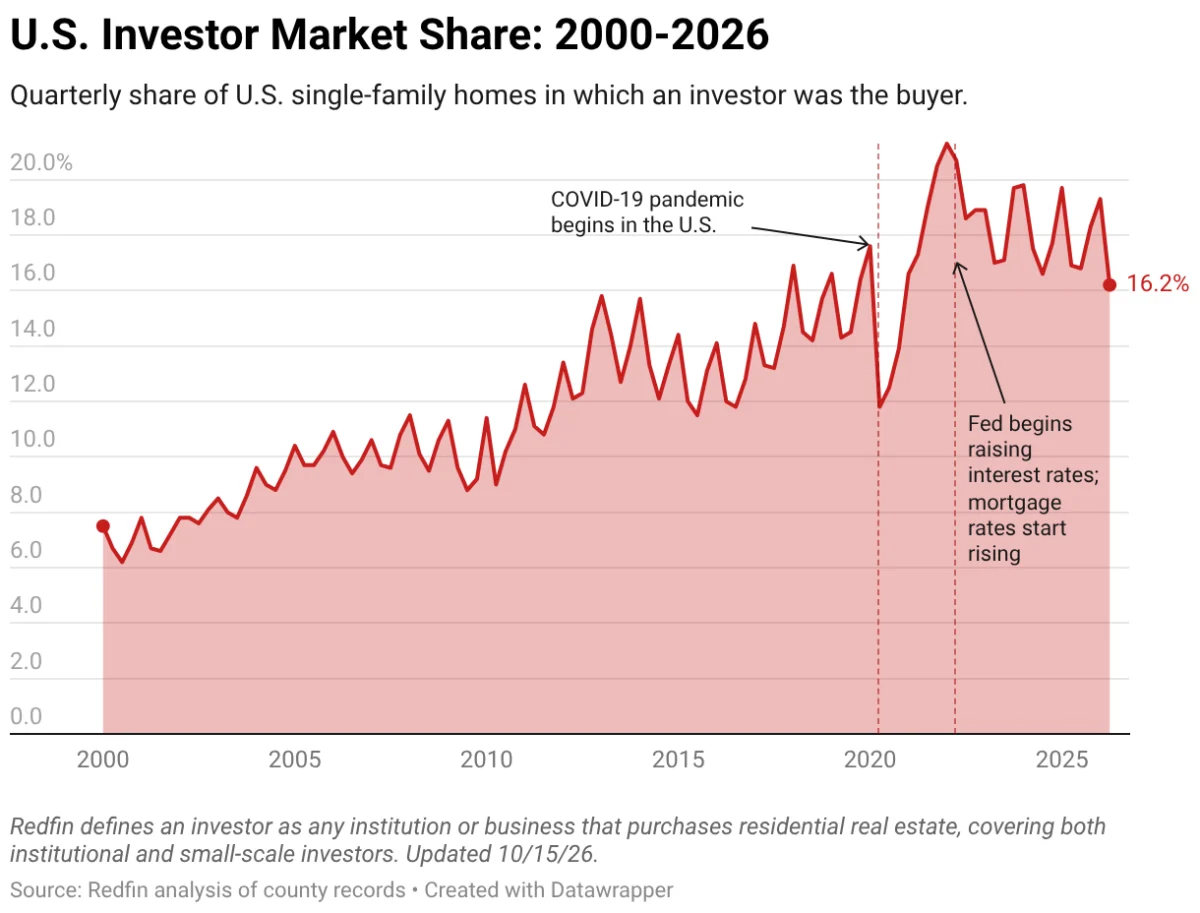
Institutional investors—firms that purchase residential real estate for portfolios—became major players during the pandemic, purchasing roughly $64 billion worth of properties in a single wave. By 2022, nearly one in five homes were being bought by investors.
While their market share has receded from its peak, their presence remains a point of contention. Critics argue that institutional investors drive up prices by outbidding families. However, economists like Chen Zhao offer a nuance: "Restricting investor purchases would actually reduce rental supply and put additional pressure on the for-sale market. Large institutional investors only account for about 1% of total home purchases. The core issue remains: the U.S. needs more homes, period."
Official Responses and Federal Policy
The federal government has acknowledged the severity of the crisis, with the current administration focusing on regulatory reform. President Trump’s approach has centered on reducing environmental regulations and exploring the use of federal land for residential development to lower the cost of entry for builders.
Legislative efforts, such as the recently passed ROAD to Housing Act, aim to streamline the process of getting homes to market. Yet, these efforts are met with skepticism by some, as immigration policies that could potentially shrink the construction workforce and tariffs on imported building materials may counteract the benefits of deregulation. The consensus among policymakers is that the housing market requires a "whole-of-government" approach, yet the tension between supply-side deregulation and macroeconomic protectionism remains unresolved.
Implications: The New Normal for Buyers and Sellers
The implications of this environment are profound. For many, renting has become more affordable than buying in every major U.S. city, fundamentally altering the social contract of homeownership.
For Prospective Buyers
Buyers must accept that the "easy" market of the past is gone. In this high-cost environment, patience is the most important asset. Those entering the market should:
- Prioritize Financial Preparedness: With volatile interest rates, securing a pre-approval and maintaining a robust emergency fund is non-negotiable.
- Leverage Local Insights: Because the market varies wildly by region—with prices cooling in some Southern cities while remaining hyper-competitive in the Midwest and Northeast—working with a local expert is essential.
- Re-evaluate Needs: Many buyers are finding that looking for condos or townhomes, rather than detached single-family houses, is the only way to break into the market.
For Sellers
While sellers hold an advantage in terms of low competition, they are also finding that buyers are increasingly price-sensitive.
- Competitive Pricing: Even in a low-supply market, homes that are overpriced will sit on the market. Pricing based on current, cooling trends is key.
- Focus on Presentation: With buyers being more selective due to high monthly payments, properties that are "move-in ready" command a significant premium over those requiring major renovations.
Conclusion: Looking Ahead to 2027 and Beyond
Will house prices fall in 2026? All signs point to a "soft landing" rather than a crash. Prices have been growing at a modest 2% year-over-year since mid-2025, which, while still positive, is significantly slower than wage growth in many sectors. This suggests that while affordability is not "fixed," the rate of decay has leveled off.
"Closing the housing shortage and bringing costs back to more sustainable levels will require a coordinated effort from policymakers and the housing industry," says Redfin Chief Economist Daryl Fairweather. "Until then, homeownership will remain out of reach for many Americans."
Ultimately, the trajectory of the housing market will depend on the intersection of housing supply, the cost of capital, and the broader economic health of the nation. As the industry grapples with these systemic challenges, the "Great Housing Standoff" serves as a reminder that housing is not just a commodity—it is a critical piece of national infrastructure that, when neglected, creates ripple effects that touch every facet of the American economy.