By Marc Perelman and Sophian Aubin
The decision by the Palestinian Authority (PA) to push back long-awaited legislative and presidential elections to September 2027 has sent shockwaves through the West Bank, casting a long shadow over the future of Palestinian statehood and the credibility of its ageing leadership. For an entire generation of Palestinians, the democratic process remains an abstract concept—a promise made repeatedly and broken with equal frequency.
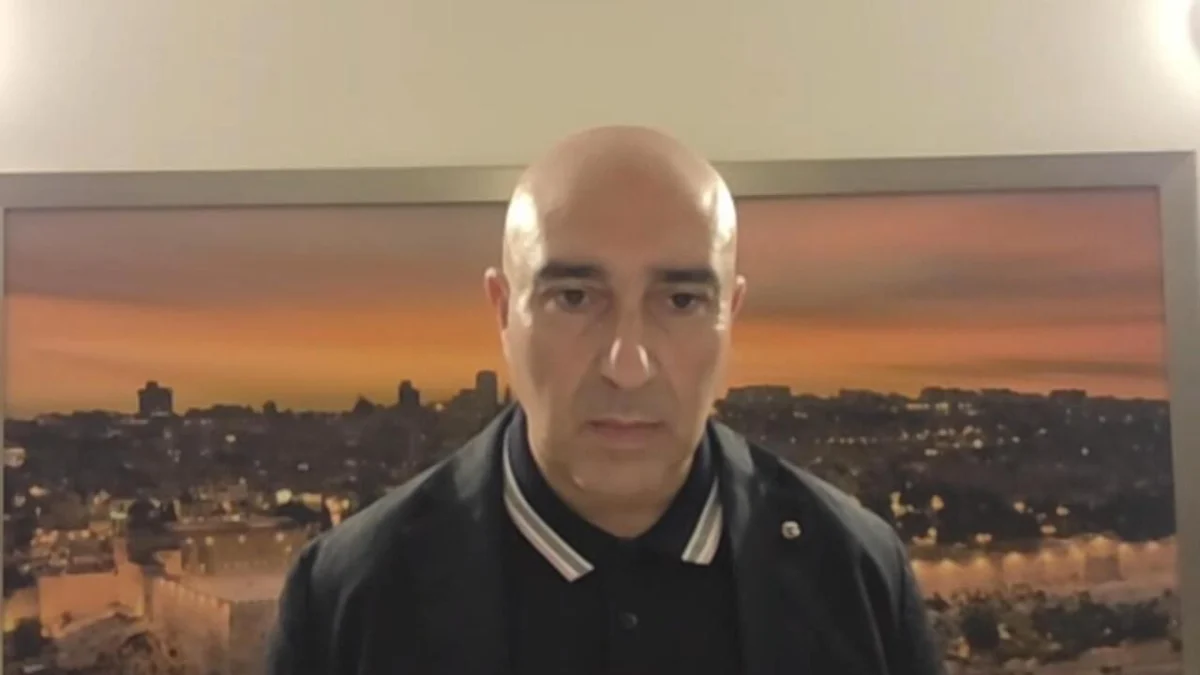
In a recent appearance on FRANCE 24’s Tête à Tête, prominent Palestinian activist Samer Sinijlawi delivered a scathing critique of the move, labeling it a "terrible disappointment." Speaking from Jerusalem, Sinijlawi argued that the postponement is not merely a bureaucratic delay, but a calculated rejection of political renewal by an entrenched leadership hierarchy.
Main Facts: A Broken Promise to a Generation
The postponement marks a continuation of a two-decade-long democratic vacuum. The last time Palestinians went to the polls for legislative elections was in 2006. Since then, the political landscape has been defined by internal division between Fatah in the West Bank and Hamas in Gaza, and a systematic erosion of institutional accountability.
Samer Sinijlawi emphasized that the justification often cited by the PA—Israeli interference and restrictions—is being used as a convenient smokescreen. "It is not about the occupation," Sinijlawi asserted. "It is about a deep-seated rejection of change among the ageing Palestinian leadership who fear losing their grip on power."
The activist pointedly identified Palestinian Vice President Hussein al-Sheikh as a primary architect of this delay, noting that he has been leading the push for postponement in a very public and unapologetic manner.

Chronology: The Road to Perpetual Delay
To understand the gravity of the current situation, one must look at the recent timeline of broken commitments:
- Early 2026: Under intense pressure from the international community, specifically France and other European Union members, the Palestinian Authority signaled a commitment to holding elections by June 2026.
- The Macron-Abbas Accord: President Mahmoud Abbas reportedly provided written assurances to French President Emmanuel Macron and other global leaders that the electoral process would move forward, contingent on a roadmap for reform.
- Summer 2026: Diplomatic efforts reached a crescendo as France successfully rallied 15 nations to recognize a Palestinian state, provided that such recognition was tethered to the promise of democratic reform and upcoming elections.
- October 10, 2026: The promise was officially shattered. The Palestinian leadership announced that the legislative and presidential elections, originally slated for mid-2026, would be deferred to September 2027.
- October 15, 2026: Public discourse reached a boiling point as activists like Sinijlawi condemned the move as a betrayal of the Palestinian public’s desire for a mandate-based government.
Supporting Data: The Cost of Stagnation
The implications of this delay extend far beyond the ballot box; they threaten the financial and diplomatic lifeline that sustains the PA.
International donor countries have long conditioned their financial support on the principles of transparency, reform, and democratic legitimacy. As Sinijlawi warned in his interview, the patience of international taxpayers is wearing thin. "I am sure there will be consequences," he stated. "It is becoming increasingly difficult for donor nations to justify funding a system that is fundamentally refusing to hold elections and renew its mandate."
The fiscal stability of the PA is already precarious. Without a clear path to electoral legitimacy, the administration faces the risk of a "legitimacy deficit," which could lead to a reduction in foreign aid, further economic instability, and a potential total collapse of public services in the West Bank.
Official Responses and Diplomatic Fallout
The international community, particularly those who invested significant political capital in the "reform and elections" roadmap, has been left in a difficult position. President Macron, who had staked a degree of diplomatic credibility on the promise of an electoral roadmap, now faces the fallout of a process that has stalled at the finish line.
While the Palestinian leadership maintains that they are navigating an impossible environment defined by security threats and territorial fragmentation, critics argue that these arguments have lost their efficacy after twenty years. The refusal to engage in the electoral process has effectively silenced the voices of the youth, who represent the majority of the population but hold no sway in the current decision-making apparatus.

Within the PA, the silence surrounding the delay is telling. While senior officials like Hussein al-Sheikh have been identified as drivers of the delay, there has been a noticeable lack of a coherent public defense that satisfies either the Palestinian street or the international diplomatic corps.
Implications: A System at the Crossroads
The decision to defer elections to September 2027 carries profound consequences for the Palestinian cause:
1. The Crisis of Legitimacy
When a government operates for two decades without a fresh mandate, it loses the ability to claim it truly represents the will of its people. This creates a vacuum that is often filled by non-state actors or internal dissent, weakening the state’s position in any future negotiations with Israel or the international community.
2. The Alienation of Youth
With the median age of the Palestinian population being remarkably young, the lack of political agency is fostering deep-seated resentment. A generation that has been raised on the promise of democracy, only to see it perpetually delayed, is likely to become increasingly disillusioned with the mainstream political process. This disillusionment often manifests in social unrest or a complete withdrawal from civic participation.
3. Diplomatic Isolation
The recognition of a Palestinian state by 15 countries, orchestrated by France, was a monumental diplomatic victory. However, that victory was built on the foundation of a "reformed" Palestine. By reneging on the election promise, the PA risks undermining the very states that have been its strongest advocates on the world stage. If the leadership is seen as an obstacle to democracy, the momentum for international recognition could stall, or even reverse.
4. The Stability of Institutions
The administrative machinery of the Palestinian Authority is currently tethered to an aging leadership cohort. Without an infusion of new blood and the validation that comes from an electoral victory, these institutions risk becoming ossified and ineffective. The reliance on donor funding creates a feedback loop where, if the donors pull back due to lack of democratic progress, the institutions may cease to function entirely.

Conclusion: A Call for Accountability
As Samer Sinijlawi’s commentary highlights, the postponement is not merely a technical delay; it is a profound political choice. The Palestinian leadership is currently betting that the status quo is more sustainable than the uncertainties of an election. However, the cost of this bet may be the very legitimacy of the state they claim to be building.
As the international community watches and waits, the message from the Palestinian street is becoming increasingly clear: the desire for change is no longer just a request; it is a fundamental requirement for the survival of the Palestinian political project. Whether the leadership chooses to honor its commitments by 2027 or continues down the path of perpetual deferral will likely determine the fate of the Palestinian Authority for years to come.
The question remains: will the leadership recognize that their own survival is tied to the empowerment of the people they represent, or will they continue to prioritize the preservation of their current positions at the expense of the democratic future they once promised? As the clock ticks toward September 2027, the world—and more importantly, the Palestinian people—are waiting for an answer.