Introduction: A Devastating Loss at Edwards Air Force Base
A profound sense of mourning has descended upon the United States military community following a catastrophic aviation accident at Edwards Air Force Base in California. On Monday, a legendary B-52 Stratofortress heavy bomber crashed shortly after takeoff, erupting into a massive fireball that left no survivors. The tragedy, which occurred during a routine test flight, claimed the lives of eight individuals, including a mix of military personnel, government officials, and civilian contractors.
The incident, which took place approximately 60 miles (95 kilometers) north of Los Angeles, has sent shockwaves through the defense community. Edwards Air Force Base, known as the "center of the aerospace testing universe," is a facility where the boundaries of aviation technology are pushed daily. However, the events of Monday serve as a grim reminder of the inherent risks associated with high-stakes flight testing and the maintenance of aging, albeit formidable, weapon systems.
The Chronology of the Disaster
The timeline of the crash began shortly after the noon hour on Monday. The B-52, a cornerstone of the United States Air Force’s long-range strike capability, was prepared for a specialized sortie. According to officials, the mission was designed to test newly integrated radar modernization hardware—a critical upgrade intended to keep the decades-old airframe relevant in modern, high-threat environments.
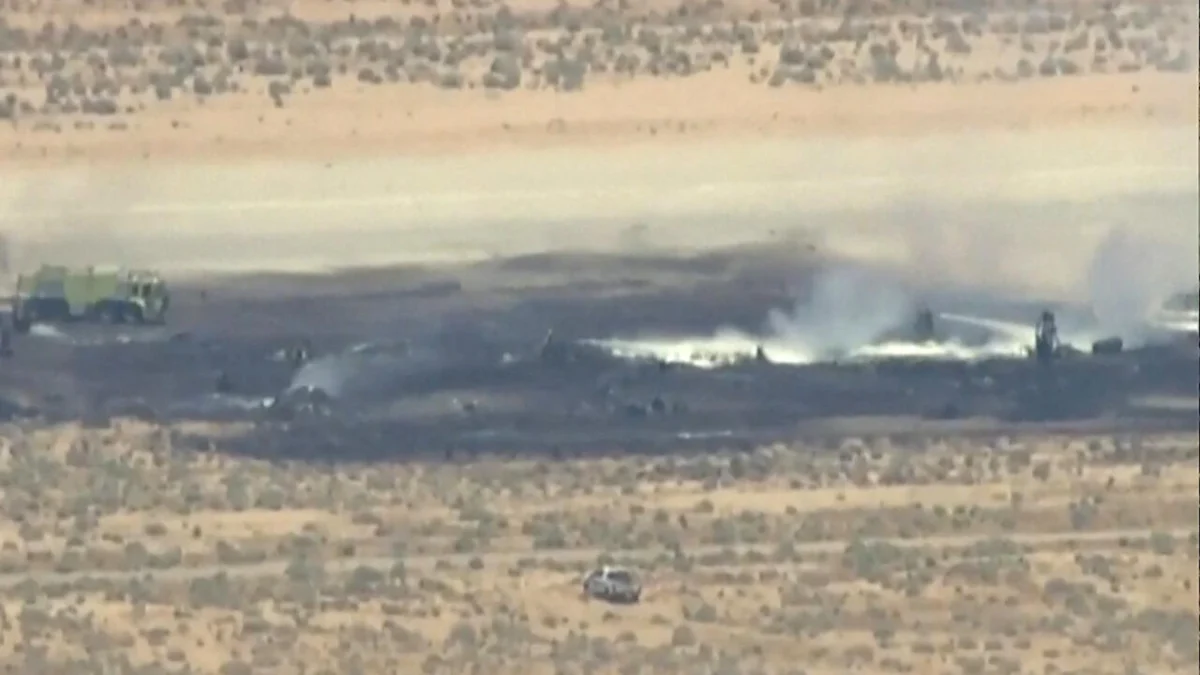
Witnesses and base personnel reported that the aircraft initiated its takeoff roll under standard conditions. However, moments after lifting off from the runway, the massive bomber experienced a catastrophic failure. Footage of the immediate aftermath, later described by base leadership, revealed that the aircraft plummeted to the ground within the confines of the base perimeter.
The impact resulted in an immediate, high-intensity fire. Emergency response crews, including base fire departments and rapid-intervention teams, were dispatched to the crash site within seconds. Despite their best efforts, the nature of the fireball—fueled by the aircraft’s significant fuel reserves—rendered the scene an "unsurvivable" environment. By the time rescue teams reached the wreckage, it was clear that the incident had resulted in the total loss of the aircraft and the eight souls on board.
Official Responses and Immediate Aftermath
Colonel James Hayes, addressing a somber press gathering at Edwards Air Force Base, confirmed the fatality count with visible emotion. "Edwards Air Force Base experienced a horrible tragedy, and we lost eight great Americans," Hayes stated.
The Colonel provided clarity regarding the nature of the operation, emphasizing that the test sortie was a routine part of the Air Force’s ongoing efforts to modernize its strategic bomber fleet. Regarding the cause of the crash, Hayes was careful not to speculate, noting that a comprehensive safety investigation board has been convened. "After reviewing the footage of the crash, it was deemed that this was an unrecoverable crash and unsurvivable," Hayes added, highlighting the speed at which the disaster unfolded.
In the hours following the crash, the base implemented strict operational protocols. The airfield was immediately closed to all incoming and outgoing traffic, with inbound aircraft being diverted to nearby regional airports. Base officials have also confirmed that the process of notifying the next of kin is underway—a delicate and time-consuming operation given the diverse professional backgrounds of those on board.
The military has committed to a transparent investigation, though they have signaled that the final determination of the cause could take several months, if not longer, as investigators sift through the charred remains of the avionics and airframe.
The B-52 Stratofortress: A Legacy of Power and Complexity
To understand the gravity of this loss, one must understand the significance of the B-52 Stratofortress. Often referred to as the "BUFF" (Big Ugly Fat Fellow) by the crews who fly them, the B-52 is a masterpiece of Cold War engineering that has defied the standard retirement cycles of military hardware.
Design and Strategic Utility
First entering service in 1954, the B-52 was originally conceived as an intercontinental nuclear deterrent against the Soviet Union. Its design philosophy focused on range, payload, and reliability. With a wingspan of 185 feet (56 meters) and a length of 159 feet (48 meters), the Stratofortress is an imposing sight. It is capable of carrying a massive array of weaponry, ranging from conventional bombs and precision-guided munitions to cruise missiles and nuclear payloads.
The aircraft’s endurance is legendary; with a combat range of up to 8,800 miles without refueling, it remains a pillar of the U.S. nuclear triad. Over the decades, the Air Force has continuously upgraded the B-52’s internal systems, including its engines, communications suites, and, as in this tragic case, its radar and targeting systems. These upgrades are vital to maintaining the aircraft’s viability until the introduction of the B-21 Raider.
Crew Dynamics
The standard crew of a B-52 is five: the aircraft commander, a pilot, a radar navigator, a navigator, and an electronic warfare officer. However, test missions such as the one conducted on Monday often include additional personnel. These can include flight test engineers, software specialists from the government, and contractors from private defense firms responsible for the new radar hardware. The presence of these specialists on the flight deck explains the diverse professional backgrounds of the eight victims.
Implications for the Air Force and National Defense
The loss of eight lives and a vital, modernized B-52 presents several long-term challenges for the United States Air Force.
Modernization Setbacks
The radar modernization project was intended to ensure that the B-52 fleet remains effective in contested airspace. The loss of the specific airframe used for these tests—and potentially the specialized test equipment on board—will likely result in a temporary suspension of that specific testing program. Engineers and project managers will now have to pause to determine if the crash was caused by a system failure related to the new radar, a mechanical failure of the airframe, or an external factor.
Safety and Fleet Airworthiness
While the B-52 is considered one of the safest and most reliable aircraft in the inventory, accidents of this nature inevitably trigger "fleet-wide" reviews. The Air Force will likely issue a temporary safety stand-down for similar test missions across the country. This ensures that any potential systemic issue with the radar modernization hardware—or the integration process—is identified before any other aircraft are put at risk.
The Human Toll and Institutional Memory
Beyond the technical and strategic implications, the loss of eight individuals is a blow to the institutional memory of the Air Force. Test flight crews are among the most experienced and highly trained professionals in the military. Replacing the combined expertise of those lost in this crash is a process that will take years. The military community will undoubtedly honor these individuals as they continue to grapple with the reality that, in the high-stakes world of aerospace development, even the most rigorous safety protocols cannot entirely eliminate risk.
Conclusion: Honoring the Fallen
As the investigation at Edwards Air Force Base continues, the nation’s attention remains focused on the families of the victims. The tragedy serves as a solemn reminder of the sacrifices made by those who work in the shadows of national defense—the researchers, pilots, and engineers who dedicate their lives to ensuring the United States maintains its technological edge.
While the B-52 Stratofortress will likely continue to fly for many years to come, the memory of this Monday will remain a dark chapter in the history of the base. For now, the flags at Edwards and across the U.S. Air Force remain at half-staff, a visual representation of the respect and sorrow felt for the eight Americans who lost their lives in the pursuit of innovation.
The road to understanding what caused this catastrophe will be long and arduous. For the families, it will be a time of grief; for the Air Force, a time of reflection; and for the aviation community, a period of renewed focus on the eternal quest for flight safety. As Colonel Hayes noted, these were "great Americans," and their contributions to the nation’s defense will not be forgotten.