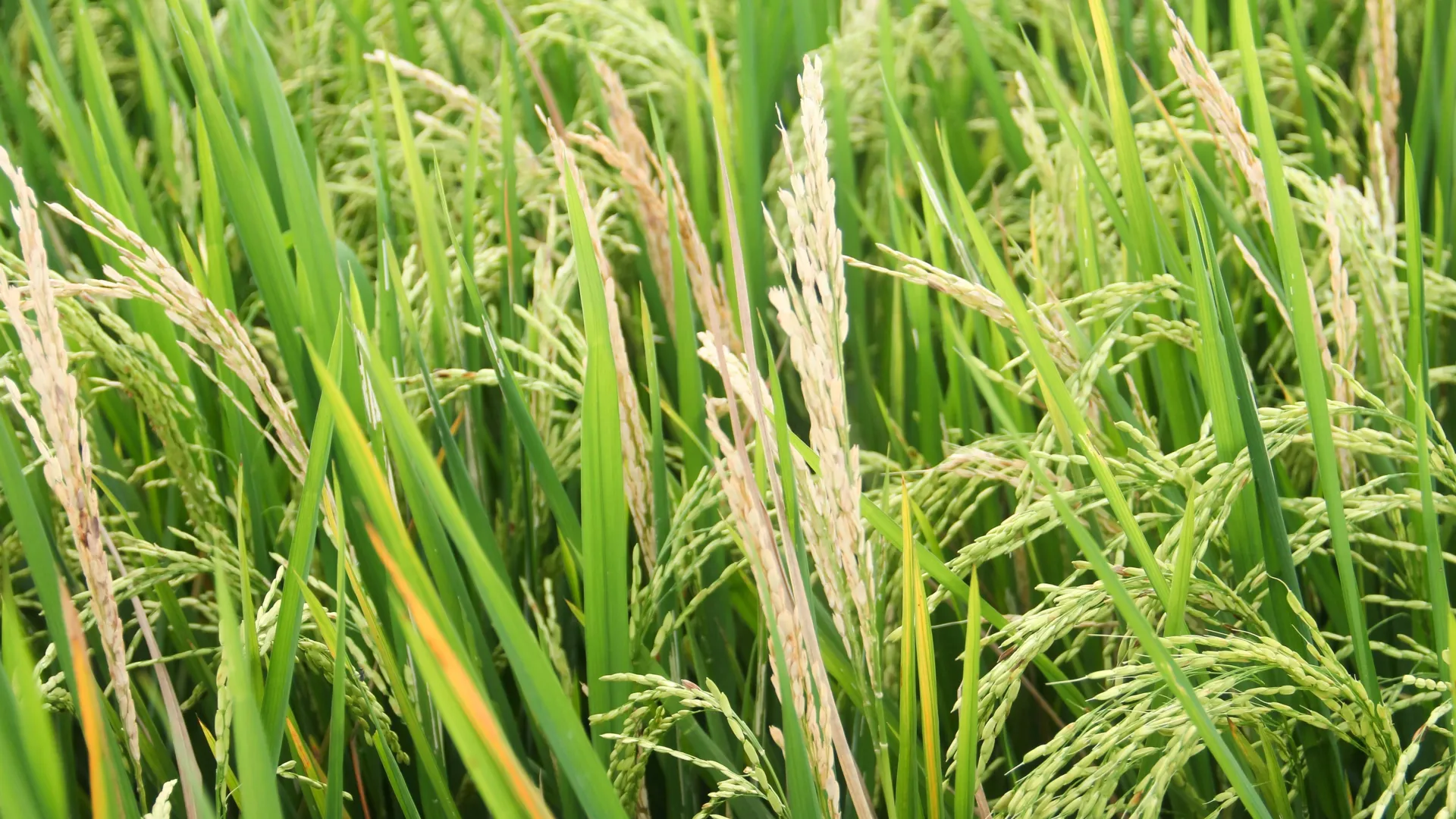
In a landmark advancement for agricultural science, an international team of researchers has unveiled a sophisticated new methodology to fortify the world’s most vital food crops against Magnaporthe oryzae—the devastating fungus responsible for blast disease. This fungal pathogen, which inflicts catastrophic damage on rice, wheat, and barley, currently threatens the stability of the global food supply. By decoding the molecular "handshake" between plants and pathogens, scientists have successfully engineered immune receptors capable of detecting multiple fungal threats, offering a glimpse into a future where crops are inherently resistant to evolving agricultural blights.
The Critical Threat to Global Food Security
The stakes of this research could not be higher. Magnaporthe oryzae is arguably the most destructive fungal pathogen in modern agriculture. Its impact is measured not just in financial loss, but in human caloric intake; it is estimated that the annual loss of rice to blast disease is sufficient to feed approximately 60 million people.
The fungus employs a cunning biological strategy. It infiltrates the leaf and stem cells of host plants by deploying specialized "effector" molecules. These proteins act as chemical saboteurs, interfering with the plant’s internal cellular functions and clearing a path for the fungus to establish a lethal infection. As climate change shifts agricultural zones and facilitates the migration of the pathogen into new territories across Asia and Africa, the need for durable resistance mechanisms has transitioned from an academic interest to an urgent global imperative.
Chronology of Discovery: From NLRs to Tandem Kinases
For over three decades, the scientific community’s understanding of plant immunity was dominated by a single class of proteins: Nucleotide-binding and leucine-rich receptors (NLRs). These receptors have served as the cornerstone of plant pathology, teaching us how plants "see" invading pathogens. However, relying solely on NLRs is akin to locking a door with only one type of bolt; if the pathogen evolves a key, the plant becomes defenseless.
The recent breakthrough, led by the John Innes Centre in the United Kingdom in collaboration with Kobe University in Japan, represents a paradigm shift. The researchers pivoted their focus toward a relatively under-explored group of immune proteins known as tandem kinase proteins (TKPs).
The investigation began with the observation that some TKPs possess a specialized region called a Heavy Metal Associated (HMA) domain. Scientists noted that similar domains exist within NLR receptors, where they function as a biological "bait" to trap pathogen effectors. By identifying these shared structural characteristics, the team realized they could potentially manipulate these domains to recognize threats they were never naturally intended to see.
Decoding the Molecular Trap
The study, recently published in the journal Science Advances, utilized cutting-edge biophysical techniques, including X-ray crystallography, to achieve a high-resolution, three-dimensional view of how these immune receptors interact with the fungus.
The researchers discovered that the HMA domain acts as a trap. When the fungus secretes its effector molecules, these molecules are lured into binding with the HMA domain. This binding event triggers an alarm within the plant cell, inducing a controlled, localized "suicide" of the infected cells. By sacrificing a small patch of tissue, the plant effectively creates a firebreak, starving the fungus and preventing the infection from systemic spread.
Armed with this structural map, the team performed a remarkable feat of protein engineering. They modified the TKP immune receptors so that they could recognize two different fungal effectors associated with infections in wheat and barley. This "dual specificity"—the ability of a single receptor to identify multiple distinct threats—is a rare trait in nature. By proving that this can be introduced through synthetic design, the researchers have opened a new front in the war against crop disease.
Official Perspectives: A New Frontier for Resistance
Professor Mark Banfield, a research group leader at the John Innes Centre and a primary author of the study, emphasized the significance of these findings during a press briefing. "We’ve discovered something that could lead to a potential intervention on what is the worst fungal disease of cereals," Banfield stated.
The team’s enthusiasm is rooted in the versatility of the discovery. "If we can engineer these integrated HMA domains for new properties by making amino acid protein changes where effectors bind, we can gain what we call novel recognition specificities," Banfield explained. "This is a new frontline for the defense of plants against disease."
Dr. Daniel Yu, the study’s first author, noted the technical feasibility of this approach. "Our study indicates that this new class of resistance proteins is amenable for engineering purposes. We now know that the previous tools we used in engineering NLR receptors may also work with this new class."
Implications: Building a Multilayered Defense System
The implications of this research extend far beyond the laboratory. By identifying how to customize plant immunity, scientists are moving toward the creation of "stacked" resistance—a strategy where multiple types of immune receptors (NLRs and TKPs) are introduced into a single crop variety.
Because these two classes of receptors likely activate the immune system via different pathways, combining them would create a redundant, layered defense. "We think these two classes of immune receptors are activated in different ways," Professor Banfield noted. "That gives the potential for more robust immunity in the field because you are not putting all your eggs in one basket."
This "super-resistant" crop model is the ultimate goal. By forcing the fungus to overcome two or more distinct, engineered defense systems simultaneously, the evolutionary pressure on the pathogen to mutate becomes exponentially harder to overcome. It is a biological equivalent of upgrading from a single-factor authentication security system to a multi-factor verification process that is constantly evolving.
The Road Ahead: From Protoplasts to the Field
While the results are groundbreaking, the researchers remain cautious and pragmatic. The current findings were validated using protoplasts—isolated wheat cells. The transition from the Petri dish to the greenhouse, and eventually to open-field agriculture, remains a complex hurdle.
The next phase of the research involves demonstrating that these engineered receptors function effectively within whole plants, where the biological environment is significantly more complex. Furthermore, the researchers are looking to integrate these findings with emerging technologies such as Artificial Intelligence (AI) and precision breeding. AI, in particular, could be used to predict how to best re-engineer HMA domains to recognize even the most elusive fungal effector molecules, effectively staying one step ahead of the pathogen’s own rapid evolution.
A Global Necessity
The urgency of this work is highlighted by the geographic spread of the pathogen. While wheat blast has not yet reached the United Kingdom, its trajectory since its emergence in Brazil in the 1980s has been relentless. As climate change alters humidity and temperature profiles globally, regions previously considered "safe" are increasingly at risk.
For farmers in the developing world, where subsistence agriculture is the primary safeguard against famine, a new, durable resistance mechanism could mean the difference between a successful harvest and total crop failure. The John Innes Centre’s research represents a vital step toward protecting the global food supply chain.
As we look toward the future, the integration of structural biology, protein engineering, and plant pathology offers a hopeful outlook. By learning to speak the chemical language of our crops, we are gaining the ability to help them protect themselves. The journey from the molecular structure of an HMA domain to a robust, climate-resilient crop is long, but the path has been clearly illuminated. Through such scientific rigor, the vision of a more food-secure world is becoming an increasingly tangible reality.