We live in a culture obsessed with the leaderboard. From the moment we enter the education system, we are categorized, ranked, and measured. This early conditioning primes us to accept a pervasive cultural narrative: that existence is a "game" to be won. Whether it is the classic Milton Bradley board game—a staple of American households since 1860—or the modern, digital-age anxiety of social media status, the implication remains the same: life is a contest, and your primary objective is to outpace your peers.
However, as we analyze the psychological and sociological impacts of this mindset, a sobering truth emerges. By treating life as a competitive game, we are not just misinterpreting the human experience; we are actively sabotaging our capacity for genuine fulfillment.
The Genesis of the "Game of Life" Narrative
The metaphor of the "game of life" has deep roots in Western civilization. The concept suggests that life is an activity governed by clear rules, objective metrics, and a finite conclusion.
A Chronology of Competition
- 1860: Milton Bradley introduces The Checkered Game of Life. It was the first popular board game in the United States, designed not just for entertainment but to impart Victorian morality and the importance of hard work.
- The 20th Century: As industrialization shifted, the game evolved. The 1960s and 1980s iterations of the game shifted focus toward wealth accumulation, marriage, and career advancement, reflecting the suburban "American Dream."
- The Modern Era: The 21st century has seen the digitalization of this game. LinkedIn profiles, Instagram aesthetics, and the "hustle culture" movement have turned life into a public-facing performance where "success" is measured in metrics—followers, salary bands, and job titles.
The Structural Flaw: Games vs. Reality
To understand why this metaphor is dangerous, one must distinguish between a game and the lived human experience. A game, by definition, is a closed system. It involves artificial goals with no intrinsic value. It does not matter who puts a ball through a hoop more frequently, yet we agree to the rules to create a transient sense of challenge and victory.
Life, conversely, is not a closed system. It is open, chaotic, and inherently subjective. When we attempt to impose the rigid structure of a game onto the fluid nature of existence, we run into three fundamental conflicts:
1. The Measurement Problem
In a game, victory is binary. You win or you lose. In life, the most important aspects—ethics, love, intellectual growth, and peace of mind—are unquantifiable. You cannot measure a "meaningful relationship" on a spreadsheet, nor can you rank one person’s internal peace against another’s. When we focus on the "game," we prioritize the tangible (money, cars, prestige) simply because it is easier to measure, effectively trading the meaningful for the trivial.
2. The Erosion of Relationships
Competition thrives on the scarcity of victory. If I win, you must lose. When this logic is applied to our social circles, it creates a toxic environment of latent resentment. A healthy friendship requires us to celebrate the success of others; a competitive mindset requires us to view that success as a personal defeat. This cognitive dissonance destroys the very intimacy that makes life worth living.
3. The Surrender of Autonomy
When you play a game, you follow the rules set by the game designer. When you treat life as a game, you surrender your personal agency to society. You adopt someone else’s definition of a "winner"—the high-paying job, the prestigious degree, the "right" zip code—without ever questioning whether those goals align with your own values. You become a pawn in a game you did not design.
Supporting Data: The Psychology of Comparison
Sociological studies on status anxiety, such as those popularized by Alain de Botton, confirm that the constant comparison of oneself to peers creates a baseline of chronic insecurity.
"Comparing yourself to others is a race to the bottom," says organizational psychologist Dr. Elena Vance. "When you frame life as a competition, you enter a state of perpetual scarcity. Even if you reach the top of the hierarchy, the fear of being displaced creates a cycle of stress that prevents the individual from ever experiencing contentment."
Data consistently shows that individuals who prioritize "extrinsic goals"—those that rely on the approval and comparison of others—report higher levels of anxiety and lower life satisfaction compared to those who focus on "intrinsic goals," such as personal development, community connection, and autonomy.
Official Perspectives and Philosophical Critiques
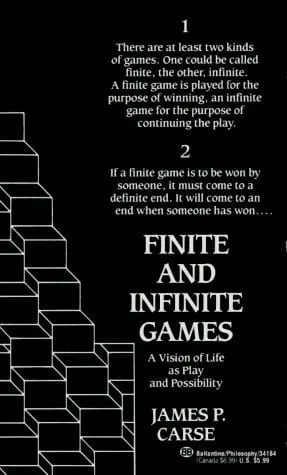
Philosophers have long warned against the "Pyrrhic victory"—a win so costly it is equivalent to a defeat. James Carse, in his seminal work Finite and Infinite Games, argues that there are two types of games:
- Finite Games: Played for the purpose of winning. These are what we call "games" in the traditional sense.
- Infinite Games: Played for the purpose of continuing the play.
Carse argues that life is an infinite game. The objective is not to finish, nor to "win," but to participate, to learn, and to grow. When we treat an infinite game as a finite one, we seek to bring the "play" to an end by declaring ourselves the winners. In doing so, we kill the very thing that gives life its richness.
The Implications of "Losing"
Perhaps the most damaging aspect of the "game of life" metaphor is the fear of losing. In a zero-sum game, 99.99% of people are destined to be "losers." If you base your self-worth on the metrics of a game you are statistically destined to lose, you invite a lifetime of shame.
The implications of this are profound:
- Mental Health Crises: The rise of burnout and depression is intrinsically linked to the "success-or-failure" paradigm.
- Ethical Compromise: When the goal is to "win," the ends often justify the means. This leads to the erosion of personal ethics in favor of competitive advantage.
- Loss of Self: People who spend their lives chasing "trophies" often reach the end of their careers or lives only to realize they have no idea who they are outside of their competitive context.
Reclaiming the "Good Life"
The path away from the competitive trap begins with a radical shift in perspective. To live a good life, one must abandon the desire to "win" and replace it with the desire to "thrive."
Redefining Success
Success should be redefined not as a point on a leaderboard, but as the degree of alignment between your daily actions and your personal values. If your values include kindness, creativity, or exploration, then a successful day is one in which those values were practiced—not one in which you outperformed a colleague.
Cultivating Community
We must consciously transition from viewing our peers as competitors to viewing them as collaborators. This requires vulnerability. It means admitting that we are all struggling with the same existential questions and that our neighbor’s success does not diminish our own capacity to flourish.
Establishing Internal Rules
Finally, we must stop playing by the rules of others. Autonomy is the antidote to the competitive trap. By setting our own standards for what constitutes a meaningful life, we remove the ability for external society to declare us "losers." When you are the one defining the finish line, you can never truly be beaten.
Final Thoughts: The Proper Place for Competition
None of this is to say that competition is inherently evil. Sports, board games, and professional challenges are wonderful outlets for human energy and playfulness. They provide a space to test our limits and enjoy the camaraderie of a contest.
The tragedy occurs when we fail to separate the game from the human. Go ahead—play to win on the golf course, in the fantasy football league, or in a friendly debate. But when the game is over, leave the scorecards on the table. When you step back into your home, your relationships, and your inner world, remember that these things are far too precious to be reduced to a score.
Life is not a game to be won. It is a reality to be experienced. And the only way to "win" is to realize that the game was an illusion all along.